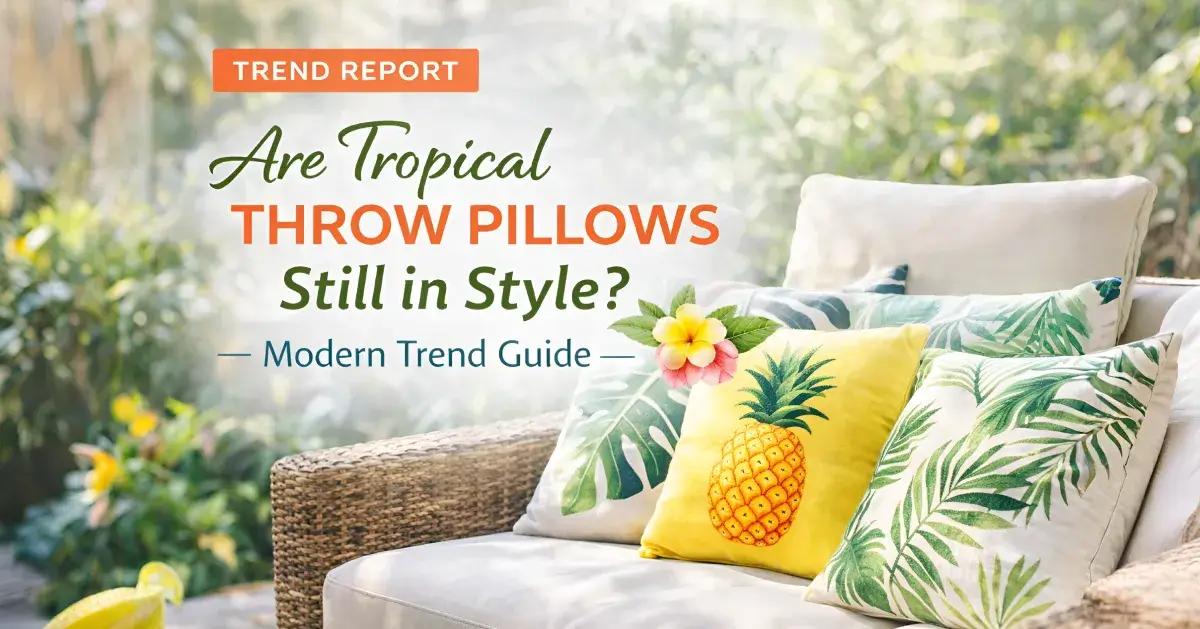

In the fast-moving world of interior design, few questions spark as much debate as the longevity of a trend. We all fear investing in decor that feels dated the moment we bring it home. When it comes to the lush, vibrant world of botanical prints, many homeowners find themselves asking: are tropical throw pillows still in style?
The answer is a resounding yes—but with a critical caveat. The way we do tropical has evolved. Gone are the kitschy, neon-bright flamingos of 2017. In their place is a sophisticated, biophilic approach that feels curated, artistic, and timeless. Tropical decor is no longer just a trend; it has matured into a design staple, rooted in our collective desire to bring the calming influence of nature indoors. In this 2026 trend guide, we break down exactly how to navigate this aesthetic with modern elegance.
The Short Answer: Yes — With a Modern Twist
Tropical decor is not a fleeting fad; it is a manifestation of biophilic design—the innate human tendency to seek connections with nature. As our lives become increasingly digital and urban, the psychological need for organic shapes, natural textures, and botanical imagery only grows stronger. Major interior design reports for 2026 continue to cite “nature-inspired living” as a top growth category, cementing tropical motifs as a key player in modern homes.
However, the “new tropical” aesthetic is refined. It has moved away from the loud, tourist-shop vibe of the past decade and into the realm of high-end editorial design. Think muted sage greens instead of electric lime; intricate, scientific botanical illustrations instead of cartoonish prints; and rich, tactile fabrics like linen and velvet instead of shiny polyester. The modern tropical pillow is a piece of art, not just a splash of color.
Trend Insight: What Designers Mean by “Tropical” In 2026, “tropical” doesn't mean a tiki bar theme. It refers to an atmosphere of relaxed luxury. Designers use terms like “organic modern,” “resort chic,” and “botanical minimalism” to describe this look. It’s about capturing the feeling of a breeze through palm leaves, rather than just printing a picture of a palm leaf.
The History and Evolution of Tropical Home Decor

To understand where we are going, we must look at where we've been. The tropical aesthetic has cycled through pop culture for decades, each time reinventing itself.
1950s–70s: The Tiki Era. Post-WWII America developed a fascination with Polynesian culture, leading to bamboo bars, rattan furniture, and bold, campy Hawaiian prints. It was fun, escapist, and decidedly informal.
1980s–90s: The Miami Vice Excess. The trend shifted to pastels, Art Deco influences, and oversized leafy prints, often bordering on gaudy. Oversaturation eventually led to a decline, and “tropical” became synonymous with “dated” for nearly two decades.
2010s: The Pinterest Revival. The rise of social media brought the Monstera Deliciosa back into the spotlight. The “jungalow” style exploded, mixing bohemian textiles with an abundance of plants.
2020–Present: The Biophilic Era. The post-pandemic world prizes slow living and mental well-being. Tropical decor has shed its kitsch and embraced its soothing roots. We now see tropical elements used sparingly and thoughtfully to create sanctuaries of calm.
What's IN for Tropical Throw Pillows in 2026

If you want your home to look current, these are the specific styles and elements to look for.
| Modern Tropical | Outdated Tropical |
|---|---|
| Muted sage tones | Neon greens |
| Botanical illustrations | Cartoon prints |
| One statement pillow | Matching loud sets |
| Textured fabrics | Shiny polyester |
a) Botanical Precision
We are seeing a move towards detailed, illustrative botanical prints that resemble vintage herbarium studies. Instead of generic “jungle” patterns, look for single-species studies—a beautifully rendered fern, a detailed palm frond, or a scientific illustration of a tropical flower. This style feels intellectual and artistic, elevating the pillow from mere decoration to a conversation piece.
b) Muted Tropical Palettes
The color palette has shifted dramatically. Bright, primary colors are out; earthier tones are in. Look for sage green, olive, dusty coral, terracotta, and warm sand tones. These colors allow tropical prints to blend seamlessly into neutral living rooms without screaming for attention. A good rule of thumb: if the color palette looks like it could hang in a gallery, it's in style.
c) Texture Over Print
For the minimalist or Scandinavian home, the trend is texture. Instead of a printed image, look for pillows that create a tropical feel through weaving techniques. Jacquard palm leaves, embossed velvet monstera patterns, or woven rattan-style textiles add the “tropical” vibe through 3D texture rather than loud color. This is the most sophisticated way to nod to the trend without committing to a bold print.
d) Oversized Statement Singles
The “less is more” philosophy rules 2026. Rather than cluttering a sofa with five different small tropical prints, the trend is to use one oversized (22″ or 24″) statement pillow as a focal point. This anchors the room and treats the pillow like a piece of art, allowing the rest of the decor to breathe.
“The modern tropical aesthetic is about whispering, not shouting. It’s the suggestion of paradise, not a caricature of it.”What's OUT for Tropical Throw Pillows in 2026
Avoid these dated looks to ensure your space feels fresh and modern.
a) Matching Sets of Clashing Prints
The “tropical overload” look—where every pillow on the couch is a different, loud print—dates a room instantly. It feels chaotic rather than curated. Avoid buying pre-bundled sets of 4-5 different loud patterns.
b) Neon and Hyper-Saturated Colors
Electric turquoise, fluorescent pink, and highlighter green are firmly in the past. These colors tend to look cheap and artificial. The market has moved to sophisticated, desaturated, and nature-inspired hues that feel grounded.
c) Novelty Prints
Flamingos, toucans, and pineapples used as the main subject of a pillow are now considered “novelty” items. While fun for a child's room or a guest bathroom, they lack the gravity needed for a main living space. The distinction is between a theme (tacky) and a style (sophisticated).
How to Style Tropical Pillows the Modern Way

Execution is everything. Here is how to style your pillows to achieve that coveted editorial look.
The 1-2-3 Formula
For a fail-safe arrangement, follow this formula: Start with 1 statement tropical print pillow (the hero). Pair it with 2 solid pillows in a color pulled directly from the print (the supporting cast). Optionally, add a 3rd element: a subtle texture or neutral pattern like a stripe or linen weave. This creates balance and lets the tropical print shine.
For step-by-step layout ideas, see our guide on how to mix and match throw pillows.
The “Grounding” Technique
Tropical prints have high energy. To keep them from looking flighty, pair them with heavy, natural furniture. A tropical pillow looks infinitely more expensive on a linen sofa, a leather armchair, or next to a wood coffee table than it does on a glossy, synthetic white surface. The natural materials “ground” the pattern and enhance its organic quality.
Choosing the right material also matters — our best fabrics for tropical throw pillows guide compares comfort and durability.
Room-by-Room Intensity Guide
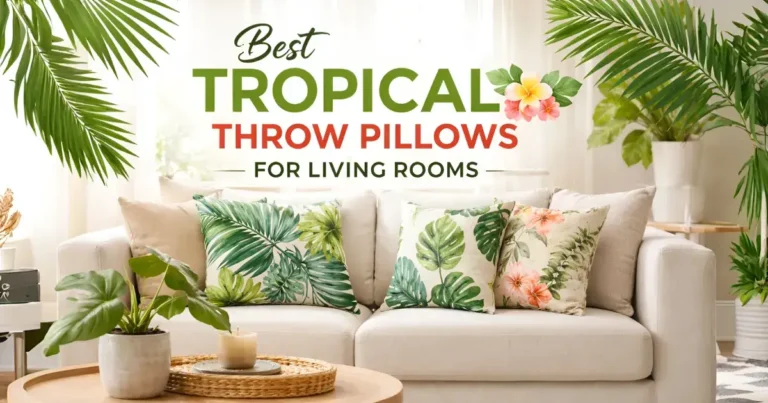
Living Room: Restraint is key. 1-2 prints max.
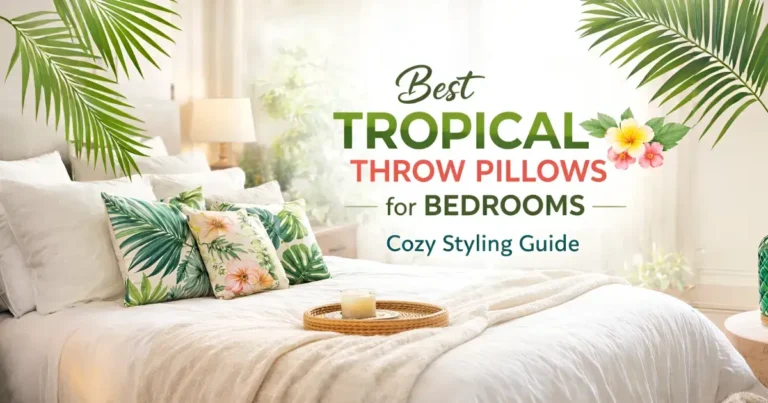
Bedroom: Keep it calm. A single lumbar pillow with a subtle botanical print brings nature to the bedside without disrupting sleep.
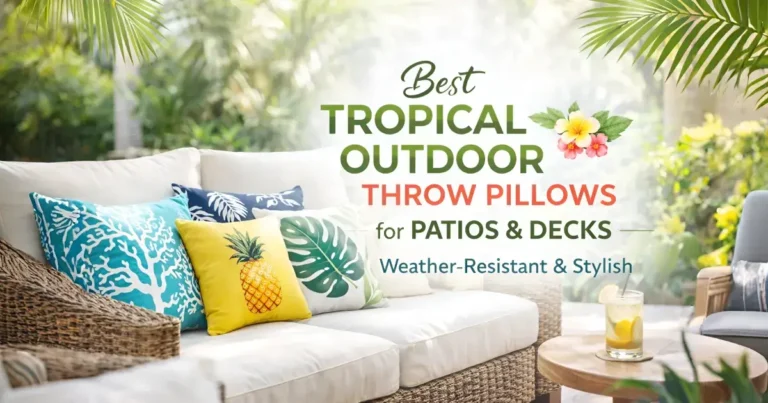
Outdoor: Go wild. The patio is the one place where “more is more” still applies. Tropical prints always look at home under the open sky.
You can explore room-specific recommendations in our guide to best tropical throw pillows for living rooms.
Expert Predictions: Tropical Decor Trends for Late 2026
Looking ahead, we see the emergence of “Dark Tropics.” This trend pairs deep, moody rainforest greens with dark charcoal, navy, and black backgrounds. It creates a sultry, luxurious atmosphere that feels very different from the bright, airy tropical look of the past.
We also predict a rise in “micro-botanicals”—tiny, intricate leaf patterns that read almost like a texture from a distance, offering an alternative to the large-scale palm prints that have dominated for years.
Future Forecast: Global Fusion Expect to see tropical prints merging with other global textile traditions. Think Batik-style tropical prints from Indonesia or block-printed botanicals inspired by Indian textiles. This “Global Fusion” trend adds a layer of cultural richness and craftsmanship to the tropical aesthetic.
FAQ Section
Are tropical print pillows out of style?
No, but the style of print has changed. Loud, neon, and cartoonish prints are out. Sophisticated, muted, and botanical-illustration style prints are very much in style for 2026.
How do I make tropical pillows look modern, not tacky?
Focus on quality fabrics (linen, velvet) and muted color palettes. Pair them with solid colors and natural textures like wood and rattan to ground the look. Avoid “theme” rooms.
What colors are replacing neon tropicals in 2026?
Earth tones are taking over. Look for sage green, olive, terracotta, warm sand, and deep forest green. These colors feel organic and expensive.
Can tropical pillows work in a modern minimalist home?
Absolutely. Choose a “texture over print” approach—like a white pillow with an embossed palm leaf texture—or a single, high-contrast black and white botanical print.
Conclusion — Timeless, Not Trendy
Ultimately, tropical decor is elemental. It speaks to our deep-seated need for nature, warmth, and vitality. As long as humans seek sanctuary in their homes, the tropical aesthetic will have a place. The key for 2026 and beyond is to treat it with the same design rigor you would apply to any other style: prioritize quality, embrace subtlety, and let nature be the guide.
Tropical design continues to evolve with modern lifestyles. By choosing refined patterns, natural textures, and thoughtful placement, homeowners can enjoy a tropical aesthetic that feels timeless rather than trendy.
Ready to find the perfect modern tropical accents for your home? Explore our room-specific guides to get the look right every time.