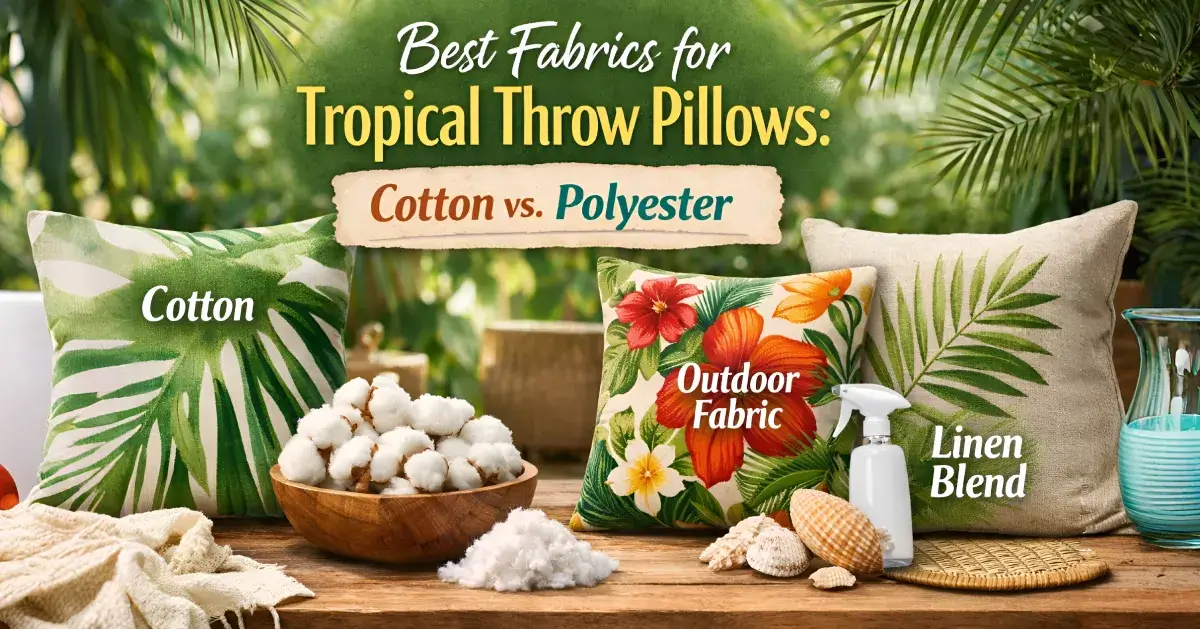

Choosing the right fabric for tropical throw pillows is just as important as picking the perfect pattern. While bold leaves and vibrant colors may catch your eye first, the material determines how comfortable the pillow feels, how long the colors stay bright, and how well it holds up in your home.
Tropical designs often use rich greens, florals, and botanical prints — and not all fabrics handle those colors the same way. Some materials fade quickly in sunny rooms, while others resist moisture, wrinkles, and everyday wear. The best choice depends on where the pillows will be used and how much use they’ll get.
In this guide, we’ll break down the most common fabrics used for tropical throw pillows — including cotton, polyester blends, outdoor-rated materials, and natural fibers. By the end, you’ll know exactly which fabric works best for:
- Comfortable everyday living rooms
- Bright sunrooms or humid spaces
- Homes with kids or pets
- Decorative, low-use styling
If you're still comparing designs, sizes, and overall styling, you can explore our complete tropical throw pillows buying guide for a broader overview before choosing specific materials.
Why Fabric Choice Matters for Tropical Throw Pillows
When shopping for tropical throw pillows, most people focus on color and pattern first. But fabric is what determines whether those beautiful designs still look good a few months later — or start fading, wrinkling, or wearing out.
Tropical prints often feature bold greens, florals, and high-contrast patterns. These colors can be more sensitive to sunlight and washing, which makes material selection especially important.
Here’s why fabric makes such a big difference:
🌞 Sun Exposure Affects Color
Bright rooms, sunrooms, and homes with large windows can cause certain fabrics to fade faster. Natural materials like cotton may lose vibrancy over time, while synthetic and outdoor-rated fabrics are designed to hold color longer.
🧼 Cleaning & Maintenance Vary
Some pillow covers are easy to toss in the washing machine. Others wrinkle easily or require spot cleaning only. If your pillows will see everyday use, choosing a low-maintenance fabric saves time and frustration.
🐾 Lifestyle Matters
Homes with kids or pets need fabrics that can handle:
- Frequent washing
- Spills
- Rougher use
Durable blends or performance fabrics tend to work better in these environments than delicate materials.
💧 Humidity & Moisture
In humid climates or near open windows, certain fabrics can trap moisture, leading to odors or mildew. This is where tropical outdoor pillow options made with moisture-resistant materials can be a smart choice — even for indoor spaces.
✨ Appearance Over Time
Some fabrics look crisp and structured, while others develop wrinkles or lose shape. If you want pillows that maintain a polished look with minimal effort, the material plays a big role.
Understanding these differences helps you choose pillows that not only look beautiful on day one — but continue to perform well in your specific space.
Cotton Tropical Throw Pillows
Cotton is one of the most common materials used for tropical throw pillows, and for many homes, it’s a comfortable and practical choice. It offers a soft feel and a natural look that pairs well with relaxed, resort-inspired interiors.
Pros of Cotton
✔ Soft and breathable
Cotton feels comfortable against the skin, making it ideal for sofas, beds, and everyday lounging areas.
✔ Easy to clean
Many cotton pillow covers are machine washable, which makes them convenient for homes with frequent use.
✔ Natural appearance
Cotton works beautifully with botanical prints and tropical patterns, giving pillows a relaxed and inviting feel.
Cons of Cotton
✖ Can fade in direct sunlight
If placed near windows or in very bright rooms, cotton fabrics may lose color faster than synthetic or performance materials.
✖ Wrinkles easily
Cotton tends to crease, which may make pillows look less polished unless they’re smoothed regularly.
✖ Not moisture-resistant
Cotton absorbs moisture, which can be an issue in humid environments or sunrooms.
Best Use Cases for Cotton Tropical Throw Pillows
Cotton works best in spaces where comfort matters most and sunlight exposure is limited.
Ideal for:
- Living rooms with moderate light
- Bedrooms
- Cozy reading nooks
- Decorative layering on sofas or beds
If your space receives a lot of sun, you may want to explore more durable or fade-resistant options — especially when comparing best fabrics for tropical throw pillows for long-term use.
Polyester & Blended Fabrics
Polyester and polyester blends are among the most practical choices when selecting the best fabrics for tropical throw pillows. While they may not always have the natural feel of cotton, they offer durability and color retention that many households appreciate.
Pros of Polyester
✔ Holds color well
Tropical designs often include bold greens, florals, and rich prints. Polyester fibers help these colors stay vibrant longer, even in brighter rooms.
✔ Durable and shape-retaining
Polyester resists stretching and sagging, helping pillows keep a fuller, more structured appearance over time.
✔ Wrinkle-resistant
Unlike cotton or linen, polyester fabrics tend to stay smooth with less effort.
✔ Budget-friendly
Many affordable tropical throw pillows use polyester or blended fabrics, making them widely accessible.
Cons of Polyester
✖ Less breathable
Polyester doesn’t allow air to circulate as easily as natural fibers, which can make it feel slightly warmer.
✖ Texture varies by quality
Lower-quality polyester may feel synthetic, while higher-quality blends are softer and more comfortable.
Best Use Cases for Polyester Tropical Throw Pillows
Polyester is ideal when durability and low maintenance are priorities.
Best for:
- High-traffic living rooms
- Homes with kids or pets
- Bright indoor spaces
- Seasonal décor that needs to stay vibrant
For spaces with heavy sunlight or humidity, you may also consider more specialized tropical outdoor pillow options, which are designed specifically for those conditions.
Outdoor-Rated Fabrics (Sun-Resistant Options)
Outdoor-rated fabrics are designed to handle conditions that standard indoor materials often struggle with. Even if you’re decorating indoors, these performance fabrics can be a smart choice for bright or humid environments.
Key Features of Outdoor Fabrics
✔ UV resistance
These fabrics are engineered to resist fading, making them ideal for tropical throw pillows placed near windows or in sunrooms.
✔ Moisture resistance
Outdoor materials help prevent water absorption, reducing the risk of mildew or odors in humid spaces.
✔ Mold and mildew protection
This is especially helpful in coastal areas or homes with high humidity levels.
✔ Easy to clean
Most outdoor-rated pillows can be wiped clean, and many covers are machine washable.
Best Use Cases for Outdoor Tropical Throw Pillows
These fabrics are not just for patios — they’re also useful indoors under certain conditions.
Ideal for:
- Sunrooms
- Enclosed patios
- Bright living rooms with large windows
- Humid climates
- Homes near the coast
Outdoor fabrics allow tropical prints to stay vibrant even in challenging environments.
Important Note
Outdoor pillows can be used indoors without issue, but indoor-only fabrics are not designed to withstand outdoor exposure. If your space gets strong sunlight or moisture, choosing performance fabrics helps your pillows last longer.
If your focus is more on decorative styling rather than durability, you may prefer decorative tropical pillows made from softer, more aesthetic materials.
Linen & Natural Fiber Blends (Decorative Focus)
Linen and natural fiber blends bring a soft, textured look that pairs beautifully with relaxed, tropical-inspired interiors. These fabrics are often chosen more for their aesthetic appeal than long-term durability.
Why People Love Linen
✔ Natural texture
Linen adds subtle depth and softness, which works especially well with botanical prints and earthy color palettes.
✔ Casual, airy feel
It enhances the light, breezy atmosphere often associated with tropical and coastal-style décor.
✔ Stylish layering option
Linen pillows are often used alongside bolder tropical prints to create balance and visual interest.
Things to Keep in Mind
✖ Wrinkles easily
Linen naturally creases, which can make pillows look more relaxed but less structured.
✖ More decorative than durable
It’s not the best choice for high-traffic areas or homes with pets and children.
✖ Sensitive to frequent washing
Linen requires gentle care and may shrink or lose shape if not washed properly.
Best Use Cases for Linen Tropical Throw Pillows
Linen works best where comfort and appearance matter more than heavy use.
Ideal for:
- Bedrooms
- Decorative arrangements on sofas
- Guest rooms
- Low-use accent styling
If durability and fade resistance are more important in your space, comparing with polyester or tropical outdoor pillow options may help you choose a better long-term solution.
Quick Fabric Comparison Table
Different fabrics perform better in different situations. This simple comparison makes it easier to choose the best fabric for tropical throw pillows based on comfort, durability, and environment.
| Fabric Type | Comfort | Durability | Fade Resistance | Maintenance | Best For |
|---|---|---|---|---|---|
| Cotton | High | Medium | Low | Easy washing, may wrinkle | Living rooms, bedrooms |
| Polyester / Blends | Medium | High | Medium–High | Low maintenance, wrinkle-resistant | Everyday use, busy homes |
| Outdoor-Rated Fabrics | Medium | Very High | Very High | Easy to wipe clean, moisture-resistant | Sunrooms, patios, bright spaces |
| Linen / Natural Blends | Medium | Low | Low | Gentle care, wrinkles easily | Decorative styling, bedrooms |
This table shows that there isn’t one perfect material for every situation. The best choice depends on where the pillows will be used and how much wear they’ll experience.
Which Fabric Should You Choose?
There isn’t one single “best” fabric for tropical throw pillows — the right choice depends on how and where you’ll use them. Here’s a simple guide to help you decide.
Best for Comfort
If softness and coziness are your top priorities, cotton is a great option. It feels natural and breathable, making it perfect for everyday lounging on sofas and beds in low-sun areas.
Best for Bright Rooms
If your pillows will sit near windows or in a sunroom, outdoor-rated fabrics are the safest choice. They resist fading and hold up better in strong light and humid conditions.
Best for Families with Kids or Pets
For high-traffic areas, polyester or blended fabrics are practical and durable. They resist wrinkles, keep their shape, and are easier to maintain with frequent use.
Best for Decorative Styling
If your goal is texture and a relaxed aesthetic, linen or natural blends add a soft, layered look. These work best in bedrooms or low-use spaces where durability is less of a concern.
Best Long-Term All-Rounder
If you want a balance of color retention, durability, and easy care, polyester blends often offer the most versatility for tropical throw pillows used in everyday living spaces.
Choosing the right material ensures your pillows stay comfortable, colorful, and attractive in your specific home environment.
Final Thoughts: Choosing the Right Fabric for Your Space
Fabric plays a bigger role in tropical throw pillows than many people realize. While patterns and colors set the style, the material determines how well your pillows handle sunlight, daily use, cleaning, and long-term wear.
There’s no universal “best” fabric — the right option depends on your home and lifestyle:
- Choose cotton for softness and comfort in low-sun areas
- Go with polyester blends for durability and easy care
- Select outdoor-rated fabrics for bright rooms, humidity, or heavy exposure to sunlight
- Use linen blends for decorative texture in low-use spaces
Matching fabric to environment helps your tropical pillows stay vibrant, comfortable, and stylish over time.
If you’re still comparing designs, sizes, and styling ideas, explore our complete tropical throw pillows guide to see how fabric choice fits into the bigger picture of creating a cohesive, tropical-inspired space.