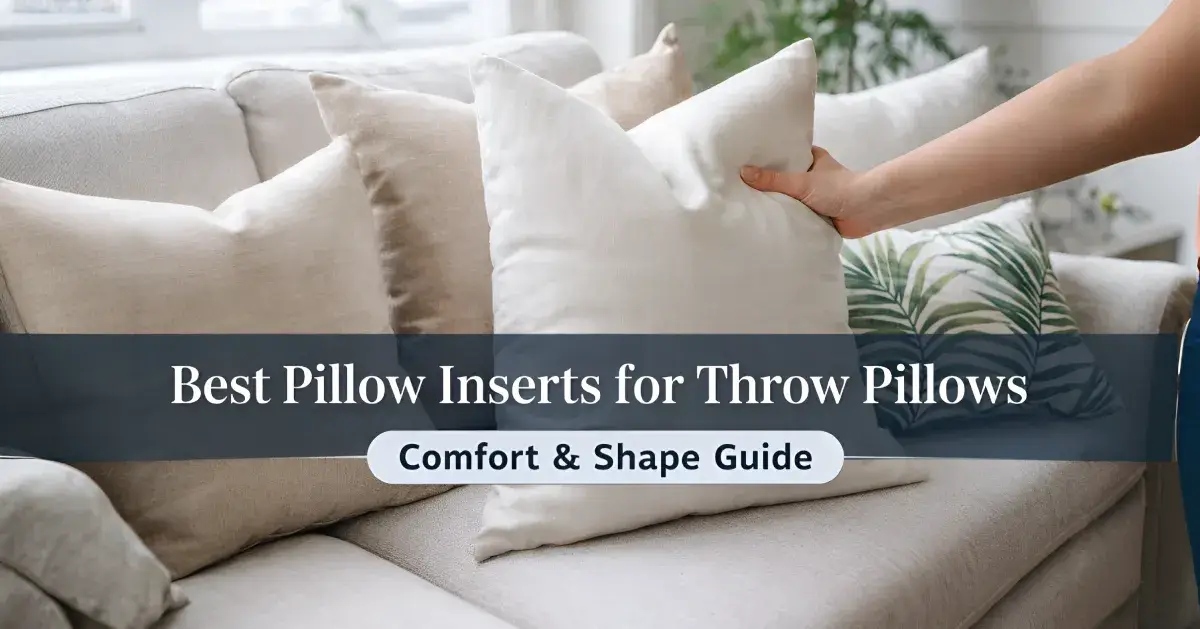

There is a hidden secret behind every luxuriously plump, inviting throw pillow you see in high-end design magazines or five-star hotels. It isn't just the fabric or the pattern of the cover—it is what lies beneath. The pillow insert is the unsung hero that determines the shape, feel, comfort, and longevity of your decorative pillows. Yet, it is the component most homeowners overlook. Many invest in stunning, expensive covers only to stuff them with cheap, lifeless inserts, resulting in flat, sad-looking pillows that do no justice to the decor. To truly elevate your home, choosing the best pillow inserts for throw pillows is just as critical as selecting the perfect print. In this complete guide, we will reveal how to find the perfect insert for every style, ensuring your tropical throw pillows look as good as they feel.
What Is a Pillow Insert?
Simply put, a pillow insert (often called a pillow form) is the inner cushion that gives a throw pillow its volume and structure. Unlike a bed pillow designed for sleeping posture, a throw pillow insert is engineered for aesthetics and casual comfort. It is the foundation of your pillow's look. Without a quality insert, even the most beautiful hand-woven tropical cover will look limp and uninviting. Inserts come in various materials, from natural down and feathers to synthetic down alternatives, polyester fiberfill, and memory foam. Understanding the differences is key to achieving that professional interior design look.

The 5 Types of Pillow Inserts Explained
Not all fills are created equal. The material inside your pillow dictates whether it will be soft and squishy, firm and supportive, or somewhere in between. Here is a breakdown of the five most common types.
a) Down Feather Inserts
This is the gold standard for luxury. These inserts are filled with a blend of natural duck or goose feathers (for structure) and down clusters (for softness). The classic ratio is often 95% feathers to 5% down, though premium options offer higher down content.
- Feel: Supremely soft, luxurious, and mouldable. They hold the “karate chop” shape perfectly.
- Best For: Decorative throw pillows in formal living rooms or master bedrooms where aesthetics are paramount.
- Cons: Expensive. Feathers can sometimes poke through thin covers. Not suitable for those with feather allergies or vegans.
- Price Range: $$$
b) Down Alternative (Synthetic Fill)
Designed to mimic the feel of natural down using polyester microfibers. These fibers are much finer and silkier than standard poly-fill, creating a plush feel without animal products.
- Feel: Soft, fluffy, and hypoallergenic. It offers a similar “squish” to down but bounces back to shape more readily.
- Best For: Everyday use, households with allergies, and budget-conscious buyers who still want a high-end look.
- Cons: Doesn't hold a “chop” quite as crisply as real feathers.
- Price Range: $$
c) Poly-Fil (Polyester Fiberfill)
The most common and affordable option found in big-box stores. It consists of standard polyester fibers blown into a casing.
- Feel: Firm and bouncy initially, but tends to become lumpy or flat over time. Lacks the luxurious weight of down.
- Best For: Temporary decor, seasonal holiday pillows, or budget projects where longevity isn't the priority.
- Cons: Clumps easily, loses shape quickly, not breathable, and can look stiff.
- Price Range: $
d) Memory Foam Inserts
Made from solid or shredded viscoelastic foam, similar to mattress toppers.
- Feel: Very firm, dense, and supportive. It holds its shape perfectly and offers significant resistance.
- Best For: Functional support pillows like lumbar cushions for office chairs or floor seating cushions.
- Cons: Heavy and stiff. Not “plumpy” or cozy for snuggling. Not ideal for purely decorative purposes.
- Price Range: $$$
e) Microfiber Cluster Fill
A step up from standard poly-fill, consisting of tiny clusters of polyester that move independently, mimicking the behavior of down clusters.
- Feel: Soft, bouncy, and resilient. It retains loft much better than standard poly-fill and offers good breathability.
- Best For: The best all-rounder for most decorative throw pillows. It hits the sweet spot between affordability and luxury performance.
- Price Range: $$
| Fill Type | Softness | Shape Retention | Price | Best For |
|---|---|---|---|---|
| Down Feather | ★★★★★ | ★★★ | $$$ | Luxury decorative |
| Down Alternative | ★★★★ | ★★★★ | $$ | Everyday allergy-safe |
| Poly-Fil | ★★★ | ★★ | $ | Budget/seasonal |
| Memory Foam | ★★ | ★★★★★ | $$$ | Lumbar/functional |
| Microfiber Cluster | ★★★★ | ★★★★ | $$ | Best all-rounder |
The Golden Rule: Always Size Up Your Insert
If you take only one piece of advice from this guide, let it be this: always buy an insert that is 1–2 inches larger than your pillow cover. This is the secret trick professional interior designers use to make pillows look expensive and full.
Most people intuitively buy a 20×20 insert for a 20×20 cover. The result? A pillow with droopy, empty corners that looks sad and underfilled. By sizing up, you force more fill into the corners, stretching the fabric taut and showcasing the pattern beautifully.
Expert Rule of Thumb
- For an 18×18 cover → Buy a 20×20 insert
- For a 20×20 cover → Buy a 22×22 insert
- For a 22×22 cover → Buy a 24×24 insert
Exception: Very stiff inserts like solid memory foam or extremely dense outdoor inserts should be bought in the exact size.
Pillow Insert Size Guide by Use Case
Different types of pillows require different sizing strategies. Here is your quick reference guide.
a) Standard Throw Pillows (Sofa/Living Room)
The most common sizes for sofas are 18×18 and 20×20 inches. For a 20×20 cover, a 22×22 insert provides that perfect, overstuffed look that feels high-end. Avoid going smaller than 18×18 for a sofa, as they tend to look like toys rather than decor.
b) Lumbar Pillows
Common sizes include 12×20, 14×22, and 12×24 inches. Because lumbar pillows are often narrower, stuffing a larger insert in can distort the shape and make them look like sausages. For lumbar pillows, it is often safer to stick to the exact size or size up by only 1 inch if using a soft down fill. Structure is key here.
c) Large Statement Pillows (Tropical Style)
Tropical prints often look best on larger canvases, like 22×22 or 24×24 pillows. For these statement pieces, sizing up is even more critical. A 24×24 cover needs a 26×26 insert to support the weight of the fabric and prevent it from slumping on the couch.
d) Euro Shams (Bedroom)
Euro shams are the large square pillows that sit against the headboard. Standard size is 26×26. Always use a 28×28 insert for these. A floppy Euro sham ruins the look of a made bed instantly.
e) Outdoor Pillow Inserts
Outdoor pillows play by different rules. Down and cotton fills will absorb moisture and grow mold. You must use 100% polyester fill with a water-resistant or waterproof casing. Look for “quick-dry” or “outdoor rated” inserts. These are typically denser, so buying the exact size is often recommended to avoid bursting the seams.
For layout strategies using different pillow sizes, see our guide on how many throw pillows should be on a sofa.
Top 8 Recommended Pillow Inserts for Throw Pillows
1. Pacific Coast Down Surround Insert
Type: Luxury Down Feather Blend
Why it's great: This is the ultimate luxury choice. It features a supportive feather core wrapped in a layer of soft down, preventing feathers from poking through while offering supreme comfort. Perfect for high-end tropical covers.
Price: $$$
2. Parachute Down Alternative Insert
Type: Premium Microfiber
Why it's great: The best hypoallergenic option on the market. It mimics the loft and weight of down so convincingly that most guests won't know the difference. Ideal for allergy sufferers.
Price: $$
3. IKEA FJÄDRAR Down/Feather Insert
Type: Value Down
Why it's great: An unbeatable price for real duck feather filling. It holds a chop well and is perfect for filling multiple decorative pillows on a budget. Note: Size up significantly as they are soft.
Price: $
4. Pottery Barn Down Alternative Insert
Type: Designer Synthetic
Why it's great: Dense, high-quality fill that fills out corners exceptionally well. Designed specifically to fit designer covers perfectly.
Price: $$
5. Amazon Basics Microfiber Insert
Type: Budget All-Rounder
Why it's great: A solid, no-frills option for everyday use. Good bounce and durability for the price point. Great for kid-friendly spaces.
Price: $
6. Sleep & Beyond Organic Wool Insert
Type: Natural/Eco
Why it's great: Made from organic merino wool encased in organic cotton. Naturally dust-mite resistant, temperature regulating, and biodegradable. The sustainable choice.
Price: $$$
7. Coop Home Goods Shredded Memory Foam
Type: Adjustable Support
Why it's great: Filled with shredded memory foam that you can add or remove to adjust loft. Offers fantastic support for lumbar pillows.
Price: $$$
8. AllWeather Outdoor Polyester Insert
Type: Outdoor Rated
Why it's great: Specifically treated to resist mildew and moisture. Essential for patio and poolside tropical pillows.
Price: $
| Insert Type | Best For | Comfort | Budget |
|---|---|---|---|
| Down Feather | Luxury decor | Very soft | $$$ |
| Down Alternative | Daily use | Soft | $$ |
| Microfiber Cluster | Balanced | Medium-soft | $$ |
| Poly-Fill | Seasonal | Firm | $ |
| Memory Foam | Lumbar support | Very firm | $$$ |
How to Achieve the “Karate Chop” Look
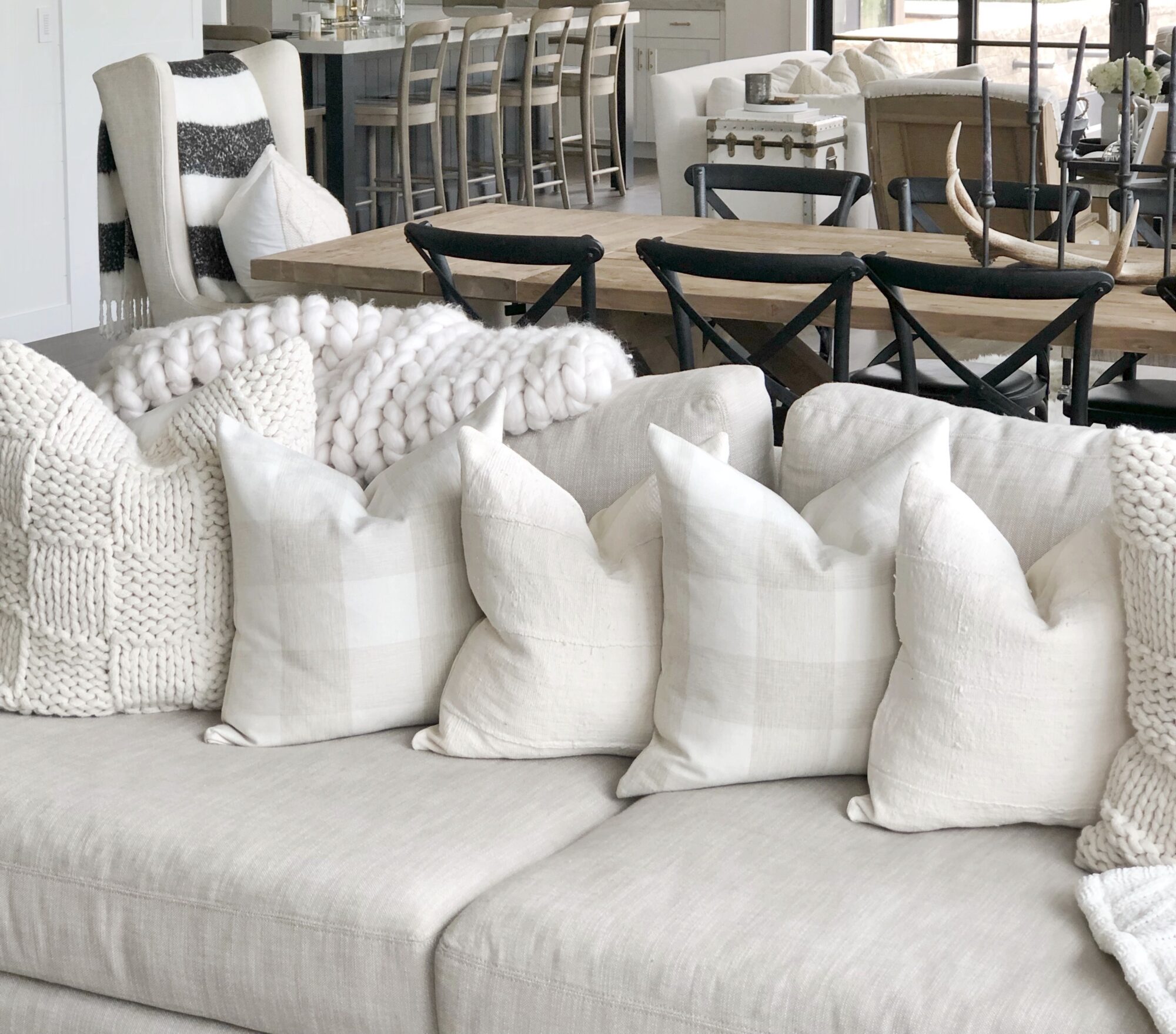
You've likely seen it in magazines: that distinct V-shaped indent in the top center of a throw pillow. This is known as the “karate chop,” and it's a styling hallmark of luxury interiors. It serves a purpose beyond aesthetics; it breaks up the uniform square shape, making the room feel lived-in and inviting rather than stiff.
You can also explore styling techniques in our article on how to mix and match throw pillows.
To achieve this, you simply fluff the pillow from the sides, place it on the sofa, and give it a firm chop with the side of your hand in the top center. Note: This only works with down or high-quality down alternative inserts. Cheap poly-fill or foam inserts will spring back immediately and refuse to hold the chop. If you love this look, invest in feather or premium microfiber fills.
Pro Tip: When your insert arrives, it will likely be vacuum-sealed and flat. Don't panic! Toss it in the dryer on low heat with a couple of clean tennis balls for 10–15 minutes. This will fluff it up to its full volume instantly.
Pillow Insert Care & Maintenance
Pillow inserts don't last forever. Poly-fill inserts typically need replacing every 1–2 years as they become lumpy. Down and high-quality down alternative inserts can last 5+ years with proper care.
Washing: Most synthetic inserts are machine washable on a gentle cycle. Down inserts should be dry-cleaned or washed very carefully to avoid clumping feathers. Always check the care label.
Reviving: If your pillow looks sad and flat, give it a vigorous fluffing by pushing the sides in and out like an accordion. Sun exposure can also help revive natural down pillows by evaporating trapped moisture.
Sustainable & Eco-Friendly Pillow Insert Options
For those curating a natural, tropical-inspired home, sustainability matters. Fortunately, the market now offers eco-friendly alternatives. Look for inserts filled with recycled polyester (rPET) made from plastic bottles, or natural plant-based fills like Kapok (a silky fiber from the Ceiba tree). Organic wool and responsibly sourced down (look for RDS certification) ensure animal welfare and environmental standards are met. Choosing these aligns perfectly with the biophilic ethos of tropical design.
Budget Buying Guide: How Much Should You Spend?
Your budget should align with your usage. For a seasonal holiday pillow you use for one month, a $5–$12 poly-fill insert is perfectly fine. For the main pillows on your living room sofa that you lean on daily, aim for the mid-range ($15–$30) sweet spot with down alternative or microfiber. If you are investing in a high-end designer cover ($60+), pair it with a premium down insert ($35–$70) to do it justice. Putting a cheap, lumpy insert in an expensive cover is like putting cheap tires on a Ferrari—it ruins the performance and the look.
FAQ Section
What is the best filling for throw pillow inserts?
For a balance of luxury and practicality, a premium down alternative (microfiber) is the best choice for most homes. For pure luxury and styling, a 95/5 feather-down blend is superior.
Should I size up my pillow insert?
Yes, almost always. Buying an insert 1–2 inches larger than your cover ensures a full, plump look and prevents empty corners.
What size insert for an 18×18 pillow cover?
For an 18×18 cover, use a 20×20 insert.
What size insert for a 20×20 pillow cover?
For a 20×20 cover, use a 22×22 insert.
Can I use outdoor pillow inserts for indoor throw pillows?
You can, but they are often stiffer and less comfortable than indoor inserts. They are designed for durability, not coziness.
How long do pillow inserts last?
Standard poly-fill lasts 1–2 years before flattening. High-quality down or down alternative can last 5+ years with regular fluffing.
What is the difference between a pillow insert and a pillow form?
There is no difference; the terms are used interchangeably to describe the inner cushion of a decorative pillow.
Conclusion — The Foundation of a Beautiful Pillow
A beautiful throw pillow is a system, not just a cover. The insert is the foundation that supports the fabric, showcases the pattern, and provides the comfort you crave. By choosing the right fill material and following the golden rule of sizing up, you can elevate your tropical decor from “store-bought” to “designer-curated.”
A high-quality insert is the foundation of designer-level throw pillow styling, influencing both comfort and visual impact across every room in your home.
Now that you have the perfect foundation, explore our collections to find the stunning tropical covers that will bring your vision to life.
See real examples in our complete tropical throw pillows guide.