


Mixing and matching throw pillows can instantly elevate a sofa — but it’s also one of the easiest ways to make a space look cluttered or chaotic. Too many bold patterns compete for attention. Too many matching pillows feel flat and uninspired. The key is knowing how to balance color, pattern, size, and texture in a way that looks intentional.
The good news? You don’t need to be a designer to get it right.
In this guide, you’ll learn simple, practical rules that professionals use to mix throw pillows confidently — including how to combine colors without clashing, layer patterns the right way, and create depth with different textures and sizes.
If you’re still deciding how many pillows to use on your sofa, you may want to review our guide on how many throw pillows should be on a sofa before arranging your final look. Once the quantity is right, mixing them becomes much easier.
Table of Contents
Let’s break it down step by step.
The 3 Golden Rules of Mixing Throw Pillows
Before you start combining colors and patterns, it helps to follow a few core principles. These rules make mixing feel intentional instead of random — and they work in almost every living room style.
1. Follow the Rule of Odd Numbers
Designers often use odd numbers because they feel more natural and visually balanced.
- 3 pillows on a standard sofa → relaxed and modern
- 5 pillows on a sectional → layered but not rigid
Odd-number groupings create movement and prevent the arrangement from looking too symmetrical.
If you’re unsure how many pillows your sofa should hold comfortably, refer to our guide on how many throw pillows should be on a sofa before finalizing your layout.
2. Use the 60-30-10 Color Rule
This classic interior design rule helps prevent color overload.
- 60% dominant color (usually your sofa or base tone)
- 30% secondary color (often found in larger pillows)
- 10% accent color (bold or patterned pillow)
For example:
- Neutral sofa (60%)
- Two green or blue pillows (30%)
- One bold tropical print (10%)
This formula keeps bold pillows grounded while still adding personality.
3. Layer by Size, Not Just Color
Mixing isn’t only about patterns — size progression matters too.
A simple layering structure:
- Larger pillows in the back
- Medium pillows in the middle
- Lumbar or accent pillow in front
This creates depth and makes even bold tropical combinations look cohesive.
These three rules form the foundation. Once you understand them, mixing colors, patterns, and textures becomes much easier.
How to Mix Colors Without Clashing
Color is the first thing people notice when mixing throw pillows — and it’s also where most styling mistakes happen. The goal isn’t to match everything perfectly, but to create harmony.
Here are simple color strategies that always work.
1. Start with a Neutral Base
If your sofa is neutral (white, beige, gray, tan), you already have flexibility. Neutrals act as a stabilizer, allowing you to introduce bold tropical prints or accent colors without overwhelming the space.
A safe approach:
- Neutral sofa
- One bold tropical pillow
- Two coordinating solid pillows
This keeps the look balanced and intentional.
2. Try a Monochromatic Palette
Monochromatic styling uses different shades of the same color.
For example:
- Light sage
- Emerald green
- Deep forest green
Using one color family keeps everything cohesive, even if patterns vary.
3. Use Complementary Colors Carefully
Complementary colors sit opposite each other on the color wheel (like blue and orange or green and coral). They create contrast and energy — perfect for tropical styling.
To avoid clashing:
- Let one color dominate
- Use the other as a smaller accent
For example:
- Two green leaf pillows
- One coral accent pillow
4. Stick to a Limited Color Palette
A common mistake is introducing too many colors at once.
A safe rule:
- No more than 3 main colors in your pillow arrangement
This keeps the sofa from feeling chaotic.
5. Pull Colors From Existing Decor
Look around the room:
- Rug
- Artwork
- Curtains
- Plants
Repeating a color from elsewhere in the room makes the pillows feel connected rather than random.
Once your color foundation feels cohesive, you can confidently start layering patterns and textures — which is where mixing really becomes interesting.
Pattern Mixing Formula (The Safe Way)
Mixing patterns can feel intimidating, but it doesn’t have to be complicated. The key is structure. When patterns vary in scale and purpose, they look layered and intentional instead of busy.
Here’s a safe, designer-approved formula.

Step 1: Choose One Lead Pattern
Start with one statement pillow. This is usually:
- A bold tropical print
- A large floral or botanical pattern
- A high-contrast design
This pillow becomes the focal point of the arrangement.
Everything else supports it.
Step 2: Add a Secondary Pattern (Different Scale)
The biggest mistake people make is mixing patterns that are the same size.
Instead:
- If your lead pillow has large leaves, choose a smaller-scale geometric or subtle stripe.
- If your lead pattern is busy, the second pattern should feel calmer.
Large + medium scale creates balance.
Step 3: Anchor with a Solid or Subtle Texture
Every mixed arrangement needs a “resting point” for the eye.
Add:
- A solid pillow
- Or a lightly textured fabric
This prevents visual overload and gives bold prints space to breathe.
If you’re unsure which materials layer well together, reviewing different best fabrics for tropical throw pillows can help you combine texture and durability effectively.
A Foolproof Pattern Combination
This combination almost always works:
- 1 bold tropical floral
- 1 small-scale geometric or stripe
- 1 solid or textured neutral
This creates contrast, depth, and balance — without chaos.
Pattern mixing becomes much easier when you think in layers: focal point, support, anchor.
Texture Layering for Depth
Color and pattern get most of the attention, but texture is what makes throw pillow arrangements feel rich and intentional. Even if your colors are simple, mixing textures adds depth and prevents the sofa from looking flat.
Think of texture as the quiet detail that makes everything else stand out.
1. Mix Smooth and Textured Fabrics
Combining different fabric finishes instantly elevates your setup.
Examples:
- Smooth cotton + woven linen
- Velvet + structured canvas
- Soft knit + crisp printed fabric
The contrast between smooth and textured surfaces makes the arrangement more dynamic.
If you’re unsure which materials pair well visually and practically, comparing different options in our guide on best fabrics for tropical throw pillows can help you choose combinations that both look good and hold up over time.
2. Balance Soft and Structured Pillows
Some pillows feel relaxed and slouchy, while others hold their shape.
Layering works best when:
- Larger pillows feel structured
- Accent or lumbar pillows feel softer
This creates dimension and prevents everything from collapsing into one flat layer.
3. Add Subtle Texture Even With Bold Prints
If you’re using vibrant tropical prints, add at least one pillow with texture but minimal pattern.
For example:
- Bold palm-leaf print
- Solid woven cream pillow
- Textured green linen
This keeps the arrangement interesting without overwhelming it.
Texture layering is often the difference between “nice” and “professionally styled.” Once color and pattern are balanced, texture adds the final polish.
Foolproof Mixing Formulas Anyone Can Copy
If you don’t want to think about color theory or pattern scale, these simple formulas make mixing and matching throw pillows easy. Just follow the structure and adjust colors to fit your space.
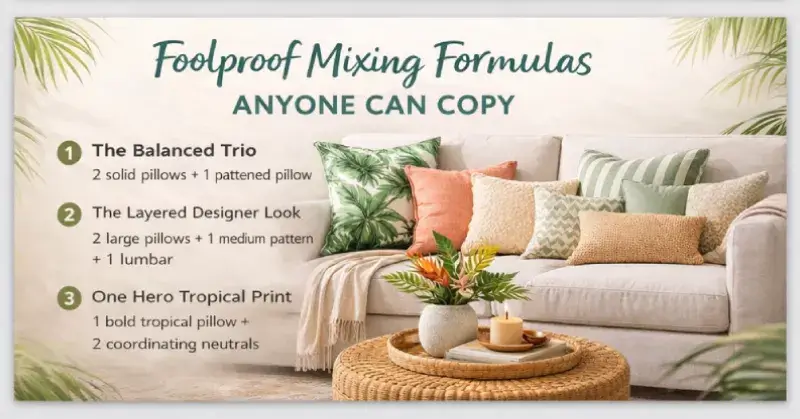
Formula 1: The Balanced Trio
2 solid pillows + 1 patterned pillow
- Solids create stability
- One bold print adds personality
This works beautifully on standard sofas and loveseats. It’s subtle, clean, and beginner-friendly.
Formula 2: The Layered Designer Look
2 large pillows + 1 medium pattern + 1 lumbar
- Large pillows anchor the back
- Pattern adds visual interest
- Lumbar finishes the arrangement
Ideal for deeper sofas and sectionals.
Formula 3: One Hero Tropical Print
1 bold tropical pillow + 2 coordinating neutrals
Let the tropical pillow be the star. Choose neutrals pulled from its color palette to support it.
For example:
- Bold green leaf print
- Cream textured pillow
- Soft sage solid
This keeps the arrangement cohesive rather than chaotic.
Formula 4: Pattern Scale Formula
1 large-scale pattern + 1 small-scale pattern + 1 solid
The different pattern sizes prevent competition while maintaining variety.
Formula 5: Monochromatic Mix
3 pillows in the same color family, different textures
Example:
- Forest green velvet
- Olive linen
- Sage printed cotton
Even without multiple colors, texture keeps it interesting.
These formulas eliminate guesswork and help you mix confidently — especially once you’ve chosen the right number of pillows for your sofa layout.
Common Mistakes to Avoid When Mixing Throw Pillows
Even with good intentions, a few common missteps can make a sofa look cluttered instead of styled. Avoiding these will instantly improve your results.
1. Using Too Many Competing Patterns
If every pillow is bold and busy, nothing stands out.
Instead:
- Choose one focal pattern
- Support it with simpler designs
Balance is more important than variety.
2. Matching Everything Too Perfectly
Buying a pre-matched pillow set can make your sofa feel flat and predictable.
Mixing different patterns, sizes, and textures creates depth and personality.
3. Ignoring Scale
Patterns that are all the same size compete with each other.
Always vary scale:
- One large pattern
- One smaller pattern
- One solid or subtle texture
4. Overcrowding the Sofa
More pillows don’t always look better.
If the arrangement makes it difficult to sit comfortably, remove one. A well-spaced trio often looks more polished than five crowded pillows.
5. Forgetting the Rest of the Room
Pillows shouldn’t feel random. Pull colors from your:
- Rug
- Artwork
- Curtains
- Plants
This creates visual connection throughout the space.
Frequently Asked Questions
How many different pillow patterns can you mix?
Most designers recommend mixing up to three different patterns on one sofa. Use one large-scale pattern, one smaller-scale pattern, and one solid or subtle texture to keep the arrangement balanced.
Can you mix floral and geometric throw pillows?
Yes. Mixing floral and geometric patterns works well when the colors coordinate and the pattern scales differ. Keep one design bold and let the other act as a supporting accent.
Should throw pillows match the sofa?
Throw pillows don’t need to match the sofa exactly. In fact, contrast often looks better. Pull one or two tones from the sofa’s color palette to create harmony without blending in completely.
How do you keep mixed pillows from looking messy?
Limit your color palette to two or three main tones, vary pattern sizes, and include at least one solid pillow to anchor the arrangement.
Final Thoughts: Mixing With Confidence
Mixing and matching throw pillows doesn’t require professional training — just a few simple principles. Start with a balanced number of pillows, layer sizes thoughtfully, vary pattern scale, and use color intentionally.
When in doubt, simplify. A cohesive trio often looks better than an overly ambitious arrangement.
If you’re building a complete look from scratch, our complete tropical throw pillows guide walks through patterns, fabrics, sizes, and styling from start to finish.