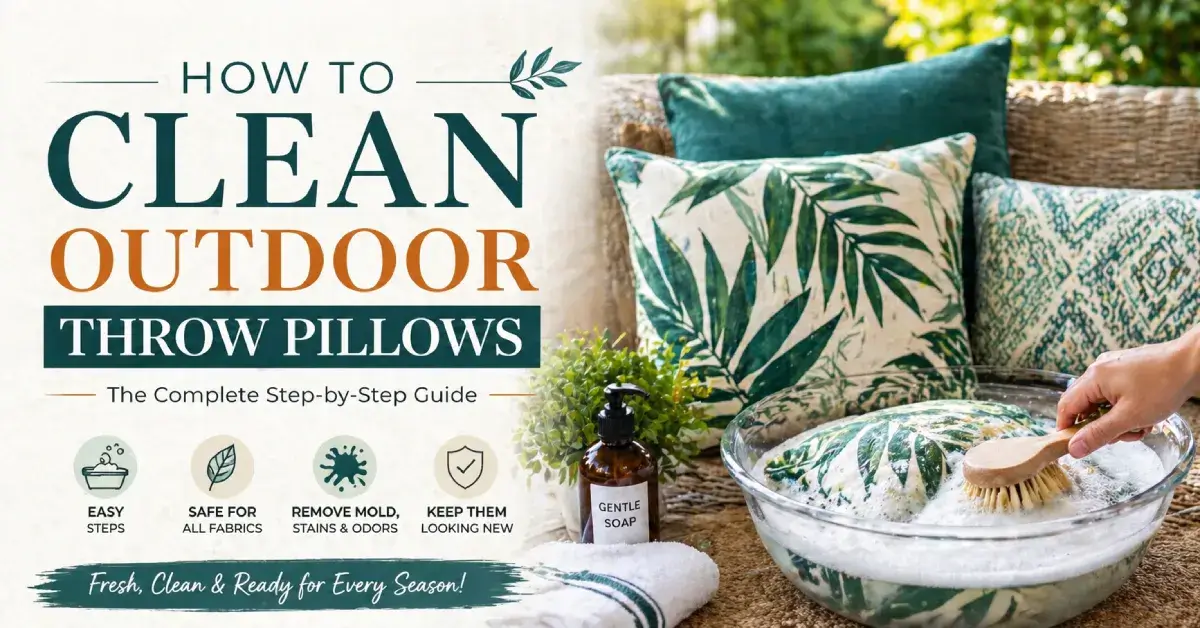
There is a specific kind of dismay that comes with unpacking your patio pillows at the beginning of summer and finding them streaked with green mildew, bleached by last year's sun, and stiff with accumulated grime. Outdoor throw pillows face environmental assaults that indoor textiles never encounter: UV radiation, rain, morning dew, airborne pollen, bird droppings, sunscreen transfers, food spills, and the slow, insidious creep of mold and mildew through every layer. Knowing how to clean outdoor throw pillows correctly — by fabric type, by stain type, and by season — is the single most effective way to protect your investment and keep your outdoor space looking resort-fresh all season long.
The stakes are higher than most people realize. Using the wrong cleaning method on the wrong fabric can permanently destroy color, break down fibers, cause irreversible shrinkage, or — in the case of Sunbrella and performance fabrics — void manufacturer warranties. This complete guide covers everything: routine cleaning, deep cleaning, specific stain treatments, insert care, proper drying, and end-of-season storage. Master these steps, and you will dramatically extend the lifespan of your beautiful outdoor textiles.
| Fabric | Cleaning Method | Safe Products |
|---|---|---|
| Sunbrella | Bleach solution | Bleach + soap |
| Polyester | Gentle wash | OxiClean |
| Printed | Spot clean | Mild soap |
| Vinyl | Wipe | Damp cloth |
Why Cleaning Method Matters as Much as Cleaning Frequency
It is easy to assume that all outdoor fabrics are created equal and can withstand aggressive scrubbing, but this is a costly misconception. Mold and mildew aren't just cosmetic issues; if left untreated, these fungi secrete enzymes that actively degrade the pillow's fibers from the inside out. Furthermore, UV-degraded fabrics become brittle over time, meaning that improper, harsh cleaning methods can easily accelerate this physical breakdown, tearing the fabric apart.
The most critical distinction lies in the fabric's dye process. Solution-dyed fabrics (like authentic Sunbrella) are uniquely bleach-safe because the color is saturated throughout the entire core of the thread. However, standard printed polyester is absolutely NOT bleach-safe. Using a bleach solution on the wrong fabric causes instant, permanent color destruction. The golden rule of outdoor maintenance is that you must always identify the fabric first, then choose your cleaning method accordingly.
THE CARDINAL RULE: IDENTIFY BEFORE YOU CLEAN
A standard three-seat sofa is roughly 84 inches wide. An L-shaped sectional averages 110–140 inches across its longest face alone. That is nearly double the blank canvas—which means the traditional rules of scale, pillow quantity, and zone thinking must be completely recalibrated to ensure the furniture doesn't look swallowed by fabric or left completely barren.
What You'll Need Before You Start
Gather these essential supplies before you begin the cleaning process. Having everything readily available prevents frustrating interruptions mid-clean, which can accidentally allow cleaning solutions to dry onto the fabric and cause permanent, unintended water spots or soap rings.
| 1. Soft-bristle brush (not metal) | 2. Mild liquid dish soap |
| 3. White distilled vinegar | 4. Oxygen bleach (like OxiClean) — safe for most fabrics |
| 5. Chlorine bleach (for Sunbrella ONLY) | 6. Large bucket or tub |
| 7. Garden hose with spray nozzle | 8. Clean white cloths or microfiber towels |
| 9. Mesh laundry bag (if machine washing covers) | 10. Rubber gloves |
| 11. Fabric protector spray (post-clean) | 12. Breathable storage bags (for seasonal storage) |
ALWAYS USE WHITE CLOTHS
Always use WHITE cloths when blotting stains. Colored cloths can transfer their own dye to the damp outdoor fabric, accidentally creating a brand-new, nearly impossible-to-remove stain while you are trying to remove the original one.
Step One: Identify Your Pillow's Fabric Type
Before touching a single cleaning product or turning on the hose, you must know exactly what fabric you are about to clean. Cleaning method errors in outdoor textiles are typically irreversible, resulting in bleached spots, melted fibers, or destroyed water-repellent coatings.
| Fabric Type | How to Identify | Bleach Safe? | Machine Wash? | Best Cleaning Method |
|---|---|---|---|---|
| Sunbrella (Solution-Dyed Acrylic) | “Sunbrella” label or tag; slightly stiff, canvas-like feel | Yes — chlorine bleach safe | Covers only, gentle cycle | Bleach solution or machine wash |
| Solution-Dyed Polyester | No Sunbrella tag; slightly softer than acrylic | No — oxygen bleach only | Covers only, gentle cold | Hand wash or gentle machine, OxiClean |
| Standard Polyester (Printed) | Shiny or soft; printed pattern (not woven-in color) | No — bleach destroys color | Cold, delicate only | Hand wash, mild soap only |
| Marine-Grade / Vinyl | Firm, smooth, plastic-like surface | No — wipe only | Never | Wipe clean with damp cloth |
| Linen-Poly Blend | Softer, natural-feel texture, often slightly wrinkled | No | Cold, gentle, air dry only | Hand wash preferred |
THE BLEACH TEST
If there is no care label attached to your pillow, perform the bleach test: apply a single drop of diluted bleach (1 part bleach to 10 parts water) to a hidden interior seam. Wait exactly 2 minutes. If the fabric color remains unchanged, it is highly likely solution-dyed and bleach-safe. If the color fades even slightly, immediately rinse the area and use only oxygen bleach or mild soap for all future cleaning.
For choosing the right materials, see our best fabrics for tropical throw pillows guide.
Routine Cleaning: After Every Rain and Weekly Maintenance
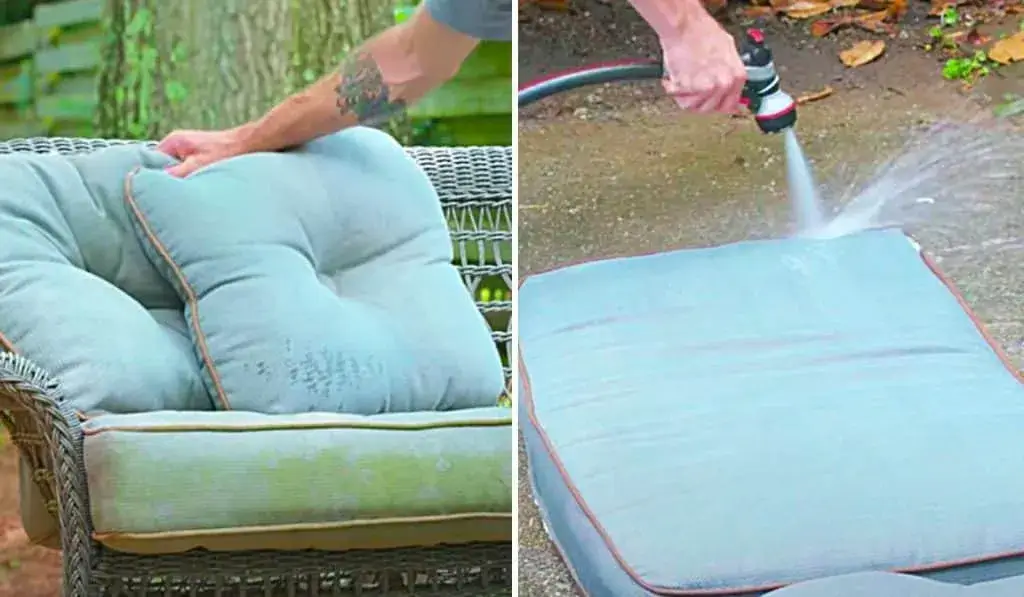
Routine cleaning actively prevents the stubborn, embedded buildup that makes exhaustive deep cleaning necessary in the first place. A simple 5-minute weekly routine will dramatically extend the life and visual vibrancy of your outdoor pillows.
1. Brush Off Loose Debris
After every use or significant weather event, use a dry, soft-bristle brush to gently sweep away accumulated dust, loose pollen, fallen leaves, and dry dirt. Always brush in one uniform direction. You must do this DRY — never scrub wet dirt into the fabric, as the moisture acts as a lubricant that pushes abrasive particles much deeper into the woven fibers.
2. Rinse with a Garden Hose
A quick weekly hose-down removes soluble surface grime, tree sap, and light pollen before it has the opportunity to chemically bond with the fabric. Use a medium pressure setting on your nozzle — never use a power washer, which can forcefully inject water into the pillow's core fill and permanently tear delicate surface fibers. Hold the nozzle at least 12 inches away from the fabric at all times.
3. Wipe Down with Mild Soap Solution
Mix 1 teaspoon of mild liquid dish soap with 1 quart of cold or lukewarm water. Dip a clean white cloth into the solution and wipe the fabric surface in gentle, overlapping circular motions. Focus special attention on areas that receive direct human contact, such as armrest pillows or the top surfaces where hands frequently rest.
4. Air Dry Completely Before Use
Stand the pillows upright on their edge or prop them vertically in a shaded area with excellent ambient airflow. Never lay them flat to dry on a solid surface — water will inevitably pool in the center, failing to evaporate, which creates the exact dark, damp conditions that mold thrives in. Do not replace them on your patio furniture until they are completely dry straight through to the central insert.
The 5-Minute Rule
Every Monday morning, spend just 5 minutes quickly rinsing your outdoor pillows with the garden hose and standing them upright to dry. This single, highly effective habit actively prevents 80% of all major deep cleaning emergencies from ever developing.
Deep Cleaning Outdoor Throw Pillows by Fabric Type
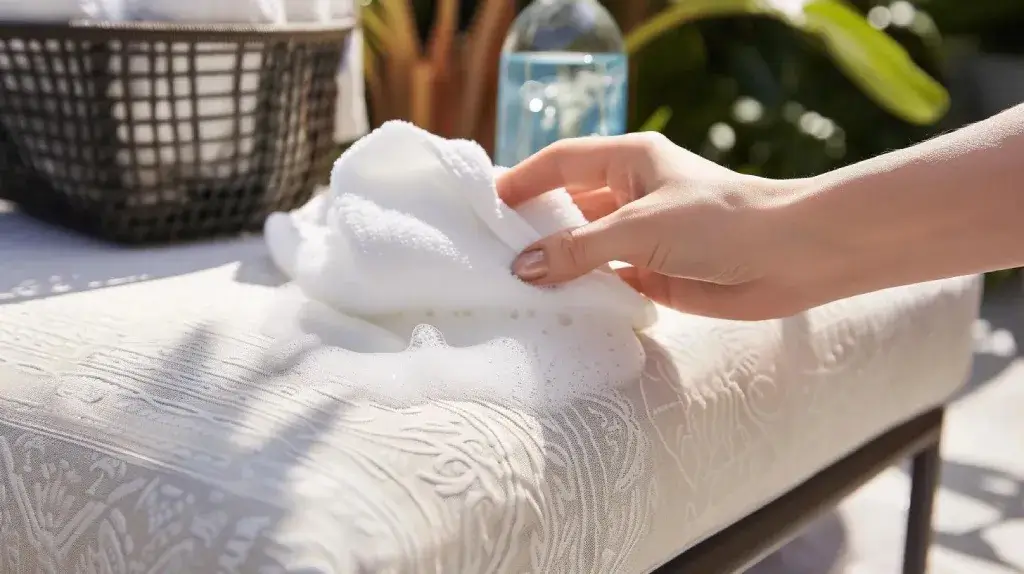
Deep cleaning is an absolute necessity at the start of the warm season, again at the end of the season before storage, and whenever routine cleaning fails to adequately remove embedded stains or lingering musty odors. The exact application method varies critically depending on the chemical composition of your fabric.
Deep Cleaning Sunbrella Fabric (The Gold Standard)
Authentic Sunbrella is remarkably the most forgiving performance fabric to clean, and notably, it is the only fabric type that is entirely safe to undergo a full, undiluted bleach treatment without sustaining permanent color loss.
- Remove the fabric cover from the internal pillow insert if your pillows have zippers.
- Prepare the cleaning solution: mix 1 cup of chlorine bleach + ¼ cup of mild liquid dish soap + 1 gallon of cold water in a large bucket.
- Apply the solution generously to the entire fabric surface using a soft-bristle brush or a heavy-duty spray bottle.
- Allow the active solution to sit undisturbed on the fabric for exactly 15 minutes — but do not let it dry out in the sun.
- Agitate the surface gently with your soft-bristle brush, meticulously working in overlapping circular motions to lift embedded grime.
- Rinse thoroughly with a garden hose until every trace of soap residue is completely gone. This step is critical: leftover soap residue actively attracts dirt and feeds future mildew growth.
- Allow the covers to air dry completely before reassembling the pillows.
Machine wash option: Remove the cover, place it in a protective mesh laundry bag, wash in cold water on a gentle cycle, adding mild soap. NEVER put Sunbrella in the dryer, as high heat destroys its water-repellent finish. Always air dry.
Deep Cleaning Solution-Dyed Polyester
While slightly less rugged than acrylic Sunbrella, solution-dyed polyester is safer for the environment and still highly effective when cleaned correctly without the use of harsh chlorine.
- Mix 1 generous scoop of oxygen bleach (such as OxiClean or an equivalent peroxide-based cleaner) into 1 gallon of warm water until fully dissolved.
- Submerge the unzipped covers entirely, or apply the solution generously to the pillow surface if the covers are non-removable.
- Let the fabric soak for 30 minutes to lift deep stains, tree sap, or general seasonal grime.
- Scrub gently with a soft brush, paying special attention to thick seams, piped edges, and zippers where dirt accumulates.
- Rinse thoroughly with a hose, executing multiple passes to ensure all oxygenated bubbles are cleared.
- Air dry vertically in a well-ventilated, shaded area.
Important Note: Do NOT use chlorine bleach on this fabric. Oxygen bleach lifts stubborn stains through a safe chemical oxidation process, not through corrosive chlorine action, making it perfectly safe for preserving the vibrancy of dyed polyester.
Deep Cleaning Standard Printed Polyester
This is the most delicate of all common outdoor fabric types. You must avoid bleach of any kind—both chlorine and oxygen-based—as it will aggressively strip the printed pattern from the textile.
- Mix exactly 1 teaspoon of mild dish soap + 1 tablespoon of white distilled vinegar into 1 quart of cold water.
- Apply the mixture sparingly with a soft white cloth, carefully working from the outside edges of any stain toward the center. Never scrub outward, which only serves to spread the stain wider.
- Rinse with cold hose water immediately. Do not allow the soap and vinegar mixture to sit and dry on the delicate print.
- Repeat the localized process if needed for particularly stubborn areas.
- Air dry completely in the shade to prevent the sun from fading the weakened, wet print.
Deep Cleaning Marine-Grade / Vinyl Covers
Marine-grade vinyl requires a completely different approach. You must never fully submerge these pillows, and you must never put them in a washing machine, as the plasticized coating will crack, warp, and permanently delaminate.
- Wipe the entire surface firmly with a clean, damp cloth and a few drops of mild soap only.
- For stubborn scuff marks or sticky sap: use a very small amount of isopropyl rubbing alcohol on a white cloth. Always test this on a hidden bottom area first to ensure it doesn't strip the topcoat.
- Rinse the area thoroughly by wiping it down with a fresh, clean, damp cloth.
- Dry manually with a clean, soft towel — vinyl fabrics dry almost instantaneously when wiped.
Deep Cleaning Linen-Poly Blend Outdoor Covers
Linen-blend outdoor fabrics offer a beautiful, natural aesthetic but are by far the most susceptible to structural shrinkage, wrinkling, and permanent texture damage if handled roughly.
- Hand wash the covers only in a basin of cold water, utilizing a very minimal amount of mild, pH-neutral soap.
- Do not wring or twist the wet fabric. Instead, press the water out gently by sandwiching the cover flat between two highly absorbent dry towels.
- Reshape the cover while it is still damp, stretching it gently back to its original square dimensions, and air dry it flat on a clean towel in complete shade.
- If machine washing is completely unavoidable: use cold water only, select the most delicate cycle available, turn off the spin cycle, and remove the covers immediately upon completion.
THE RINSE TEST
After comprehensively cleaning any outdoor pillow, lightly run your bare hand across the damp fabric. If the material feels even slightly slippery or slimy to the touch, there is still soap residue remaining within the weave. You must rinse it again thoroughly. Residual soap is one of the absolute top causes of accelerated mold growth on outdoor fabrics, as the sticky residue actively creates an organic food source for airborne mildew spores.
Learn how inserts affect comfort in our best pillow inserts guide.
Outdoor Pillow Stain Removal: Specific Solutions for Every Problem
Not all patio stains are created equal. Different organic and chemical stains respond to entirely different, highly specific treatments. You must match the chemical treatment to the exact stain type for the best, most flawless results.
MOLD & MILDEW (MOST COMMON)
Treatment for Sunbrella: Utilize the full bleach solution (1 cup chlorine bleach + ¼ cup mild soap + 1 gallon cold water). Apply it generously, wait 15 minutes, scrub the spores, and rinse.
Treatment for all other polyesters: Use a strong OxiClean solution followed by a pure white vinegar rinse. The vinegar's natural acidity effectively kills the underlying mildew spores at the root, which simple soap alone cannot address.
Prevention: Always store your pillows bone dry. Never trap outdoor pillows under a non-breathable plastic tarp, which creates a greenhouse effect.
SUNSCREEN & BODY OILS
Treatment: Apply an absorbent powder like cornstarch or baking soda first — sprinkle it generously over the greasy spot, let it actively absorb the oil for 30 minutes, then brush it completely away. Follow immediately with a concentrated dish soap solution (dish soap is chemically formulated specifically to cut through heavy grease and oils). Rinse thoroughly.
Key note: Do NOT scrub oil stains immediately when you spot them. Scrubbing forcibly drives the liquid oil much deeper into the fabric's core fiber. Always absorb the excess first, then proceed to clean.
BIRD DROPPINGS
Treatment: You must allow the dropping to dry completely and harden first. Never attempt to wipe or clean wet bird droppings, as they will instantly smear and dye the fabric. Once entirely dry, carefully scrape off the solid, caked residue using a dull plastic edge (an old credit card works perfectly). Then apply a standard mild soap solution and rinse. For bleach-safe Sunbrella, a highly dilute bleach solution will safely remove any lingering acidic discoloration.
FOOD & DRINK SPILLS
Treatment: Blot the spill immediately with a clean, dry white cloth — never rub or grind. Apply cold water instantly to dilute the sugary liquid. Follow up with your standard mild soap solution. For dark tannin stains (such as red wine, coffee, or iced tea): use a white wine or cold water dilution first, then apply an OxiClean paste for standard polyester, or a dilute chlorine bleach spray for Sunbrella fabrics.
RUST STAINS (FROM METAL FURNITURE FRAMES)
Treatment: Rust is notorious as one of the most difficult, stubborn outdoor stains to conquer. You must apply a commercial rust remover specifically formulated for delicate fabrics (such as Rust-Oleum Fabric Rust Remover) strictly following the product's packaging instructions. Do not use bleach on rust — chlorine bleach actually chemically bonds with iron oxide and can permanently, irreversibly set the stain into a much darker brown hue.
GREEN ALGAE / HEAVY POLLEN
Treatment: For authentic Sunbrella: use the standard dilute bleach solution. For all other non-bleach fabrics: create a 50/50 white vinegar solution (1 cup white distilled vinegar + 1 cup cold water). Apply it generously and leave it to penetrate for 10 minutes. The strong acidity naturally dissolves the sticky algae and powdery pollen residue without aggressively bleaching the underlying fabric dye.
NEVER MIX BLEACH AND VINEGAR
NEVER MIX BLEACH AND VINEGAR together under any circumstances. These two common household cleaning agents combine chemically to create highly toxic, extremely dangerous chlorine gas. You must rinse all vinegar residue completely away with water and allow the fabric to fully dry before ever applying any bleach-based solution — and vice versa.
How to Clean the Pillow Inserts (Not Just the Covers)
Most outdoor cleaning guides mistakenly stop at the decorative cover. But the internal insert is a sponge that holds trapped moisture, invisible mold spores, and musty odors that absolutely no amount of surface cover cleaning can address. Putting a freshly washed cover over a dirty insert re-contaminates your beautiful covers within a matter of days.
Polyester & Quick-Dry Inserts (Standard Outdoor)
These inserts must be hand washed only in a large tub or clean bathtub filled with cold water and a very small amount of mild, suds-free soap. Squeeze the insert gently to push the soapy water through the core — never fiercely wring, fold, or twist the insert, as this irreversibly damages the internal fiber structure and permanently ruins the pillow's plump shape. Rinse repeatedly until the water runs completely, flawlessly clear. This may easily take 5 to 8 full rinse cycles. The rinsing stage is the most critical: trapped, hidden soap is the absolute number one cause of persistent, sour mildew odor in outdoor inserts. Dry the insert completely before reinserting it into the cover — this requires a minimum of 24 to 48 hours of exposure in warm, open air.
When Inserts Cannot Be Saved
If the insert still smells sharply musty after a full washing and thorough drying cycle, if it displays visible, dark black mold penetration deep into the white core, or if the loft has permanently collapsed into a flat, lumpy pancake, you must throw it away and replace it rather than attempting to re-cover it. A brand-new outdoor insert typically costs only $8 to $20 and physically transforms the look and comfort of the pillow instantly.
THE SMELL TEST
After your washed insert has dried completely (waiting a full 24+ hours), press your face firmly into the thickest center of the pillow and take a deep, sharp breath. If you detect even a hint of a musty, earthy, or sour odor, the aggressive mold is still alive and present in the core. You must repeat the wash cycle with added vinegar, or simply discard and replace the insert entirely.
Drying Your Outdoor Throw Pillows: The Step Most People Get Wrong
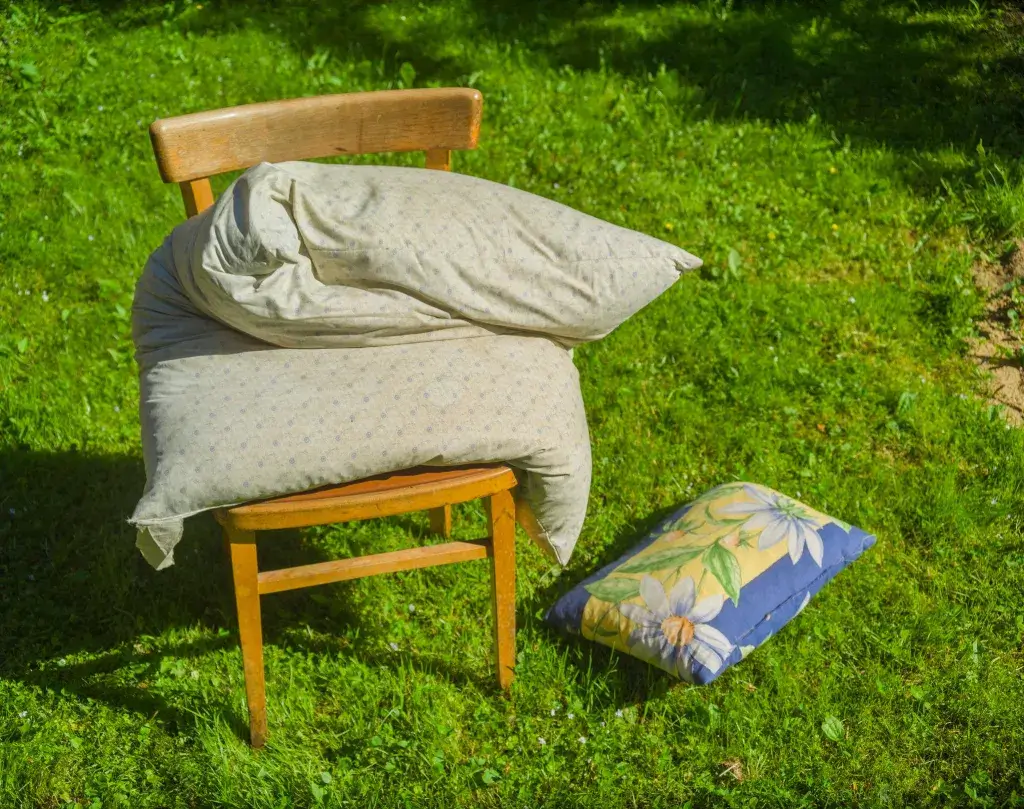
The drying stage is the critical juncture where most well-meaning homeowners inadvertently undo all their hard cleaning work. Improper, rushed drying is the single leading environmental cause of immediate, rampant mold regrowth on freshly cleaned outdoor pillows.
Always Air Dry — Never Use a Dryer
The intense, concentrated heat from a mechanical tumble dryer actively melts and destroys the vital DWR (Durable Water Repellent) chemical coating applied to performance outdoor fabrics, permanently and irreversibly reducing their essential water resistance. The high heat can also cause the covers to shrink slightly, rendering them impossibly difficult or frustrating to re-fit over their plump inserts without tearing the zipper.
Dry Vertically, Not Flat
Always stand the damp pillows on their thin edges or strategically prop them vertically against a sunny wall, chair, or fence in a position that allows ambient airflow to reach all large surfaces simultaneously. Laying them flat on a table forces water to pool heavily in the dense center of the pillow, creating precisely the stagnant, dark moisture conditions that opportunistic mold spores eagerly thrive in.
Dry in Shade, Not Direct Sun
While natural UV light from the sun does possess mild, beneficial antibacterial properties, drying wet fabrics in intense, direct baking sunlight also rapidly fades and physically weakens outdoor fabrics — yes, even high-end solution-dyed ones — over repeated washing cycles. For the absolute best, longest-lasting results, dry your pillows in open, breezy shade with excellent cross-ventilation.
The 24-Hour Rule for Inserts
Never mistakenly reinsert a freshly washed cover over a damp outdoor insert until that insert has dried in the open air for an absolute minimum of 24 hours. Press your hand firmly into the center of the bare insert — if it feels even slightly cool to the touch, it still contains trapped internal moisture. Reinstating a tight cover over a damp insert is the fastest, most guaranteed way to cultivate a thriving mold colony inside your pillows.
How to Prevent Mold and Mildew on Outdoor Pillows
In the world of outdoor textiles, prevention is dramatically easier, cheaper, and less frustrating than heavy chemical treatment. Adopting these five straightforward habits will confidently eliminate 90% of your seasonal mold and mildew risk.
- Never leave your outdoor pillows lying flat face-down on your patio furniture after a rainstorm — stand them upright immediately so the water can effectively drain out of the bottom seam.
- Apply a high-quality fabric protector spray (such as Scotchgard Water & Sun Shield or 303 Fabric Guard) generously at the start of each summer season, and proactively reapply it every 6 to 8 weeks for maximum defense.
- Store your pillows in breathable cotton pillowcases or ventilated mesh bags when they will not be in use for more than 3 days — never seal them in airtight plastic garbage bags, which actively breed humidity.
- Rotate and air out your pillows weekly — lift them entirely off the furniture and stand them in the open, breezy air for 2 to 3 hours to allow the trapped underside to breathe.
- Rinse them immediately after heavy swimming pool exposure — the harsh chlorine residue from pool water accelerates fabric fiber breakdown and actually promotes rapid mold growth when chemically combined with sticky sunscreen residue.
THE BEST INVESTMENT FOR OUTDOOR PILLOW LONGEVITY
A single $15 bottle of premium 303 Aerospace Fabric Guard applied at the start of the season brilliantly repels water, body oil, heavy sunscreen, and sticky environmental contaminants all season long. It is undeniably the single highest-return, most effective maintenance investment you can possibly make for the lifespan of your outdoor textiles.
Explore our outdoor tropical pillows guide for durable options.
When to Clean — and When to Simply Replace
Sometimes, no amount of rigorous scrubbing can save a pillow. Knowing when to walk away saves you hours of frustrating, fruitless labor.
Clean your pillows if:
- The mildew is strictly surface-level (visible as light spots on the fabric, but with no deep, musty core smell).
- The accidental stains are relatively fresh, occurring less than 6 months ago.
- The internal insert still possesses strong structural integrity (it actively bounces back when heavily compressed).
- The outer fabric still retains solid color integrity (there is no significant, patchy fading or bleaching).
Replace your pillows entirely if:
- The insert smells persistently musty even after a full, rigorous washing and a complete 48-hour drying cycle.
- Thick, dark mold is visibly growing INSIDE the white insert core when the decorative cover is unzipped and removed.
- The fabric suffers from permanent, patchy UV bleaching across more than 20% of its total surface area.
- The fabric itself feels structurally brittle, crumbly to the touch, or has naturally developed tiny, worn pinholes from prolonged sun rot.
THE INSERT-FIRST RULE
When in doubt about a pillow's salvageability, always replace the inexpensive insert first ($8–$20) and thoroughly clean the existing cover before deciding whether to throw it all away. A brand-fresh, plump insert placed inside a well-cleaned cover almost always looks and feels completely brand new — at a mere fraction of the total replacement cost.
End-of-Season Deep Clean and Proper Storage
The specific, deliberate actions you take as the weather turns cold determine the exact condition your pillows will be in when you excitedly unpack them the following spring. This essential process takes only 2 to 3 hours but effortlessly saves your entire outdoor collection from winter ruin.
The End-of-Season Cleaning Process
- Perform a full, rigorous deep clean (using the method appropriate to your specific fabric type) — absolutely never put pillows into winter storage without washing them first, as invisible sweat and oils will rot the fabric over the winter.
- Treat any minor or major stains before storage — stains that are allowed to sit and cure all winter long will become permanently bonded to the fibers by spring.
- Ensure the covers AND the internal inserts are completely, 100% bone dry before storage (requiring a 48+ hour air dry minimum in a warm room).
- Apply a fresh coat of fabric protector spray to the clean covers right before packing them away.
Storage Best Practices
- Always store the covers and inserts completely separated when possible — fold the covers neatly in a breathable cotton pillowcase or canvas bag; leave the bulky inserts standing upright in a large, ventilated storage bin.
- Store your collection in a cool, dry indoor location (like a finished basement or a climate-controlled closet) — never leave them in a sealed outdoor plastic deck box, which aggressively traps fluctuating humidity and guarantees spring mold.
- Add a small, inexpensive silica gel desiccant packet to each storage bag to actively absorb any hidden, residual moisture.
- Clearly label the outside of the storage bags with the exact pillow dimensions to ensure exceptionally easy, frustration-free reassembly when spring finally arrives.
THE NEWSPAPER TRICK
Before packing them away, stuff a dry, crumpled piece of standard black-and-white newspaper deep inside each stored insert. The highly porous newspaper actively absorbs ambient moisture and musty odors naturally throughout the long winter, keeping the bulky inserts smelling wonderfully fresh through months of dark, stagnant storage.
Frequently Asked Questions
Can you machine wash outdoor throw pillows?
You can machine wash the covers only — and strictly only for certain high-durability fabric types. Authentic Sunbrella covers can be safely machine washed on a gentle, cold cycle. Solution-dyed polyester covers can also be machine washed on cold delicate. However, you must never machine wash the internal inserts — the fierce mechanical agitation destroys the internal fiber structure, causes terrible lumping, and leads to severely uneven drying. Always air dry your covers; never put them in a hot tumble dryer.
How do you get mold off outdoor pillows?
For bleach-safe Sunbrella fabric: mix a potent solution of 1 cup chlorine bleach + ¼ cup mild soap + 1 gallon of cold water, apply it generously, wait exactly 15 minutes, scrub the spots gently, and rinse thoroughly. For standard polyester fabrics: use a robust OxiClean oxygen bleach solution followed separately by a white vinegar rinse. Never mix liquid bleach and vinegar together — you must rinse the fabric completely between applications to avoid toxic fumes.
Can you use bleach on outdoor pillows?
You can safely use chlorine bleach only on authentic Sunbrella (solution-dyed acrylic) fabric. Sunbrella is chemically engineered from the thread up to be completely bleach-safe. Utilizing chlorine bleach on standard printed polyester, however, instantly destroys the colorful dye and creates permanent, ruined bleach stains. Gentle oxygen bleach (like OxiClean powder) is the safe, preferred alternative for the vast majority of non-Sunbrella outdoor fabrics.
How often should you clean outdoor throw pillows?
You should perform a quick routine hose-down weekly to remove dust. Execute a mild soapy wipe-down every 2 weeks during periods of highly active use. A full, rigorous deep clean is required at the start of the season, occasionally mid-season (if heavy soiling occurs), and absolutely at the season's end before storage. Always perform localized stain treatment immediately upon occurrence — never, ever allow organic stains to sit and permanently set in the hot sun.
How do you dry outdoor throw pillows after cleaning?
You must always air dry them naturally — never utilize a mechanical tumble dryer, which melts water-repellent coatings. Stand the damp pillows vertically on their edges (not laying flat) in a spot of open shade that receives excellent ambient airflow. Allow the thin covers roughly 4 to 6 hours to dry, and give the dense inserts a strict minimum of 24 to 48 hours. Do not reassemble the pillows until both individual components are completely, undoubtedly dry straight through to the very center.
Proper cleaning and drying are the difference between outdoor pillows that last one season and those that look fresh for years.