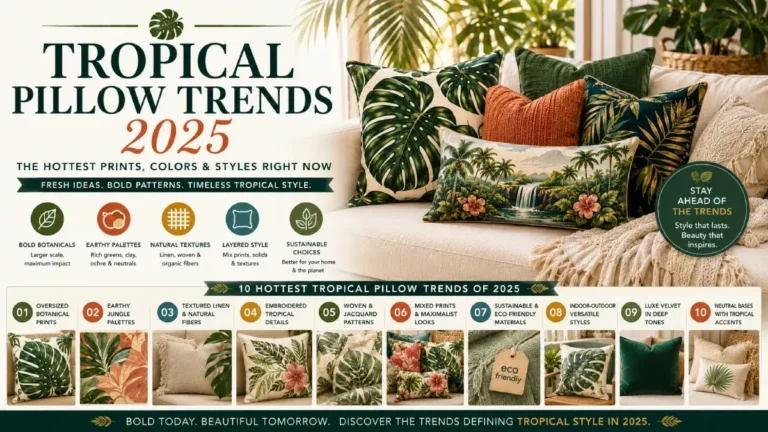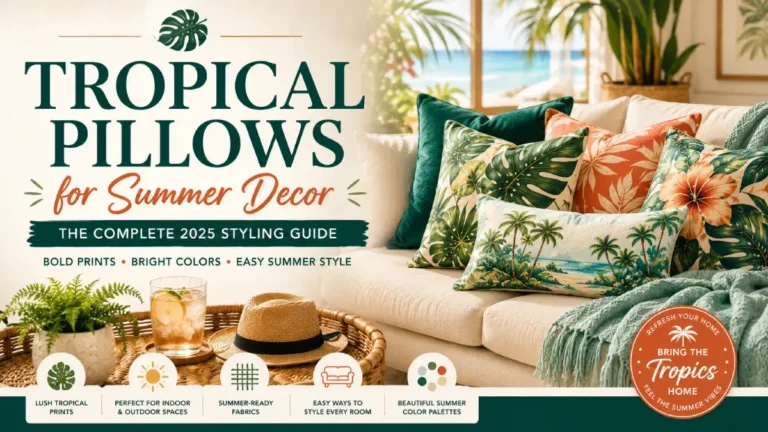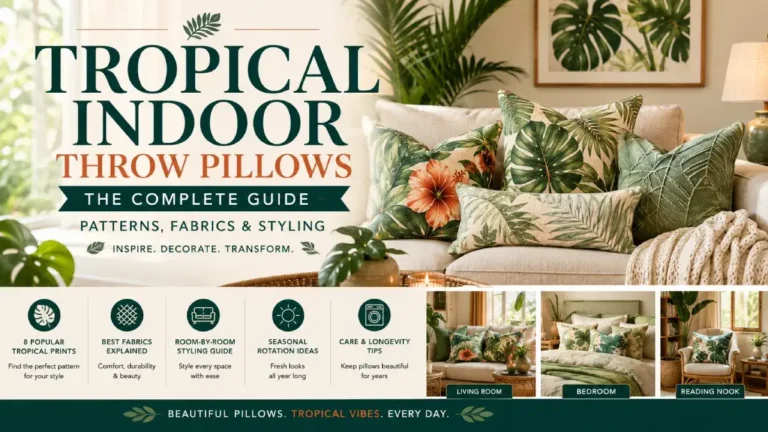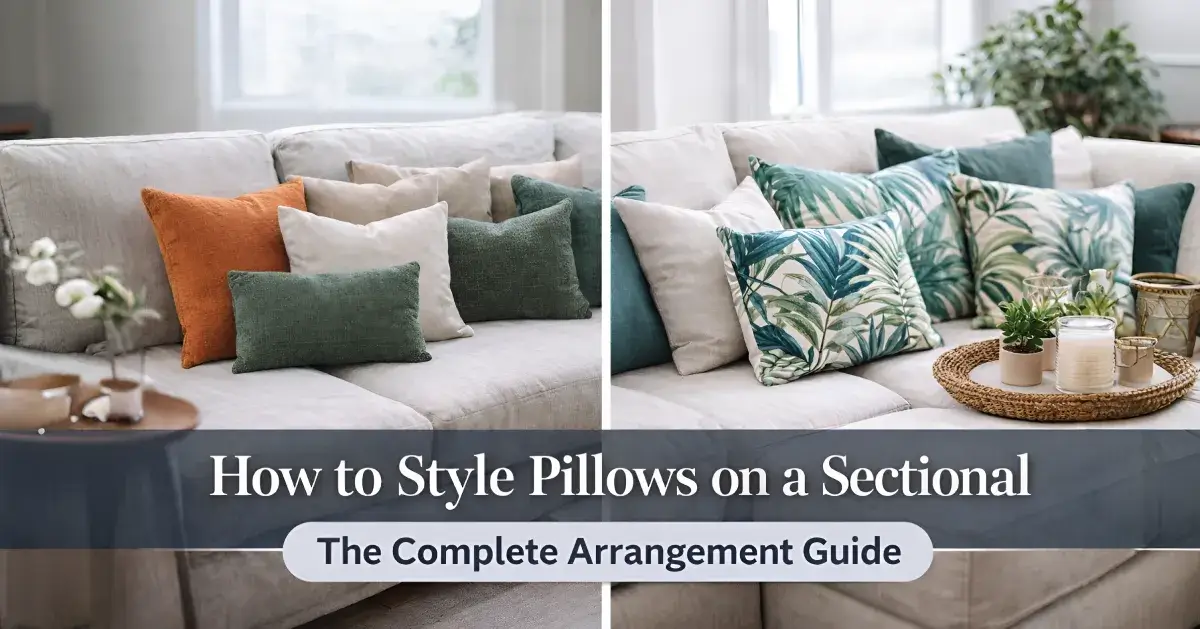
Of all the furniture pieces in a home, the sectional sofa presents the most complex and rewarding canvas for throw pillow styling. Its sheer scale, its sprawling L-shaped or U-shaped footprint, and its signature corner seat create a highly specific set of aesthetic challenges that standard sofa pillow rules simply don't address. Placed incorrectly, too few pillows leave the sectional looking bare, abandoned, and underfurnished. Too many, and it becomes an intimidating fabric fortress that no one actually wants to sit on. The immense scale of this furniture demands a completely different, highly strategic approach.
Unlike a straightforward three-seat sofa—where placing five pillows symmetrically is almost always the right, reliable answer—a sectional requires deliberate “zone thinking.” You are no longer styling one unified sofa; you are effectively styling two or three distinct seating zones that must feel entirely cohesive while each maintaining their own internal visual logic. Getting this delicate balance right transforms the sectional from an overwhelming, blocky challenge into the most inviting, statement-making piece of furniture in your entire home.
In this complete, authoritative guide, we break down exactly how to style pillows on a sectional using five proven, professional arrangement formulas. We will provide specific, actionable advice on pillow counts, sizes, color harmonization, conquering the notoriously tricky corner seat, and discovering how vibrant tropical prints can elevate the entire setup to designer-level status.
WHY SECTIONALS ARE DIFFERENT
A standard three-seat sofa is roughly 84 inches wide. An L-shaped sectional averages 110–140 inches across its longest face alone. That is nearly double the blank canvas—which means the traditional rules of scale, pillow quantity, and zone thinking must be completely recalibrated to ensure the furniture doesn't look swallowed by fabric or left completely barren.
Know Your Sectional Type Before You Style It
Before choosing or purchasing a single pillow, it is crucial to accurately identify which specific type of sectional you own. Each configuration has a fundamentally different zone structure and requires a markedly different styling approach to achieve visual harmony.
L-Shaped Sectional
The most common sectional type found in homes today. It consists of a long main sofa side and a shorter perpendicular section meeting seamlessly at a 90-degree corner. This creates two distinct zones: the long back and the short arm. The corner seat is the primary focal point and the main challenge area. Total recommended pillow range: 6–9.
U-Shaped Sectional
Comprised of three connected sides forming a massive U-shape. This configuration is most common in large media rooms, basement lounges, and expansive open-plan living areas. It features three distinct seating zones plus two internal corners to manage. It naturally requires the most pillows of any sofa type. Total recommended pillow range: 9–14.
Sectional with Chaise
Essentially a standard sofa featuring an extended, backless lounging section replacing the final end seat. The chaise side is a dedicated “relaxation zone”—different pillow logic applies here. You must use fewer pillows to maintain the lounge function, focusing entirely on comfort and bolster support. Total recommended pillow range: 5–8.
Modular / Curved Sectional
Modular pieces can be frequently rearranged, while curved sectionals create a flowing, continuous semi-circular line without sharp corners. Highly symmetrical pillow arrangements work particularly well on curved sectionals, naturally following the organic bend of the furniture. Total recommended pillow range: 6–10 depending on the exact configuration.
STYLING FOR THE SIGHTLINE
Before buying pillows, photograph your bare sectional from the room's main entrance. This is the critical view your guests always see first. You must style for this specific sightline—not just for how it looks when you are standing directly in front of it or sitting on it. The pillows should draw the eye comfortably into the room.
How Many Pillows Does a Sectional Actually Need?
The eternal question of quantity depends heavily on the sectional's overall size, depth, and specific configuration—but there is a highly reliable framework interior designers use. Use the comprehensive table below as your baseline starting point, then adjust slightly based on your specific sectional's depth and your household's tolerance for moving pillows.
| Sectional Type | Minimum | Ideal | Maximum |
|---|---|---|---|
| Small L-shape (under 110″) | 5 | 7 | 9 |
| Standard L-shape (110″–130″) | 6 | 8 | 10 |
| Large L-shape (130″+) | 7 | 9 | 12 |
| Sectional with Chaise | 5 | 6 | 8 |
| U-Shaped | 9 | 11 | 14 |
| Modular/Curved | 6 | 8 | 10 |
Note: These are decorative pillow counts only. They absolutely do not include the functional, matching seat or back cushions that are physically built into the sectional structure. Always err toward the ‘Ideal' column rather than pushing the maximum limit to maintain seating viability.
THE ZONE RULE
Count your sectional's distinct seating zones—typically 2 for an L-shape, 3 for a U-shape. Then systematically allocate 3 to 4 pillows per zone as your baseline, adjusting carefully for scale. A massive 7-seat L-shape may comfortably accommodate 4 per zone; a compact 4-seat apartment L-shape may only need 3 per zone to look beautifully full.
What Size Pillows Work Best on a Sectional Sofa?
Size selection for sectionals follows one rigid, unbreakable principle above all others: you must go bigger than you think. The sheer, overwhelming scale of a sectional actively dwarfs standard pillow sizes. A standard 16×16 pillow that looks perfectly appropriate and stylish on a petite vintage loveseat becomes completely lost, looking like a tiny afterthought on a deep-seat sectional.
THE FOUNDATION SIZE: 20X20 MINIMUM
For the vast majority of standard sectionals, a 20×20 pillow should be the absolute smallest square pillow in your arrangement—not the largest. Deep-seat sectionals (those measuring 36 inches or deeper from front to back) look markedly best with 22×22 as the primary foundational size, utilizing 20×20 only as the front accent layer.
OVERSIZED ANCHORS: 22X22 AND 24X24
The corner seat—the cavernous intersection of the L—desperately needs the largest pillow in the entire arrangement. A massive 22×22 or 24×24 placed here provides the heavy visual “anchor” the corner seat naturally demands. It also physically fills the deep corner space much more effectively, completely reducing that characteristic shadowed, deflated corner look.
THE LUMBAR IS NON-NEGOTIABLE ON A SECTIONAL
On a sprawling sectional, lumbar pillows serve a crucial, dual purpose extending far beyond mere aesthetics: they provide genuine, necessary lower back support on the longer seating run, where guests tend to sit back deeply and lounge rather than perch politely. A beautifully patterned 14×22 lumbar resting on the long side of an L-shape is both visually striking and functionally essential.
| Sectional Section | Recommended Size | Purpose |
|---|---|---|
| Corner seat (anchor) | 22×22 or 24×24 | Visual anchor, fills corner depth perfectly |
| Long back section | 20×20 (primary), 22×22 (deep seat) | Main decorative pillows, structural base |
| Short arm section | 18×18 or 20×20 | Accent pillows, lighter visual scale |
| Center of long run | 14×22 lumbar | Center focal point, ergonomic back support |
| Chaise end | 18×18 single or lumbar | Comfort accent, avoids cluttering lounging area |
5 Proven Pillow Arrangement Formulas for a Sectional
Rather than guessing and constantly rearranging, use one of these five rigorously tested, professional arrangement formulas. Each formula is meticulously designed for a specific sectional type and a distinct decorating goal. The diagrams below provide a text-based representation of exactly how pillows should be positioned to achieve flawless visual balance.
Formula 1 — The Classic Gradient (7 Pillows)
Pillows systematically decrease in size from the corner outward, creating a beautiful, natural gradient effect. The corner anchor is the largest; the far arm ends are the smallest. This gives the sectional a highly relaxed, organic quality—as if the pillows were naturally, effortlessly gravitating toward the cozy corner.
[LONG SECTION — left to right]
Position 1 (far left end): 20×20 Print A
Position 2: 22×22 Solid B — CORNER ANCHOR
Position 3: 22×22 Print C (corner seat)
[SHORT SECTION — top to bottom]
Position 4: 20×20 Solid D
Position 5: 18×18 Print E
Position 6: 14×22 Lumbar (center, long side)
Position 7: 18×18 Texture F (far right end)
Key rules: The corner commands the two largest pillows. The lumbar sits prominently on the long run. There is strict pattern/solid/texture alternation maintained throughout the setup.
Formula 2 — The Mirror (8 Pillows)
Each arm of the L perfectly mirrors the other in terms of size, shape, and pattern. The corner holds one massive, singular statement pillow. This creates a highly intentional, meticulously polished look that is absolutely perfect for formal living rooms or homes leaning toward a more traditional, tailored aesthetic.
[Both sections mirror each other from the corner outward]
Far ends (x2): 18×18 Solid (identical pair)
Mid position (x2): 20×20 Print (identical pair)
Corner (x1): 24×24 Statement Anchor (single)
Lumbars (x2): 14×22 (one on each section, perfectly symmetrical)
Key rules: Identical pillows must sit in mirror positions. The corner gets the boldest, most dramatic single piece. Two matching lumbars provide the final touch of rigid symmetry.
Formula 3 — The Island (6 Pillows)
Each arm of the L perfectly mirrors the other in terms of size, shape, and pattern. The corner holds one massive, singular statement pillow. This creates a highly intentional, meticulously polished look that is absolutely perfect for formal living rooms or homes leaning toward a more traditional, tailored aesthetic.
[SOFA SECTION]
Corner: 22×22 Anchor
Back row: 20×20 Print + 20×20 Solid
Center: 14×22 Lumbar
[CHAISE SECTION — minimal intentionally]
Near chaise end: 18×18 single accent
Far chaise end: Optional bolster (6×16) for neck support
Key rule: Do not over-pile the chaise—it completely kills the lounging function. One single accent pillow is usually enough; two is the absolute maximum.
Formula 4 — The Zone Method (11 Pillows)
Rigorously divide the immense U-shape into three highly distinct zones (Left Wing, Base, Right Wing). You must style each zone independently as if it were a mini sofa—then ensure all three connect seamlessly through a meticulously shared color story.
[LEFT WING — 3 pillows]
End: 18×18 Texture
Center: 20×20 Print A
Corner: 22×22 Solid Anchor
[BASE — 3 pillows]
Left: 20×20 Print B
Center: 14×22 Lumbar (focal point of entire U)
Right: 20×20 Solid
[RIGHT WING — 3 pillows, mirror of left]
Corner: 22×22 Solid Anchor (matching left corner)
Center: 20×20 Print A (matching left center)
End: 18×18 Texture (matching left end)
Plus: 2 additional accent pillows tucked at base corners for softening.
Key rule: The horizontal Lumbar resting in the Base center is the single most important pillow in the entire U arrangement—it confidently anchors the whole sprawling design.
Formula 5 — The Tropical Layered (9 Pillows)
This lush formula is specifically designed to maximize the impact of tropical and botanical interiors. It relies on utilizing three distinct print scales (large, medium, and small) alongside deep textures and grounding solids, creating a richly layered, immersive arrangement that feels exactly like a highly curated jungle.
[LONG SECTION]
Far end: 18×18 Small print (micro-botanical)
Next: 22×22 Large tropical print (oversized monstera or sweeping palm)
Corner: 24×24 Oversized solid ANCHOR (deep teal or warm coral)
[SHORT SECTION]
Corner side: 22×22 Medium print (Bird of Paradise or vibrant hibiscus)
Center: 14×22 Lumbar (woven rattan texture or rich solid)
Far end: 20×20 Textured (heavy velvet solid or Jacquard weave)
Extra layer: 18×18 Small accent nestled at the junction of both sections.
Key rules: The three distinct print scales must all share at least one unifying color. A heavy solid anchor at the corner expertly grounds the wild arrangement. A heavily textured lumbar actively prevents pattern overload.
THE TROPICAL PILLOW RULE ON SECTIONALS
Never, under any circumstances, place two large-scale botanical prints directly next to each other. You must always separate bold, noisy prints with a calming solid or a heavy texture to give the eye a place to rest. The master formula is: print → solid → print → texture → print → solid → texture.
The Corner Seat: How to Solve the Sectional's Biggest Challenge
The deep internal corner of an L-shaped sectional is simultaneously the single most commonly styled area of the entire piece—and by far the most commonly done wrong. It acts as the undeniable visual focal point of the sectional while also functioning as the most physically awkward, cavernous seating position. If left empty, it looks like a black hole. If overstuffed, it looks like a laundry pile.
The root of the problem is straightforward: standard 18×18 pillows placed in the corner look comically small and lost because the corner seat is effectively much wider and deeper than any standard pillow can possibly fill. The deep, square-shaped depression at the intersection desperately demands a radically different geometric approach to look intentional.
SOLUTION 1 — THE OVERSIZED SINGLE
Place one massive 24×24 or 26×26 pillow squarely in the dead center of the corner. Its tremendous size fills the gaping space confidently, completely eliminates the “lost in the corner” problem, and acts as the natural, undeniable anchor for all surrounding pillows. Use your boldest, most dramatic pattern or your most striking, deeply saturated solid color here.
SOLUTION 2 — THE DOUBLE STACK
Place two standard 20×20 pillows overlapping slightly in the corner—one angled to face down the long section, one angled to face down the short section. This effectively fills the awkward corner void while maintaining a strict, pleasing scale consistency with the rest of the sofa's arrangement.
SOLUTION 3 — LEAVE IT OPEN (INTENTIONAL MINIMALISM)
In much more casual, deeply cushioned sectionals (like cloud sofas), leaving the corner intentionally clear creates an incredibly inviting, nest-like seat. The other pillows frame it beautifully on the sides; the empty corner becomes an open invitation to dive in. Add one single, small 16×16 accent pillow only to soften the seam.
ANCHOR THE CORNER
Whichever specific corner solution you choose to deploy, always ensure you use your largest or boldest pillow right there. The corner acts as the visual anchor of the entire sectional—the human eye naturally travels to it first before scanning the rest of the room. Make it count.
Color and Pattern Strategy: Avoiding Visual Chaos on a Large Sectional
The primary challenge of a sectional is that its massive scale actively amplifies everything. Minor color mistakes or slight pattern clashes that are barely noticeable on a petite two-seat sofa rapidly become overwhelmingly loud across nine feet of continuous L-shaped fabric. Control is essential.
THE 3-COLOR RULE FOR SECTIONALS
To maintain elegance, choose three colors maximum for your pillow scape: one dominant color (which usually ties closely to the sectional's own fabric color), one secondary color (a recurring accent tone spread across 3 to 4 pillows), and one pop color (which appears dramatically on 1 to 2 pillows only). Utilizing any more colors than this guarantees the sectional becomes visually chaotic and disjointed at this scale.
THE PATTERN RATIO: 60/30/10
Stick to 60% solid or subtle texture pillows, 30% medium-scale pattern, and exactly 10% bold statement print. This proven ratio ensures the sprawling sectional feels incredibly rich and thoughtfully layered without becoming overwhelming. The single bold tropical print occupying that 10% slot (typically sitting proudly as the corner anchor) becomes a genuine, curated feature rather than just visual noise.
CONNECTING BOTH ARMS WITH COLOR
The most common and jarring mistake on L-shapes is styling it so the two arms look like they belong to completely different sofas. Solve this visual break by strictly repeating at least one identical pillow color (not necessarily the same pillow pattern) on both the long and short sections. This color thread visually and psychologically unifies the entire massive piece.
THE CONNECTOR PILLOW
Choose one solid-colored or heavily textured pillow and repeat it on both sections of your L-shape—literally using exactly the same pillow twice. This single, deliberate repeat creates the strong visual thread that effortlessly ties both distinct arms together into one cohesive, brilliantly designed piece of furniture.
Styling Tropical Pillows on Your Sectional: A Natural Partnership
The sectional sofa is arguably the most ideal canvas for tropical pillow styling in the entire home. Its generous, sweeping scale can comfortably accommodate the large, dramatic botanical prints that so often get sadly cropped and lost on smaller, traditional sofas. A magnificent monstera print that barely fits on an 18×18 is utterly stunning when allowed to breathe at 22×22 on a deep-seat sectional corner.
SCALING UP THE TROPICAL PRINT
The fundamental rule of tropical sectionals: you must use at least one 22×22 tropical print as the primary focal anchor on any standard arrangement. At this expansive size, a lush palm frond can sweep fully and beautifully across the pillow face; a vibrant Bird of Paradise stem proudly shows its complete, dramatic, uncut composition to the room.
THE TROPICAL PALETTE ON A LARGE CANVAS
Vibrant tropical color palettes work extraordinarily well across a large sectional because the immense scale allows for a genuine, unfolding color story rather than a compressed color clash. A row of deep navy base pillows, plus two vibrant teal accent pillows, plus one warm coral pop, plus one bold tropical botanical print creates a high-end, resort-quality arrangement that tells a deeply cohesive visual story.
MIXING TROPICAL WITH NATURAL TEXTURES
On a massive sectional, bold tropical prints desperately need grounding to prevent them from floating away visually. You must pair large botanical prints with raw, natural woven textures—a heavy rattan Jacquard, a chunky natural linen, an intricate velvet emboss—to prevent the arrangement from feeling purely, artificially decorative and entirely disconnected from the room's core furniture materials. For more living room ideas, see our Best Tropical Throw Pillows for Living Rooms guide.
How to Style an Outdoor Sectional with Tropical Pillows
Outdoor sectionals follow the exact same core arrangement principles and formulas as indoor ones, but with two highly critical additions: absolutely all pillows must be crafted from purpose-built outdoor performance fabrics, and the total number of pillows should be slightly reduced to properly account for harsh weather exposure and practical, daily handling.
Key differences when moving your sectional outdoors include using premium Sunbrella or solution-dyed acrylic fabrics exclusively to prevent rapid UV fading. You should actively reduce your pillow count by 1 to 2 pillows versus an indoor equivalent setup, as outdoor furniture handles far more rough wear and tear. Prioritize quick-dry inserts over plush down-comfort inserts to prevent mold. Crucially, the corner anchor rule applies even more strongly outdoors—a massive, bold 22×22 tropical print in bright Sunbrella fabric makes an otherwise drab outdoor corner look professionally designed and highly inviting. For complete outdoor guidance, refer to our Best Outdoor Tropical Pillows for Patios and Decks.
OUTDOOR BOLDNESS
Outdoor sectionals placed in lush tropical or patio settings are where maximum boldness is heavily warranted. Go at least one full shade bolder and brighter on your outdoor choices than you ever would indoors—abundant natural sunlight and the vast open sky naturally wash color out. What feels almost too bright in a store will look ‘just right' on your sunny deck.
Your Sectional Pillow Styling Checklist
Before you finalize your sectional pillow arrangement and consider the job done, run swiftly through this professional checklist. It takes exactly two minutes and is guaranteed to catch 90% of the most common styling errors.
- Have you confidently identified your sectional type and verified the correct pillow count range for it?
- Is your foundational base pillow size 20×20 or larger (22×22 if you have deep-seats)?
- Does the deep corner seat currently hold the absolute largest and/or boldest pillow in the entire arrangement?
- Have you explicitly included at least one lumbar pillow on the longest seating section?
- Are you currently using an odd total number of pillows across the whole sectional?
- Do you have at absolute minimum two entirely different pillow sizes in play?
- Are all the pillows beautifully connected by at least one shared, unifying color?
- Have you varied the tactile texture—not just the flat pattern or the base color?
- Is the arrangement smartly split between prints and solids/textures (ensuring no more than 60% are patterned)?
- Can you clearly identify three or more comfortable seating positions without having to move any pillows?
THE FINAL POLISH
If you answer ‘no' to any of the questions above, stop and address that single item before changing absolutely anything else. In our extensive experience, items 3 (missing a corner anchor), 4 (forgetting a lumbar), and 10 (cramming too many pillows) are the three most commonly failed checks that ruin otherwise beautiful setups.
Frequently Asked Questions
How many throw pillows should be on a sectional sofa?
For a standard L-shaped sectional, 7 to 9 decorative pillows is considered the ideal, professional range. The absolute minimum is 5 (for much smaller apartment configurations); the maximum is around 12 for a massive U-shape. Use the designer Zone Rule: allocate 3 to 4 pillows per distinct seating zone and adjust slightly for the scale of your specific room.
What size pillows look best on a sectional?
20×20 should be your minimum base size on any standard sectional. For deep-seat sectionals (those measuring 36 inches or deeper), use 22×22 as the primary foundational size. Always, without exception, use your absolute largest pillow—22×22 or 24×24—tucked directly at the corner seat to serve as a robust visual anchor.
How do I style the corner of a sectional?
You have three distinct options: (1) Use one oversized 24×24 to 26×26 statement pillow as a single, massive corner anchor; (2) Use two overlapping 20×20 pillows, angled with one facing each direction down the arms; or (3) Leave it intentionally open with a single small 16×16 accent. Because the corner is the focal point of the sectional, you must always use your boldest piece here.
Should I use the same pillows on both sections of an L-shaped sectional?
You should not use completely identical pillow arrangements, but you absolutely should repeat at least one specific color across both sections. This creates a psychological and visual “thread” that unifies both distinct arms and prevents the sectional from looking like two mismatched, random sofas clumsily pushed together.
Is it OK to have 10 pillows on a sectional?
On a very large L-shape (130 inches or longer) or an expansive U-shape, yes—10 to 12 pillows can work beautifully if they are properly arranged in zones and scaled appropriately so they don't look like clutter. The ultimate test is functional: can three or more people sit down comfortably without displacing any pillows? If yes, your count is perfectly appropriate.
Can tropical prints work on a sectional?
Tropical prints actively thrive on sectionals. The larger physical canvas means bold, sweeping botanical prints can be shown at their full, uncropped scale—a gorgeous 22×22 monstera print on a deep-seat sectional is dramatically more impactful than the exact same print cropped onto a smaller sofa. Use the Tropical Layered formula (Formula 5) for the absolute best result.
How do I make a gray sectional look more tropical?
A standard gray sectional is actually the ideal neutral base for vibrant tropical accents. Add two deep teal (20×20) anchor pillows, one boldly scaled tropical botanical print at 22×22 in the corner, one warm coral lumbar in the center, and one woven natural texture (like rattan or jute). The gray beautifully recedes into the background and the tropical palette pops dramatically against it.
Style Your Sectional with Confidence
A massive sectional sofa is not a styling obstacle to be feared—it is an incredible design opportunity waiting to be maximized. Its generous, sprawling scale accommodates exactly what smaller, traditional sofas simply cannot: the dramatically oversized botanical print, the richly layered zone arrangement, and the bold, heavy corner anchor that effortlessly makes a room feel complete. Armed with the five proven arrangement formulas, the specific corner solutions, and the strict color strategy outlined in this comprehensive guide, you possess everything you need to entirely transform your sectional from a basic furniture purchase into the breathtaking, defining statement piece of your home. Carefully choose your preferred formula, commit fully to grounding the corner anchor, and let your vibrant tropical palette do the rest.
Explore our complete, detailed tropical pillow guides below to confidently find the perfect pillows, dimensions, and inserts for your newly styled sectional masterpiece.