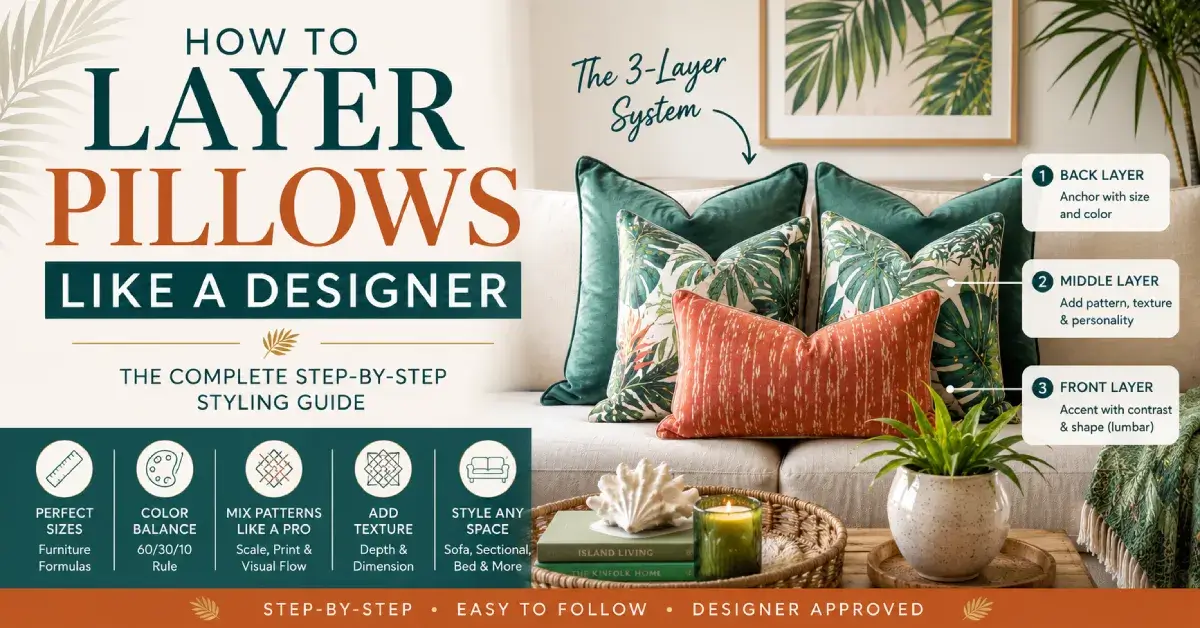
Have you ever purchased a set of stunning, high-quality throw pillows, brought them home, placed them on your sofa, and felt entirely underwhelmed by the result? You are not alone. One of the most common frustrations in home decorating is the disconnect between how beautiful a pillow looks in a store and how flat and lifeless it looks in a living room. The reason why most people's pillows look “off” is incredibly simple, yet often overlooked: the secret is never about the individual pillows themselves. The secret is entirely about intentional, methodical layering.
Professional interior designers do not just toss cushions onto furniture and hope for the best. They follow a specific, highly structured, and entirely learnable process to create those lush, inviting arrangements you see in luxury magazines and high-end resorts. Layering is a strategic formula that perfectly balances dimensions, colors, patterns, and textures to create a cohesive visual story.
In this comprehensive 2025 styling guide, we are going to pull back the curtain and teach you the exact framework professionals use to layer pillows. We will cover strict rules for sizing, precise quantity guidelines, color hierarchy, the art of pattern mixing, and the critical importance of texture layering. Whether you are styling a standard sofa, a massive sectional, a primary bed, or outdoor seating, this guide will equip you with the definitive 3-layer system needed to transform your space into a designer-quality sanctuary.
What “Layering” Actually Means
Before diving into the formulas, we must clarify the definition of the term itself. Layering is the process of creating deliberate visual depth through structured variation. It is the sophisticated interplay of different elements stacked front-to-back to draw the eye in and create a sense of luxurious abundance. Layering is decidedly NOT just “piling pillows on” a piece of furniture until there is no room left to sit.
Consider a flat, boring arrangement: three identical 18×18 pillows placed in a neat row across a sofa. Even if the fabric is expensive and the print is beautiful, the arrangement feels completely static and one-dimensional because there is no hierarchy. Now, contrast that with a properly layered arrangement: large, solid-colored velvet pillows anchoring the back corners, slightly smaller botanical prints sitting just in front of them, and a textured, fringed lumbar pillow resting proudly in the center. The layered arrangement possesses movement, shadow, contrast, and architecture. It invites you to sink into it, which is the ultimate goal of any well-designed space.
The Designer's 3-Layer System
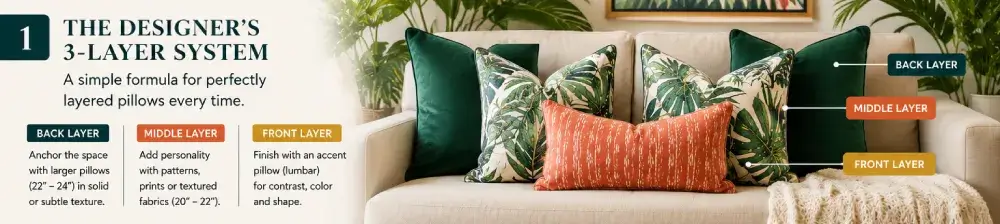
The foundation of all professional pillow styling is the 3-Layer System. Regardless of whether you are working with a cozy loveseat or an expansive L-shaped sectional, you will almost always utilize this three-tiered approach to build your arrangement from the back to the front.
LAYER 1 — THE FOUNDATION (Back Row)
These are the largest pillows in your arrangement, typically measuring 22×22 or 24×24 inches. You should always use an even number of foundation pillows (usually 2 or 4, depending on sofa size). These pillows must feature solid colors or very subtle, tonal textures. Because they take up the most visual real estate, these pillows set the room's dominant color. Designer tip: your foundation pillows should match or closely complement the color of your sofa to create a seamless, cohesive base that anchors the rest of the arrangement.
LAYER 2 — THE CHARACTER (Middle Row)
Sitting directly in front of the foundation pillows are your character pillows, usually sized at 18×18 or 20×20 inches. This middle layer is exactly where your pattern, print, or boldest color lives. If you love botanical prints, bold geometric shapes, or vibrant tropical patterns (like sweeping palm leaves, dense monstera foliage, or vivid hibiscus florals), this is where you showcase them. Because they are framed by the solid foundation pillows behind them, these prints are allowed to shine without overwhelming the space. This is the most expressive layer of the entire arrangement.
LAYER 3 — THE ACCENT (Front/Center)
The final layer sits at the very front of the stack. This is typically a 14×18 (or 12×20) lumbar pillow, or occasionally a single, smaller 16×16 accent square. The accent layer introduces the most unexpected element of the design—a bright pop of contrasting color, intricate embroidery, heavy fringe, or a highly tactile woven texture. This single, final piece acts as the jewelry of the room; it is the crowning touch that makes the entire arrangement look deliberately “finished” rather than thrown together.
For exact dimensions, see our throw pillow size guide.
The Golden Rules of Pillow Layering
Once you understand the 3-Layer System, you must apply the following non-negotiable rules to ensure the execution is flawless. Designers instinctively follow these principles on every single project.
- Always use ODD numbers of distinct pillow types (but EVEN numbers within each size). An odd number of total pillows (like 3, 5, or 7) creates a relaxed, inviting asymmetry that the human eye finds incredibly pleasing. However, for balance, you use even pairs for the back and middle layers, leaving the odd-numbered single pillow (the lumbar) for the center front.
- Scale down front to back — always largest at back, smallest at front. Placing a small pillow behind a large one completely defeats the purpose of layering, as the smaller pillow gets visually swallowed. Always respect the sizing hierarchy.
- Every arrangement needs at least 3 different textures. If all your pillows are smooth cotton, the arrangement will look incredibly flat. You must mix materials like velvet, linen, woven rattan-effect, and embroidered fabrics to create necessary visual friction.
- Follow the 60/30/10 color rule (dominant/secondary/accent). Ensure 60% of your pillow colors are a grounding neutral or dominant shade, 30% are a rich secondary color, and 10% is a bright, energetic accent pop.
- At least one pillow must share a color with something else in the room. To prevent the arrangement from looking like it was parachuted in from another house, tie the pillow colors to your area rug, curtains, artwork, or accent chairs.
- Never mix more than 3 different pattern scales (large/medium/small). Mixing a massive palm leaf print with another massive floral print creates exhausting visual chaos. Balance large prints with medium geometrics and small, subtle tonal textures.
- The lumbar pillow is non-negotiable — it completes every arrangement. The elongated, rectangular shape of a lumbar pillow breaks up the repetitive square shapes of the foundation and character layers, providing critical visual relief.
- Leave breathing room — don't fill every inch of sofa real estate. Your sofa is primarily for sitting, not just for displaying pillows. Leave the center seating cushions clear to invite people to actually use the furniture comfortably.
Learn more in our tropical color palette guide.
5 Proven Layering Formulas by Furniture Type
Different pieces of furniture require distinctly different approaches to pillow quantity and scale. Below are five proven, fail-safe designer formulas that you can copy exactly for your own home.
1. Standard Sofa (84–90″)
The classic, balanced 5-pillow arrangement that works in nearly every living room setting. Layer symmetrically from the outside corners inward.
- 2 × 22×22 solids (back corners) — dominant color
- 2 × 20×20 bold prints (in front of back pillows) — character
- 1 × 14×22 lumbar (center) — accent
Total: 5 pillows.
2. Large Sofa / Sectional Corner
Sectionals demand larger scale and higher quantity to prevent the pillows from looking dwarfed by the massive footprint of the furniture.
- 2 × 24×24 (deep corners) — anchor
- 2 × 22×22 (in front) — secondary
- 2 × 20×20 prints (front layer) — character
- 1-2 × lumbar — accent
Total: 7–8 pillows.
3. Loveseat (60–72″)
Because space is tight, symmetry can feel too rigid. An asymmetrical approach is perfect for making a loveseat feel modern and spacious.
- 2 × 20×20 back pillows — dominant
- 1 × 18×18 print — character
- 1 × 12×20 lumbar — accent
Total: 4 pillows (2+1+1 asymmetric).
4. Queen / King Bed
Bed layering relies heavily on architectural height. You must use Euro shams to build a tall, commanding backdrop against the headboard.
- 2–3 Euro shams 26×26 (back) — architectural
- 2 standard shams 20×26 (in front) — clean transition
- 2 × 20×20 decorative prints — character
- 1–2 × lumbar or accent — final focal
Total: 7–10 pillows.
5. Outdoor Sectional
Outdoor spaces require slightly different rules. Colors should be brighter, and fabrics must be robust. Always use slightly larger pillows outdoors.
- 2 × 24×24 (back/anchor) — weather-resistant solid
- 2–4 × 20×20 (middle) — bold outdoor prints
- 1–2 × outdoor lumbar — accent
Total: 5–8 pillows. (Use solution-dyed fabrics only).
Explore weather-resistant options in our outdoor tropical pillows guide.
Mastering Color Layering
Applying the 60/30/10 color rule specifically to your pillow arrangement is the fastest way to achieve a curated, professional look. Color layering dictates that you do not use equal amounts of every color in your palette. Instead, you create a distinct hierarchy that guides the eye smoothly across the furniture.
In a standard 5-pillow arrangement, your 60% dominant color is represented by your two large foundation pillows. This color usually matches your sofa or serves as a soft, grounding neutral. Your 30% secondary color—perhaps a rich teal, deep jungle green, or sophisticated navy for tropical rooms—is represented by your two character pillows. Finally, your 10% accent color—a bright coral, pineapple yellow, or vivid hibiscus pink—makes its sole appearance in your single, center lumbar pillow.
FOR TROPICAL ROOMS
To achieve the ultimate tropical resort aesthetic on a neutral sofa, use deep navy and rich teal as your 60% and 30% colors for the back and middle layers. Then, use vibrant coral as your 10% accent pop for the lumbar pillow. The printed character pillow in the middle layer should ideally contain ALL three of these colors, acting as the perfect visual bridge that ties the entire arrangement together.
Pattern Mixing Like a Pro
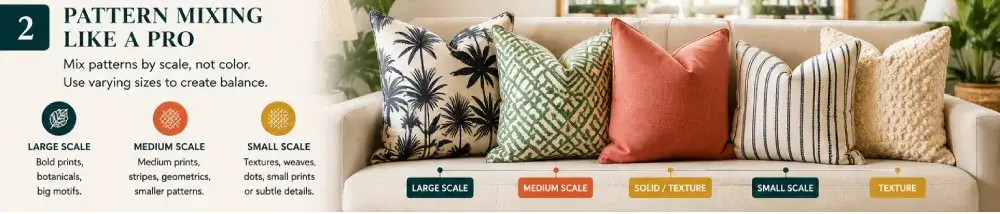
Many people find mixing patterns intimidating, often resulting in either playing it too safe with all solids or creating visual chaos with clashing prints. The designer's secret to pattern mixing lies entirely in scale variation. You must mix patterns at three distinct scales: Large, Medium, and Small/Textural.
A large-scale pattern might be a massive, sweeping banana leaf or an oversized botanical print. A medium-scale pattern could be a structured geometric trellis, a classic cabana stripe, or a smaller, tighter floral motif. A small-scale pattern reads almost as a solid from a distance—think of a subtle herringbone, a tiny dot, or a tight woven texture. The golden rule is that you must NEVER use two large-scale prints in the same pillow arrangement. They will aggressively fight for dominance and exhaust the viewer's eye.
LET YOUR BOLDEST PRINT LEAD
When building a layered arrangement, always choose your favorite, boldest pattern first (this will be your Layer 2 character pillow). Once you have selected this “hero” fabric, pull its specific colors out and use them to choose your solid foundation pillows and your textural accent pillows. The hero print dictates the rest of the design.
Avoid styling errors with our throw pillow mistakes guide
Texture Is Your Secret Weapon
Texture is arguably more important than color when it comes to creating a luxurious, layered look. Texture creates depth, casts tiny shadows, and catches the light differently as the day progresses. Even if every single pillow on your sofa is exactly the same color, varying the texture will ensure the arrangement still looks incredibly dynamic and expensive.
In tropical design, relying on a diverse mix of textures is paramount for authenticity. Ideal texture combinations for island-inspired rooms include plush velvet (which adds deep richness and luxury), natural linen or nubby cotton (which provides a casual, organic, breathable feel), woven rattan-effect or jute-style fabrics (which deliver authentic island rawness), and heavily embroidered or tufted details (which add a touch of artisan craftsmanship). Mixing a smooth velvet foundation pillow with a crisp linen print and a heavily textured, fringed lumbar guarantees a masterfully layered result.
How to Layer Pillows on a Bed
Styling a bed requires a slightly different approach than a sofa because you must account for sleeping pillows and a much larger, deeper surface area. The goal is to create an inviting, plush slope that naturally draws the eye from the headboard down to the foot of the bed.
The front-to-back hierarchy for a perfectly layered bed is strict: Euro shams in the back, standard shams in the middle, decorative throw pillows next, and a final lumbar in the very front. Euro shams (26×26) are essential because they create vital architectural height, masking the gap between the mattress and the headboard. Standard shams act as a clean transition, while the decorative pillows introduce your bedroom's color scheme. The front lumbar is the jewelry of the bed arrangement. Crucially, you should never use your actual sleeping pillows as part of the decorative arrangement; either tuck them neatly behind the Euro shams or lay them flat beneath the decorative layers to keep the aesthetic pristine.
The Perfect Tropical Bed
For an instantly relaxing, luxury-resort feel, start with a pristine white duvet cover. Place two oversized, botanical palm-print Euro shams against the headboard. Layer one soothing, solid sage-green linen standard sham in front of each Euro. Finish the look with a single, heavily textured coral or woven rattan lumbar pillow perfectly centered at the front.
See our best tropical throw pillows for bedrooms guide.
Tropical-Specific Layering Techniques
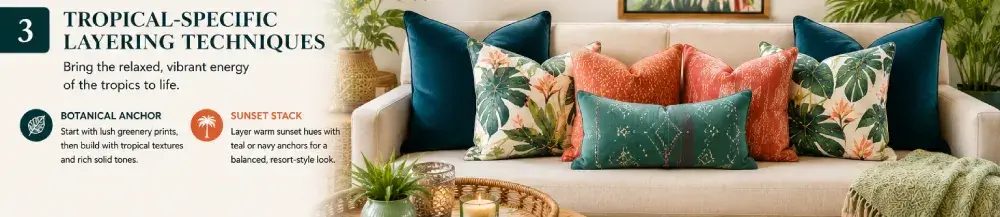
While the core rules of layering apply to every interior design style, there are a few specific techniques that elevate tropical pillow styling to the next level. Embracing these targeted strategies ensures your room feels like an elegant coastal retreat rather than a generic living space.
First, rely on The Botanical Anchor. To successfully pull off a tropical aesthetic, you must always include at least one botanical print (such as monstera leaves, classic palm fronds, or banana leaves) within your character layer (Layer 2). This print instantly establishes the theme without requiring you to paint the walls green. Second, try The Sunset Stack: placing a vibrant coral lumbar in the front, a deep ocean-teal 20×20 in the middle, and a grounding navy 22×22 in the back creates an instant, emotionally resonant island vibe reminiscent of a Caribbean sunset.
Third, heavily mix natural textures. The tropics are defined by organic materials. Combining a woven rattan-effect pillow with a crisp printed linen and a smooth velvet solid perfectly captures the diverse landscape of an island environment. Furthermore, as a quick Tropical Palette Reminder, always ensure you anchor your brights with neutrals, relying heavily on color combinations like “Island Paradise” or “Resort Luxe” detailed in our color palette guide. Finally, as an Outdoor Tropical Tip: go one size larger outdoors. Start with a 22×22 minimum on outdoor sectionals; bright, tropical colors look significantly more vibrant and intentional when washed in natural sunlight, so the larger scale helps them stand out beautifully.
Common Layering Mistakes to Avoid
Even with the best intentions, it is easy to accidentally ruin an arrangement by ignoring the fundamentals. Keep this quick checklist in mind when styling your pillows to avoid the most common pitfalls that make a sofa look amateurish.
- All pillows the same size — This creates zero visual hierarchy and makes the arrangement look like a rigid, flat wall of fabric rather than a plush, inviting nest.
- All pillows matching as a set — Buying five identical pillows looks mass-produced and overly manufactured, completely destroying the desirable “curated over time” designer look.
- Skipping the lumbar — An arrangement composed entirely of squares often looks boxy and incomplete. The elongated shape of a lumbar pillow provides necessary visual relief.
- Too many large-scale prints — Mixing massive florals with massive geometric shapes results in exhausting visual chaos, leaving the eye with absolutely no place to rest.
- Forgetting texture — Even a flawlessly executed color scheme will look dull, flat, and inexpensive if all the pillows are made from the exact same smooth cotton material.
- Pillows too small for furniture — Tiny 16×16 pillows on a massive, deep-seated sectional look completely out of place. When in doubt, always size up, never down.
Frequently Asked Questions
How many layers of pillows should I use?
You should almost always use 3 distinct layers (back/foundation, middle/character, front/accent) regardless of the size of your furniture. Whether you are styling a loveseat or a massive sectional, you maintain the 3-layer depth; you simply scale the total quantity of pillows up or down to match the width of the seating.
Can I mix different pillow sizes?
Yes—in fact, you absolutely MUST mix different pillow sizes. Size variation is the number one rule of professional layering. Your back pillows should always be the largest (22×22 or 24×24), stepping down to medium squares (20×20), and finishing with a smaller lumbar in the front.
Do all pillows need to match?
No. Perfectly matching pillow sets actually look dated and mass-produced. The goal of high-end interior design is to achieve a “collected over time” look. Your pillows should be highly coordinated through a shared color palette, but their patterns, textures, and sizes should be distinctly different.
How do I layer pillows on a sectional?
The easiest way to style a sectional is to treat each distinct seating zone as its own separate sofa. Apply Formula 2 (the anchor formula) to the deep main corner of the sectional, and then apply a simplified, asymmetrical version (3–4 pillows) to the ends of the chaise or the extended seating arm.
What is the easiest way to start layering?
Begin with one bold, multi-colored botanical print pillow that you absolutely love. Pull two or three specific colors directly from that print, and find solid, highly textured pillows in those exact shades to act as your foundation. Add one lumbar pillow in a contrasting accent color. Done—that is a perfectly layered arrangement built around a single piece of inspiration.
Elevate Your Space with Intentional Layering
Pillow layering is an incredibly impactful, highly learnable skill, not an inherent talent. Anyone who diligently follows the 3-layer system, respects size hierarchy, intentionally varies their textures, and strictly uses the 60/30/10 color rule will produce a designer-quality result every single time. Best of all, tropical pillows are particularly forgiving because their bold, vibrant prints naturally do much of the heavy decorative lifting for you. Commit to the formulas, embrace the mix of patterns, and start transforming your furniture into lush, inviting island sanctuaries today.