
Even the most beautiful throw pillows eventually run into problems. A gorgeous tropical pillow that looked perfect on day one can turn flat, develop a musty smell, lose its vibrant color, or sprout pills on the fabric surface within months — especially if you do not know how to properly care for and troubleshoot them. Physical wear and tear is an inevitable part of living in your home, but it does not mean your decorative pillows are destined for the trash.
The good news is that the vast majority of pillow problems are entirely fixable without spending a single cent on expensive replacements. This comprehensive guide covers 10 of the most common throw pillow problems — focusing intensely on physical issues like flat inserts and lumpy fills, to visual material problems like fading and pilling — along with tested, practical fixes for each one. Whether your tropical throw pillows are looking limp, smelling slightly off, or just not holding their shape the way they used to, you will find the exact solution here. Think of this as your definitive pillow doctor manual.
| Issue | Difficulty | Cost |
|---|---|---|
| Flat Pillows | Easy | $ |
| Lumpy Fill | Easy | $ |
| Fading | Medium | $$ |
| Mildew | Medium | $$ |
| Pilling | Easy | $ |
The 10 Most Common Pillow Problems (and How to Fix Them)
Below are the most frequent physical and material complaints encountered by home decorators. Diagnose your specific issue and apply the recommended fix to restore your pillows to their original, resort-quality splendor.
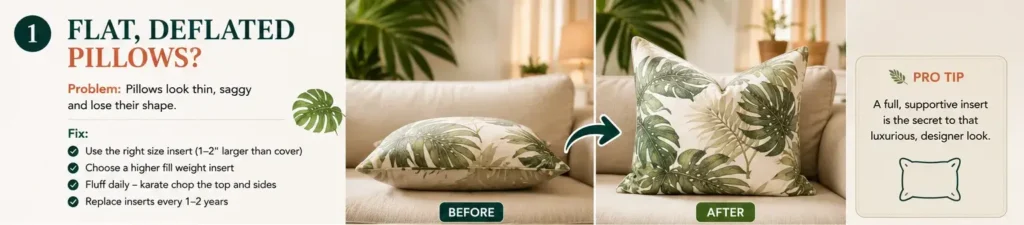
Flat, Deflated Pillows
Over-compressed inserts (especially down and standard poly-fill) lose their loft over time through regular sitting, pressing, and compressing. This is by far the most common pillow problem homeowners face. Even a premium down-filled pillow will go flat if it is never properly fluffed, or if the insert is the exact same size as the cover (or smaller). A lack of structural tension causes the insert to pancake under its own weight.
The Fix
- Fluff the insert vigorously: hold it at two diagonal corners and snap it back and forth rapidly 8–10 times to force air back in and redistribute the fill.
- “Dryer trick”: place the insert (without its cover) in a dryer on LOW heat for 20 minutes with 2–3 clean tennis balls; the balls physically beat the fill back into a lofty shape.
- If it remains flat after cleaning: the insert has lost permanent loft. You must size up to an insert 2 inches larger than the cover (a 20×20 cover strictly needs a 22×22 insert).
- For down inserts: you can add new loose down fill through the corner zipper ($5–$12 at fabric stores) to restore original volume.
- Daily maintenance: fluff and rotate each pillow every time you sit down (it takes only 10 seconds but prevents long-term flattening).
Lumpy or Uneven Fill
Poly-fill and microfiber inserts are incredibly prone to clumping, especially after being machine washed or undergoing long-term storage in a compressed state. The individual synthetic fibers mat together into dense, hardened lumps in some areas while leaving completely hollow spots in others. Cheap poly-fill inserts priced under $8 are particularly susceptible to this because they use short-staple fibers that tangle easily.
The Fix
- Machine wash the affected insert on a gentle cycle with warm water and a very small amount of mild detergent.
- While the insert is still damp, manually break apart every lump you can feel by squeezing and separating the fill forcefully through the fabric shell.
- Dry completely in the dryer on LOW heat with 3 clean tennis balls — run the cycle for 30–40 minutes, making sure to pause every 10 minutes to manually fluff and separate fibers.
- If lumping immediately recurs after washing: the poly-fill has reached the end of its usable life. Replace the insert with a higher-quality down-alternative cluster fill ($15–$30).
- Prevention: never wring or twist a poly-fill insert to remove water; always press and squeeze gently when damp.
Pillow Cover That Doesn't Fit Properly
If your pillow cover is puckering and wrinkling at the seams, it means the insert is too small. If the pillow looks saggy and empty at the corners, the insert is too small. If the cover is bulging dangerously at the zipper, the insert is too large. This sizing mismatch is extremely common when people buy matching insert and cover sizes off the shelf, not realizing that a 1:1 ratio creates a floppy, unpolished look.
The Fix
- For puckering or saggy covers (insert is too small): replace with an insert exactly 2 inches larger than the cover measurement. A 20×20 cover always needs a 22×22 insert for a designer look.
- For covers that are extremely tight and hard to close: the insert may be slightly too large or heavily over-stuffed. Try compressing the insert deeply inside the cover and using the zipper carefully; if it still will not close comfortably without straining the seams, size down the insert by 1 inch.
- General rule: NEVER buy a same-size insert for your cover — always go 2 inches larger for poly or down-alternative fills, and 1 inch larger for dense memory foam.
Fading Colors
UV light degrades fabric dyes over time, breaking down the chemical bonds that create vibrant hues. This is especially damaging for vibrant tropical prints that rely on bold colors (bright corals, ocean teals, sunny yellows). Indoor pillows left near sunny, south-facing windows and ALL outdoor pillows are highly vulnerable. Cheap, reactive-dyed surface fabrics fade the fastest, often within a single season of exposure.
The Fix
- For indoor pillows: rotate pillow positions seasonally so no single pillow faces the window year-round; apply UV-filtering window film ($20–$40) to south-facing glass.
- For outdoor pillows: only purchase solution-dyed fabrics (like Sunbrella or solution-dyed acrylic) where the color is embedded entirely through the core of the fiber — these resist fading 5–7x longer than printed surface-dyed fabrics.
- Revive faded colors temporarily: use a fabric dye refresher spray in the nearest color match to restore some vibrancy.
- Store pillows out of direct sunlight when not in active use: even 30 minutes of intense afternoon sun daily causes visible fading within one season.
- Long-term fix for outdoor pillows: replace faded covers only (keep the internal inserts) — solution-dyed replacement covers typically cost $15–$35 each.

Pilling on Fabric Surface
Pilling occurs when short, loose fibers in woven fabric surfaces break free, tangle together, and form into small, unsightly fuzzy balls. This is most common on polyester blends, velvet, and low-quality cotton. It occurs significantly faster when two highly textured surfaces (like the back of your pillow and a rough sofa fabric) rub against each other repeatedly as people sit down and stand up.
The Fix
- Use an electronic fabric shaver/lint defuzzer ($10–$20): gently glide it across the surface in one direction — it safely shaves off all pills in minutes and can restore a nearly new appearance.
- Use a disposable shaving razor as a quick alternative: stretch the fabric taut and shave in one direction with very light pressure.
- Prevent future pilling: always place pillows with the delicate print side facing OUT (away from abrasive sofa upholstery) and rotate pillows weekly.
- For velvet tropical pillows: steam the surface gently and brush it with a soft-bristled clothes brush to revive crushed velvet and prevent pill formation.
- Long-term: invest in covers made from tightly woven, higher thread-count cotton or natural linen — they are far less likely to pill than synthetic blends.
Pillows That Won't Stay in Place
If your pillows are constantly sliding down, falling over, or slipping off the sofa entirely, friction is the culprit. Smooth sofa fabrics (like microfiber, leather, or synthetic velvet) provide zero grip for pillow bottoms. Pillows constructed with slippery polyester covers compound this sliding problem. Furthermore, undersized, underfilled inserts lack the structural weight necessary to stand upright and often collapse forward easily.
The Fix
- Apply non-slip furniture gripper tape or adhesive non-slip shelf liner (cut to small 3×3 inch squares) to the bottom back corners of each pillow — this is virtually invisible and highly effective ($6–$10 for a roll).
- Ensure inserts are properly sized (2 inches larger than covers) — a tightly filled pillow is heavier and structurally less prone to toppling.
- Lean pillows at a consistent 10–15° inward angle (never straight vertical) — a slight structural lean into the sofa back naturally prevents them from sliding forward due to gravity.
- For leather sofas: consider draping a thin, textured fabric throw across the seating area to create a grippy, welcoming surface for your pillows to rest against.
Musty or Mildew Smell
A persistent musty odor means moisture has become trapped deep within the fill. This is most commonly caused by: washing the insert and not drying it completely (even slight internal dampness leads directly to mildew within 48 hours), inadvertently leaving outdoor pillows in a heavy rainstorm, or storing seasonal pillows in humid, unventilated conditions over the winter.
The Fix
- Sprinkle the pillow generously with baking soda on all sides; let sit for 4–6 hours to absorb surface odors, then vacuum thoroughly.
- For stronger internal odors: mix 1 part white distilled vinegar with 1 part water in a spray bottle; lightly mist the INSERT (remove the cover first); air dry completely outdoors in direct sun for 6–8 hours.
- Deep clean: wash the insert in the machine on a gentle cycle using a small amount of detergent PLUS ½ cup white vinegar; dry completely in the dryer on LOW heat (run 2–3 full cycles if necessary — the insert must be bone dry to the core).
- For outdoor pillows with visible mildew: use the Sunbrella-approved mildew solution (1 cup bleach + ¼ cup mild dish soap per 1 gallon water); apply, wait 15 minutes, scrub gently, and rinse completely.
- Prevention: NEVER store pillows until they are completely dry; always store in breathable cotton bags (not plastic, which traps residual moisture).
Yellowing White or Light Pillows
White or cream-colored pillows often develop a dingy yellow cast over time. This is primarily caused by the natural oxidation of fibers, sweat and body oil transfer (especially on frequently used lumbar or sleeping pillows), and improper washing techniques—specifically using chlorine bleach on synthetic fabrics, as bleach actually causes an irreversible yellowing chemical reaction on polyester, rather than whitening it.
The Fix
- Soak the entire cover in a concentrated solution of OxiClean (NOT bleach) and warm water for 2–4 hours; subsequently wash in the machine on a warm/hot setting.
- For natural fiber covers (cotton/linen): use a lemon juice and sunlight treatment — dampen the fabric lightly with diluted lemon juice (1 part lemon to 2 parts water), then lay flat in direct sunlight for 2–3 hours for natural bleaching.
- For persistent yellowing on polyester: use a commercial whitening laundry booster specifically formulated for synthetics (like Rit Whitener + Brightener) and add it to the wash cycle.
- Prevention: wash pillow covers regularly (every 2–4 weeks for frequently used pillows) — yellowing builds up slowly over time and is much harder to reverse than to prevent through routine care.
- IMPORTANT: do NOT use chlorine bleach on polyester or synthetic-blend covers — it strips the outer coating and exposes the yellow core of the synthetic fiber.
Insert Bunching in Corners
When the corners of your pillow look empty or folded, but the center is hard and overstuffed, you have corner bunching. The most common cause is an insert that is simply too small for the cover. Alternatively, the cover might have poorly tailored diagonal seams that naturally funnel fill toward the center, or the poly-fill has clumped and migrated into one central mass after washing.
The Fix
- Size up the insert by 2 inches — a properly sized and filled insert has nowhere to migrate because it physically fills the entire interior of the cover evenly.
- After inserting the pillow: reach deep into each corner of the pillow cover from the outside and manually push the insert fill into all four extreme corners; spend at least 30 seconds massaging each corner.
- Karate chop the top edge of the pillow to force redistributed fill evenly from the top seam down toward the center and bottom.
- For down-filled inserts: shake the entire insert vigorously while it is inside the cover immediately after zipping to distribute the loose down evenly before its first use.
- DIY fix for persistent corner bunching: sew tiny diagonal stitches across each inner corner of the cover (right where the seams meet) to prevent the insert points from folding back or packing improperly.
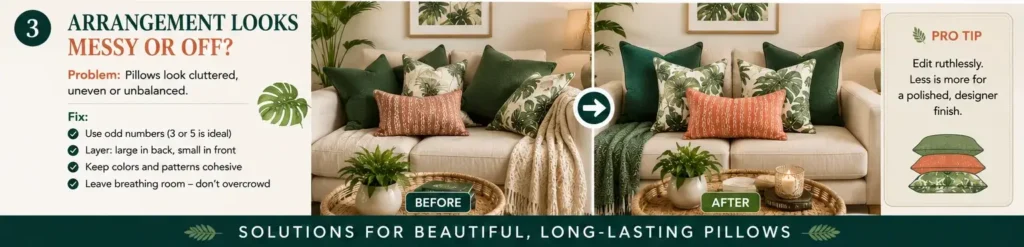
Arrangement Always Looks Messy or Off
Sometimes the pillows themselves are physically fine, but the overall presentation fails. This is a visual/styling problem, not a physical one. Common culprits include: having all pillows exactly the same size (which creates zero visual hierarchy), missing a lumbar pillow (leaving the arrangement feeling incomplete and untethered), pillows placed at random, chaotic angles, or utilizing a completely mismatched color scale that fights the room.
The Fix
- Always place pillows back-to-front, largest-to-smallest — this instantly establishes an immediate, pleasing visual hierarchy.
- Never skip the lumbar pillow — it acts as the essential visual anchor bridging the entire front-center of the sofa arrangement.
- Ensure all pillows lean at the exact same consistent 10–15° inward angle — inconsistent angles create instant visual chaos and messiness.
- Step back exactly 3 feet and evaluate the arrangement from standing height (never judge your styling from directly above or from a seated position).
- If the colors still look “off”: your printed character pillow likely doesn't contain all the other colors in the arrangement — your boldest tropical print should share at least 2 colors with your solid pillows to act as a cohesive visual bridge.
Quick-Reference Diagnosis Table
If you are unsure where to begin, use this quick-reference table for fast problem identification and immediate solution direction. Look for your specific symptom, identify the most likely root cause, and apply the quick fix.
| Problem Symptom | Most Likely Cause | Quick Fix | Status |
|---|---|---|---|
| Flat/deflated appearance | Insert too small or lost loft over time | Dryer + tennis balls; or size up insert | Fixable |
| Lumpy, uneven fill | Poly-fill clumping post-wash | Rewash + tennis ball dryer cycle | Fixable |
| Puckering cover fabric | Insert is too small for the cover | Size up insert by 2 inches | Fixable |
| Fading print colors | Excessive UV light exposure | Rotate weekly / use UV window film | Prevent |
| Pilling on fabric | Fiber abrasion and tangling | Use a fabric shaver or razor | Fixable |
| Won't stay in place | Smooth surface + wrong fill size | Non-slip liner + correct 2″ larger insert | Fixable |
| Musty or mildew smell | Trapped internal moisture | Baking soda + full heat dry cycle | Fixable |
| Yellowing fabric | Oxidation or sweat/body oils | OxiClean soak (No bleach!) | Fixable |
| Bunching in corners | Insert too small or migrated fill | Size up insert + manual corner pushing | Fixable |
| Arrangement looks off | No size hierarchy / missing lumbar | Restart with standard layering formula | Styling Fix |
When to Fix vs. When to Replace
While the vast majority of throw pillow issues can be solved with a bit of maintenance, there comes a point where cutting your losses and purchasing a replacement is the smarter, more hygienic choice. Here is a practical guide on when to keep fixing versus when to replace your items entirely.
- FIX if: The cover is still vibrant and structurally intact; the problem is purely insert-related (flat, lumpy, wrong size); the pillow smells mildly but the fabric is undamaged; or the arrangement is just styled incorrectly.
- REPLACE the INSERT if: Poly-fill continues to clump into hard balls even after 3 full wash and dry cycles; down fill has lost its permanent loft and will not revive even after a long dryer treatment; or the insert is more than 3–4 years old and receives heavy daily use.
- REPLACE the COVER if: The fabric is heavily pilling and the fabric shaver cannot restore it after 2+ treatments; fading is severe and covers at least 50% of the print surface; or the fabric has visible tears, thinning areas, or permanent, set-in staining.
- REPLACE BOTH if: Mildew has penetrated the insert deeply and a musty smell persists strongly after 2 deep-cleaning treatments; or the pillow is more than 5 years old with year-round, daily wear and tear.
Pillow Lifespan Guide
- Decorative indoor pillows (light use on accent chairs): 5–7 years
- Daily-use sofa pillows (heavy family use): 2–4 years
- Outdoor patio pillows (seasonal use, stored in winter): 3–5 years
- Outdoor patio pillows (year-round full exposure): 1–3 years
Preventing Pillow Problems Before They Start
An ounce of prevention is worth a pound of cure, especially with home textiles. You can completely avoid 90% of the problems on this list by establishing a few smart buying habits and routine maintenance rituals.
- Always buy inserts 2 inches larger than the cover measurement. This simple sizing rule prevents flat looks, bunching corners, and sagging fabrics instantly.
- Only use solution-dyed fabrics (like Sunbrella) for any pillow placed near a sunny window or used outdoors to prevent fading.
- Fluff and rotate every pillow weekly — it takes 60 seconds total and exponentially extends the life of your inserts.
- Always air-dry inserts completely and thoroughly before returning them to their covers; use 2–3 long dryer cycles if needed to prevent hidden mildew.
- Store seasonal outdoor and holiday pillows in breathable cotton bags alongside a silica gel packet, and never in airtight plastic bags that breed mold.
The Weekly 60-Second Pillow Routine
Incorporate this into your weekly tidying: Fluff all pillows aggressively (30 seconds) → re-angle them all at a consistent 15-degree inward lean (15 seconds) → karate-chop down fills gently at the top seam (10 seconds) → slightly rotate your lumbar position to prevent uneven wear (5 seconds). This microscopic routine prevents 80% of all physical pillow problems.
Frequently Asked Questions
Why do my throw pillows go flat so quickly?
This is almost always an insert sizing problem. If your insert is the exact same size as your cover (for example, putting an 18×18 insert into an 18×18 cover), it lacks internal compression and will immediately look flat when you sit against it. Always use an insert 2 inches larger than the cover to guarantee full, plush, and long-lasting results.
Can I wash throw pillow inserts in the washing machine?
Yes. Most poly-fill and down-alternative inserts are fully machine washable on a gentle cycle with warm water. The crucial step is drying: you must dry them thoroughly on low heat with 2–3 tennis balls to prevent clumping. Note: Memory foam inserts cannot be machine washed under any circumstances — hand wash and air dry those only.
How do I get rid of the musty smell in my throw pillow?
First, sprinkle the pillow generously with baking soda, let it sit for 4–6 hours to absorb moisture and odor, then vacuum it off. For stubborn, deep-set odors, remove the cover, mist the insert lightly with a 1:1 white vinegar and water solution, and let it air dry completely outdoors in direct sunlight for several hours.
Why is my white pillow cover turning yellow after washing?
Yellowing is usually caused by an accumulation of body oils, the natural oxidation of organic fibers, or—most commonly for polyester—improper bleach use. Soaking synthetic fabrics in chlorine bleach strips their finish and exposes a yellow core. Instead, soak yellowing covers in OxiClean and warm water for 2–4 hours, then machine wash. Never use chlorine bleach on polyester.
How long should throw pillow inserts actually last?
A high-quality down-alternative insert with regular daily use and proper care (frequent fluffing) lasts 3–5 years. Budget poly-fill inserts typically last 1–3 years before permanent, unfixable clumping sets in. Authentic down feather inserts are the most durable and can last 5–10 years if they are properly maintained and kept completely dry.
Conclusion
The most important takeaway for any decorator is that most throw pillow problems are not death sentences — they are simply maintenance signals. The moment a pillow goes flat, starts smelling slightly musty, or begins to look off in its arrangement, a targeted, intelligent fix can restore it completely, usually in under an hour.
The two golden principles that prevent the vast majority of all issues mentioned in this guide are correct insert sizing (always remembering to buy inserts 2 inches larger than the cover) and consistent weekly fluffing to preserve structural loft. Treat your tropical throw pillows with the same regular, thoughtful care as you would any other beloved home textile, and they will continue to deliver lush, vibrant, resort-quality style to your home for years to come.
Most pillow problems are caused by neglect, not poor quality. A few minutes of routine maintenance can keep your favorite decorative pillows looking fresh, supportive, and beautifully styled for years.