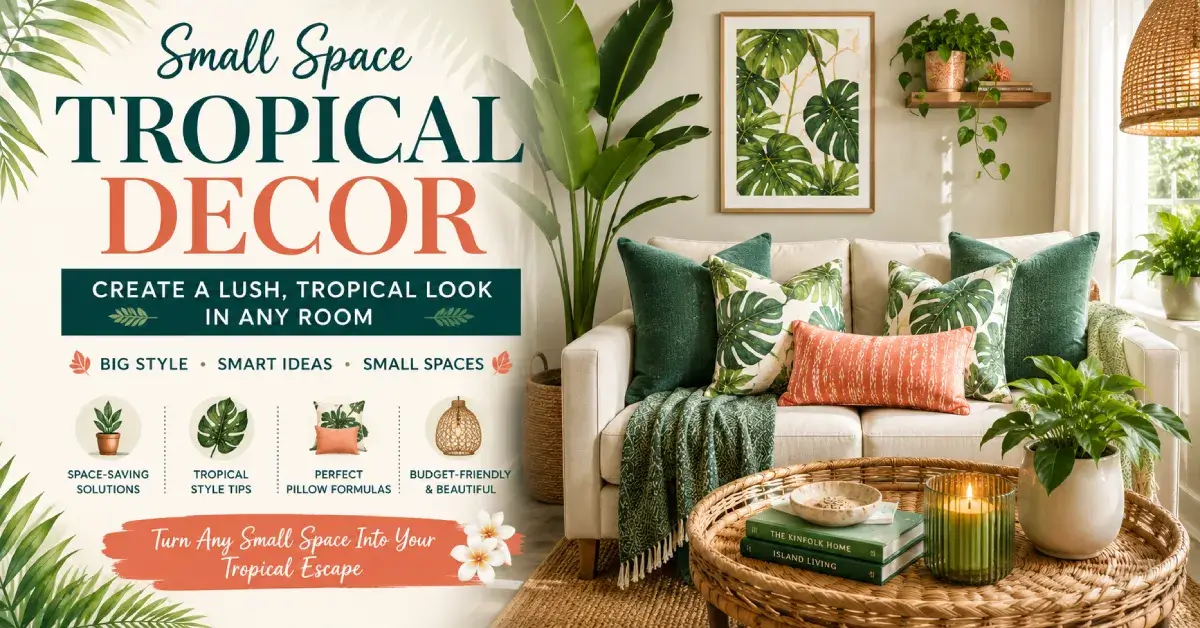
The biggest misconception about tropical decor is that it strictly requires a sprawling, open-plan villa with floor-to-ceiling windows, soaring beamed ceilings, and generous square footage. The reality of interior design is quite the opposite. Small spaces are actually ideal candidates for tropical design, because the style's signature lushness, enveloping warmth, and layered personality translate beautifully into compact rooms—when applied with the right strategy.
The core principle to master is selectivity. In a limited footprint, every single element must earn its place. A small studio apartment decorated with restraint, intention, and confidence can feel every bit as exotic, relaxing, and alive as a beachside resort. This comprehensive guide will show you exactly how to build a stunning, breathing tropical look regardless of your square footage, covering strategic color application, mastering pattern scale, utilizing clever pillow styling, room-specific tips, and budget-conscious approaches to entirely transform your compact space.
| Element | Best Choice |
|---|---|
| Base Color | Warm White |
| Accent Color | Coral / Teal |
| Pillow Count | 3 Maximum |
| Plants | Tall + Vertical |
| Patterns | One Large Print |
Why Small Spaces Are Made for Tropical Decor
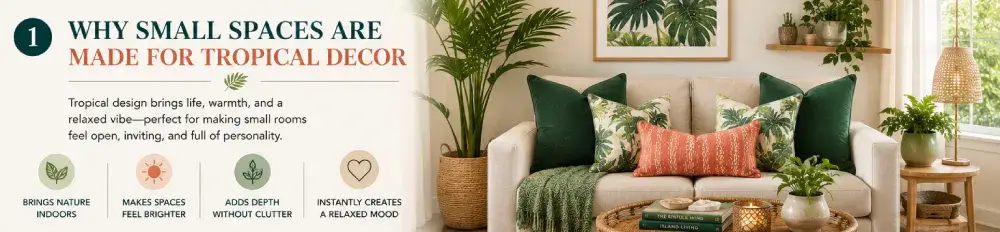
It might seem counter-intuitive, but small spaces actually benefit tremendously from tropical decor. Traditional minimalism can sometimes make small rooms feel cold, sterile, or unintentionally barren. Tropical style, on the other hand, thrives on visual density and a sense of enveloping warmth, which small rooms possess naturally. A few bold botanical prints go much further in a compact room, commanding attention and setting the mood instantly.
Warm tropical colors make small rooms feel cozy and intentional rather than merely cramped. Lush houseplants are proportionally more impactful, quickly creating a canopy-like effect that would require dozens of plants in a massive living room. Ultimately, curated minimalism punctuated with bold, vibrant tropical accents is far more sophisticated and inviting than timid, all-neutral small room styling.
The Boutique Hotel Principle
The most stunning small-space tropical interiors borrow heavily from luxury boutique hotel design: every single element is highly curated, absolutely nothing is accidental, and one meticulously chosen bold statement piece is allowed to do the visual work of ten ordinary ones.
The 6 Core Rules of Small Space Tropical Decor
Designing for a compact space requires discipline. Before purchasing any tropical decor, commit to these six foundational rules for small spaces.
1. FEWER PIECES, BOLDER CHOICES
In a small space, every item is visible from virtually every angle. One stunning, high-quality botanical print pillow resting on a loveseat has infinitely more impact than five mediocre, clashing throw pillows crowding a sectional. Edit your decor ruthlessly and let your boldest choices stand out.
2. VERTICAL IS YOUR FRIEND
Counter the claustrophobia of a small footprint by drawing the eye upward. Utilize tall, narrow floor plants, hang sheer floor-to-ceiling curtains featuring subtle tropical prints, and display wall art that uses vertical composition. Emphasizing height makes small rooms feel significantly larger and airier.
3. LIGHT COLORS ANCHOR, BOLD COLORS ACCENT
Use the lighter end of the tropical spectrum (sage green, seafoam, warm sand, soft coral) as your dominant, anchoring colors. Reserve deep navy, rich emerald, or intense hibiscus for small, strategic accent pieces. Never paint a small room dark unless you are committing fully to a very specific, moody, and intimate aesthetic.
4. ONE STATEMENT PRINT PER ZONE
In an open-plan studio or a multi-use room, limit each visual “zone” (the seating area, the sleeping corner, the dining nook) to one bold tropical print. Let that pattern breathe. Do not force it to compete with secondary large-scale prints in the same sightline.
5. DOUBLE DUTY EVERYTHING
Every piece of furniture and decor must serve multiple purposes in small tropical spaces to reduce clutter. A beautiful woven rattan storage ottoman topped with a vibrant tropical throw blanket equals high style, comfortable seating, and hidden storage all in one compact footprint.
6. LAYERED TEXTURE OVER LAYERED QUANTITY
In place of piling on many tropical items, use fewer items crafted in more varied, tactile textures. Woven rattan, printed natural linen, embroidered cotton, and smooth velvet all coexist beautifully in a small tropical space, adding profound depth without taking up physical space.
Color Strategy for Small Tropical Spaces
The Light Tropical Palette
The safest and most expansive approach to small space design relies on the lighter end of the tropical spectrum. Think of warm white walls acting as a clean canvas, anchored by a sandy beige jute rug, complemented by sage green accents and soft coral throw pillows. This is the “Modern Tropical Minimalist” approach. It keeps the room feeling airy, open, and sun-drenched, preventing the space from feeling visually heavy or overwhelming.
Strategic Color Pops
In a small space, a single color pop carries immense power. ONE bold color placed strategically in a sea of calming neutrals—for instance, a single deep teal lumbar pillow resting on a cream-colored loveseat, or a vibrant hibiscus-coral throw blanket draped over a white armchair—does more design work than an entire rainbow of competing colors. This restraint ensures your tropical accents are noticed and appreciated.
What to Avoid
There are two major mistakes to avoid in compact rooms. First, attempting to use the entire tropical color spectrum (greens, blues, pinks, yellows, and oranges) in a single small room. This quickly creates a chaotic, overwhelming environment. Second, going entirely neutral out of fear, skipping tropical color entirely. This results in a bland, lifeless room that misses the joy of tropical design.
The 3-Color Small Space Rule
For rooms under 300 square feet, stick strictly to a maximum of 3 colors: one warm neutral base (cream, sand, or warm white), one tropical mid-tone (sage, teal, or seafoam), and one bold tropical accent (coral, hibiscus pink, or pineapple yellow). This formula guarantees maximum tropical impact with zero visual clutter.
Learn more in our tropical color palette guide.
Pillow Strategy for Small Spaces
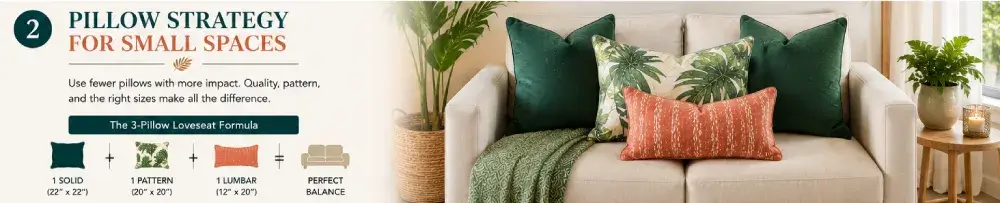
Since throw pillows are the easiest and most impactful way to inject tropical flair without sacrificing an inch of floor space, mastering pillow strategy is essential for compact living. The most common error in small spaces is pillow overcrowding.
- Small sofas and loveseats: Use a maximum of 3 pillows (two 18×18 squares plus one lumbar). Do NOT overload the seating; leave room for actual humans.
- Small armchairs: Limit to 1 pillow only (an 18×18 square or a small lumbar) to let the chair's silhouette breathe.
- Small bedrooms: Use 3–4 decorative pillows on a full or queen bed maximum. A great formula is 1 bold botanical print, 1 textured solid, and 1 bright lumbar.
- The “One Bold Print Rule”: In any given small seating zone, only ONE pillow should feature a bold, large-scale tropical print. All accompanying pillows should be solid, highly textured, or feature a very subtle micro-pattern.
- Size matters: Always use 18×18 as your minimum size. Tiny 14×14 pillows look lost, cheap, and cluttered. A larger pillow feels deliberate and luxurious.
The Small Space Power Pillow
In a highly compact room, one dramatically oversized monstera-leaf or palm-frond pillow (22×22) resting alone on a small loveseat creates infinitely more tropical impact than three smaller, matching botanical pillows crammed together. Go bold, go singular, and let it breathe.
Room-by-Room Small Space Tropical Guide
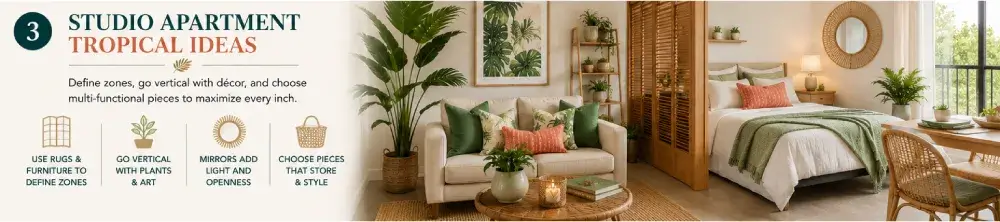
Different small spaces present different functional challenges. Here is exactly how to apply tropical design principles depending on the room you are styling.
Small Living Room (Under 200 sq ft)
- Keep your main sofa or loveseat in a light neutral tone (cream, warm white, or soft gray) to maximize the perception of visual space.
- Use exactly 3 throw pillows: two solid teal pillows flanking a palm-print lumbar, OR one bold botanical 20×20 anchor with two sand-colored 18×18 pillows and a coral lumbar.
- Add one oversized botanical wall print (vertical orientation) directly above the sofa to draw the eye upward and expand the room's height.
- Utilize one rattan side table or woven basket. Rattan provides natural tropical texture while remaining visually lightweight and see-through.
- Place one fiddle leaf fig or bird of paradise plant (tall and narrow footprint) in a corner to add lush canopy without eating up valuable floor space.
- Use a flat-weave sisal or jute area rug to anchor the tropical palette organically.
Studio Apartment
- Zone your space visually using tropical decor: let a bold outdoor-style palm rug define the “living zone,” while a woven rattan headboard clearly defines the “sleeping zone.”
- Use a single, consistent tropical color palette throughout ALL zones. Never switch color palettes from the living area to the sleeping area—it severely fragments small spaces
- Limit bold tropical prints to a maximum of 2 items per visual zone.
- Hanging plants in macramé holders are your best friend: they take absolutely zero floor space while adding maximum tropical lushness at eye level.
- Install sheer curtains in a soft, subtle botanical print. They filter natural light beautifully while adding vertical height and tropical texture.
Learn advanced styling in our how to layer pillows like a designer guide.
Small Bedroom (Under 120 sq ft)
- A white or very light neutral bedding base is non-negotiable in small bedrooms—it gives the room much-needed breathing space against tropical accents.
- Limit yourself to 3–4 pillows maximum on a full or queen bed: two crisp white standard shams, one bold botanical euro sham, and one bright hibiscus-print lumbar at the front.
- One tropical-print accent blanket folded neatly at the foot of the bed adds a brilliant splash of color without adding visual clutter.
- Hang a large-scale tropical print or framed botanical wallpaper panel above the headboard. The vertical scale makes a low ceiling feel significantly higher.
- A small trailing pothos plant on the nightstand brings organic tropical greenery right to your bedside without crowding the surface.
Small Balcony or Patio (Under 60 sq ft)
- A simple 2-seat bistro set outfitted with vibrant outdoor cushions in a tropical print immediately transforms a tiny concrete balcony into a resort escape.
- Use a maximum of 2–4 outdoor throw pillows (1–2 per chair) and ensure you strictly use solution-dyed fabrics rated to withstand outdoor UV rays.
- Hang warm-toned string lights or place a small outdoor rattan lantern to create an intimate, evening tropical ambiance.
- Install vertical planters or space-saving railing planters filled with vibrant tropical plants (elephant ear, coleus, caladium) to create a lush garden wall effect.
- Lay down a single outdoor area rug in a natural woven texture to cleanly define the balcony as its own distinct outdoor “room.”
Explore durable options in our outdoor tropical pillows guide.
Tropical Plants for Small Spaces
Plants are essential to tropical decor, but in a small space, you cannot afford to have sprawling, wide-reaching greenery blocking your walkways. You need plants that are highly floor-space efficient while still delivering major tropical vibes.
| Plant | Light Need | Water Schedule | Space Required | Style Vibe |
|---|---|---|---|---|
| Pothos | Low-Med | Weekly | Hanging / Top Shelf | Jungle Casual |
| Snake Plant | Low | Monthly | Floor Corner (Narrow) | Modern Tropical |
| Bird of Paradise | Bright | Weekly | Floor Corner (Tall) | Resort Luxe |
| Fiddle Leaf Fig | Bright | Weekly | Floor Corner (Narrow) | Architectural Tropical |
| Monstera Deliciosa | Med-Bright | Weekly | Floor (2–3 sq ft) | Classic Tropical |
| Calathea | Low-Med | Weekly | Table / Desktop | Boho Tropical |
The Tall Plant Trick
One spectacular floor plant that reaches 4 to 6 feet in height (like a bird of paradise, fiddle leaf fig, or a mature snake plant) adds far more visual lushness and architectural interest to a small room than five tiny tabletop plants scattered randomly. Go vertical to save space.
Pattern Scale in Small Tropical Spaces
A common mistake in compact rooms is misjudging the scale of botanical prints. Using massive, repeating palm leaf wallpaper on all four walls of a 100-square-foot room will feel incredibly claustrophobic. Instead, follow these simple scale guidelines based on room size:
- Rooms under 150 sq ft: Lean toward small-to-medium scale prints (where the print fits comfortably on a pillow size of 20×20 or smaller). Avoid large repeating patterns on multiple large surfaces.
- Rooms 150–300 sq ft: You have room for one large-scale botanical print to act as your statement piece. Keep all other accompanying patterns small, subtle, or completely solid.
- The Golden Rule: Never use large-scale tropical wallpaper AND large-scale pillow prints AND large-scale tropical art in the same small room. Choose ONE large-pattern anchor piece and let everything else support it quietly.
The ‘One Large Pattern' Rule
In any small space, designate exactly ONE item to carry your boldest, largest tropical print (whether that is a statement throw pillow, a piece of canvas art, or a rug). Every other patterned piece in the room must be significantly smaller in scale or reduced to a highly subtle texture.
Using Mirrors and Light
Tropical design is fundamentally linked to the feeling of abundant, warm natural light. In small spaces, you must protect and maximize every source of light to achieve that lush, breezy aesthetic.
- Placing a large mirror directly opposite a window doubles the natural light and creates an optical illusion of outdoor depth—perfect for simulating a tropical horizon.
- Swap heavy drapes for sheer curtains in warm white or cream. They keep small rooms feeling open while filtering harsh, direct sunlight into the soft, diffused glow associated with tropical spaces.
- Incorporate rattan pendant lights and woven bamboo lamp shades. When illuminated, they cast warm, dappled shadows on the walls that perfectly mimic sunlight filtering through palm fronds.
- Avoid harsh, overhead fluorescent lighting at all costs—it instantly kills the warm, organic, and relaxing tropical ambiance.
The Natural Light Rule
In small spaces, never block your windows with dark, heavy curtains, opaque blackout blinds, or large furniture pieces that cut off the room from daylight. A tropical room without light feels like a cave, not a cabana. Maximize your glass exposure.
Budget Small Space Tropical Makeover
You do not need to buy all new furniture to achieve a tropical look. Because small spaces require so few items, you can completely transform a room on a highly restricted budget.
- Under $50: Purchase ONE spectacular statement tropical throw pillow ($25–$35) for your sofa. Add a trailing pothos plant ($8–$15) to a high shelf. Rearrange your existing furniture to open up the window and maximize natural light. This alone will change the room's energy.
- $50–$150: Upgrade to two coordinating tropical pillows ($50–$80). Add one natural rattan basket or side table ($30–$50) to introduce island texture, and hang one vertical botanical wall print ($20–$40).
- $150–$300: Execute a complete small-room refresh. Buy a curated set of 3 tropical pillows ($80–$120), one tall statement floor plant like a snake plant ($40–$80), a highly textured jute or sisal rug ($60–$100), and soft, sheer tropical-print curtains ($40–$80).
Small Space Tropical Shopping Priorities
- Throw Pillows (Highest visual return on investment, zero floor space)
- One Tall Statement Plant (Instant life and verticality)
- Natural Fiber Rug or Basket (Grounding island texture)
- Vertical Botanical Wall Art (Draws the eye up)
- Sheer Tropical-Print Curtains (Filters light beautifully)
Frequently Asked Questions
Can I use tropical decor in a small apartment?
Absolutely. Small spaces are surprisingly ideal for tropical design because the style's warm colors, rich organic textures, and bold botanical patterns create a sense of a lush, enveloping retreat rather than vast spaciousness. The key to success is editing ruthlessly: choose fewer, bolder pieces rather than filling the room with clutter.
What colors work best for small tropical spaces?
Use a light, airy neutral base (cream, warm white, or soft sand) combined with one mid-tone tropical color (sage green, teal, or seafoam) and exactly one bold accent color (coral, hibiscus pink, or pineapple yellow). To prevent visual overwhelm, stick to a maximum of 3 colors in any room under 300 square feet.
How many throw pillows should I use in a small living room?
For a loveseat or a small apartment-sized sofa, 3 pillows is the absolute ideal maximum (typically two 18×18 or 20×20 squares paired with one lumbar). For a small armchair, use just 1 decorative pillow. Less is always more in small tropical spaces to ensure seating remains functional and uncrowded.
What is the best tropical plant for a small apartment?
A Pothos is excellent because it trails down from a high shelf or hanging basket, taking up zero floor space. A Snake Plant is perfect for tight floor corners as it grows straight up and requires very little maintenance or light. A Calathea is stunning for a desktop or side table, offering beautiful, tropical-patterned leaves.
How do I make a small room feel tropical without painting the walls?
Paint is not necessary. Use 2–3 highly curated tropical throw pillows, one tall vertical floor plant, a natural fiber rug (like jute or sisal), and a single large-scale botanical art print. These four elements alone will transform the atmosphere of a white-walled apartment completely, giving it a lush, resort-like feel.
Conclusion
Mastering small space tropical decor is not about cramming in as many palm fronds and bright colors as possible—it is about choosing the right elements with complete and utter confidence. In a compact room, every single item you place is seen, which means every single item wields disproportionate visual power.
One spectacularly vibrant botanical throw pillow. One soaring fiddle leaf fig in the corner. One carefully selected piece of large-scale art. These three choices, made deliberately and placed thoughtfully, are all it takes to create a room that feels like a private island retreat, regardless of its square footage. Start with one exceptional tropical throw pillow, anchor your colors, and let your lush, compact sanctuary bloom.
In small spaces, tropical decor works best not through quantity, but through bold, intentional choices that make every inch feel warm, lush, and alive.