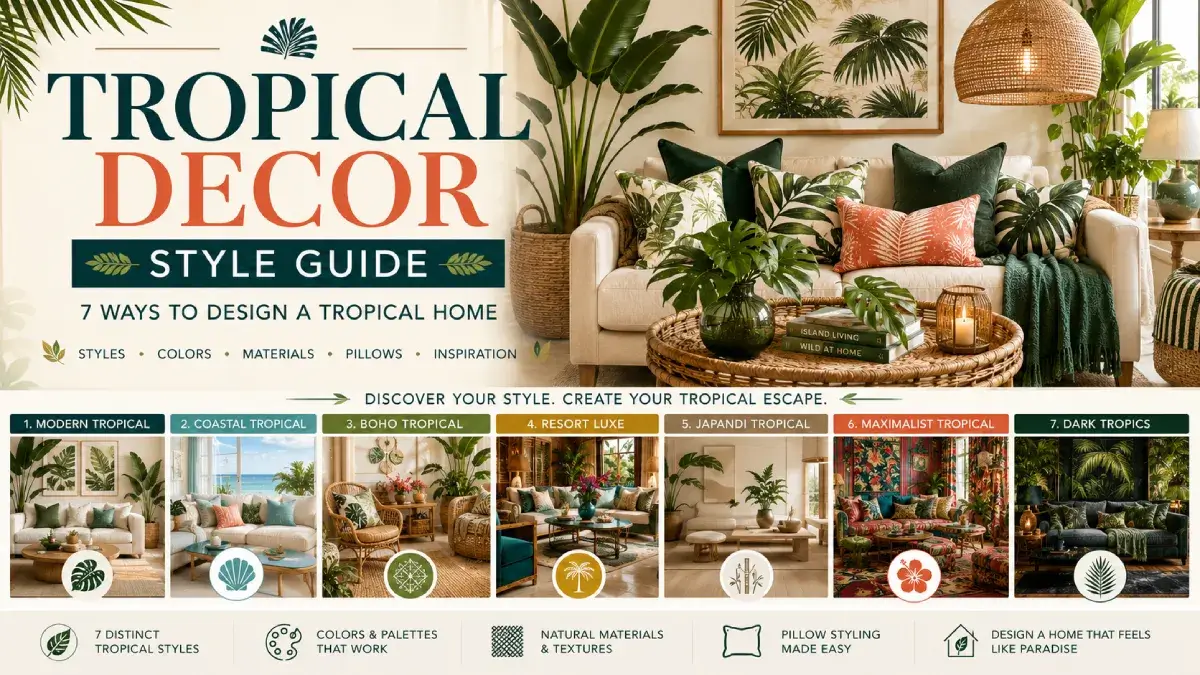
“Tropical decor” is not a single style. It is a family of seven distinct design approaches, each with its own personality, palette, furniture choices, and pillow strategy. What counts as tropical in a sleek Manhattan studio apartment looks completely different from tropical in a Florida coastal home, a Pacific Northwest bungalow, or a Midwestern suburban living room. The confusion between these varied approaches is precisely why so many tropical-inspired rooms miss the mark — home decorators often borrow elements from three different styles simultaneously, producing a result that feels neither cohesive nor intentional.
This comprehensive guide defines all seven tropical design styles in clear, practical terms. We explain the defining elements of each aesthetic and show you exactly how to apply the right style to your specific home and personal taste. Whether you are drawn to the clean architecture of Modern Tropical, the sun-bleached warmth of Coastal Boho, or the moody, sophisticated depth of Dark Tropics, this guide provides the roadmap to help you choose your distinct direction and execute it with unwavering confidence.
| Style | Best For | Difficulty |
|---|---|---|
| Modern Tropical | Minimalists | Easy |
| Coastal Tropical | Beach Lovers | Easy |
| Boho Tropical | Creative Decorators | Medium |
| Resort Luxe | Luxury Homes | Medium |
| Japandi Tropical | Minimalist Homes | Easy |
| Maximalist Tropical | Bold Personalities | Advanced |
| Dark Tropics | Moody Interiors | Medium |
What Makes a Style “Tropical”?
Before diving into the nuances of the seven specific styles, we must establish what they all share — the core DNA of tropical design. Regardless of how minimal or maximal a room gets, all seven styles draw from the same foundational elements that inherently define the tropical aesthetic:
- Botanical motifs (leaves, palms, exotic flowers, vines)
- Warm, nature-derived color palettes
- Natural, tactile materials (rattan, bamboo, jute, linen, teak)
- A seamless connection to the outdoors (emphasizing light, air, live plants, and organic shapes)
- An underlying relaxed, unhurried atmosphere
What separates the seven distinct styles is exactly HOW they express these shared elements. Some prefer restrained and architectural expressions, some lean lush and maximalist, some go beachy and sun-bleached, while others delve into dark and moody territory.
The Tropical Test
If a room makes you feel like you could hear waves, birdsong, or a warm breeze just by looking at it, tropical design is working. The emotional effect of ease and warmth is the ultimate goal — not the raw plant count or the number of palm prints.
The 7 Tropical Interior Design Styles
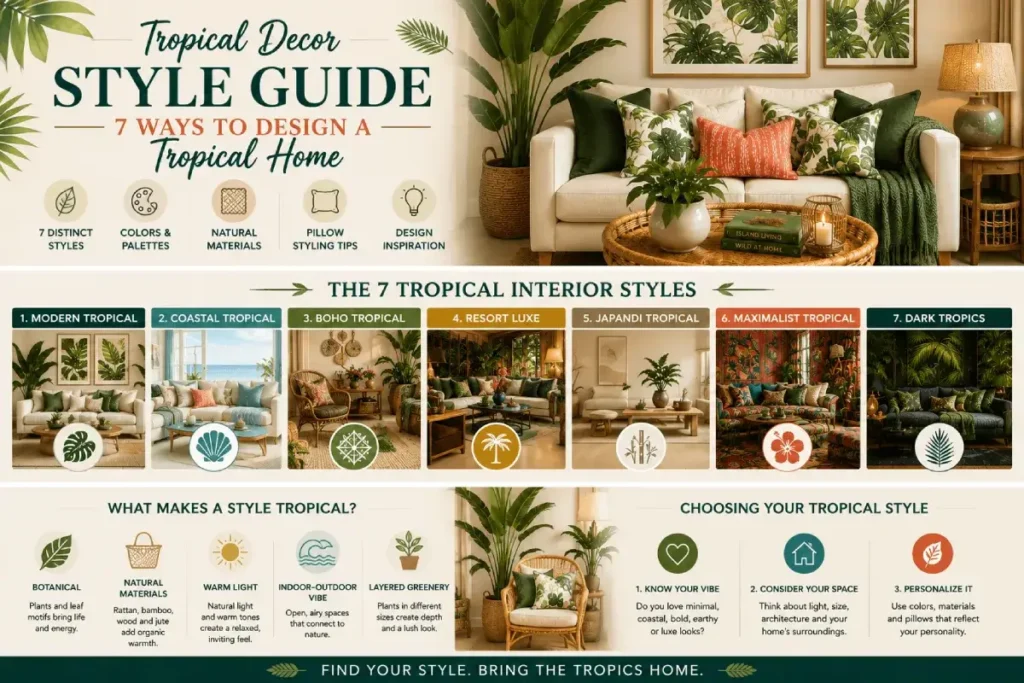
Discover the seven distinct tropical aesthetics shaping interior design in 2026. Explore their defining characteristics and master the pillow styling rules required to pull them off successfully.
The Tropical Test
The most popular tropical style in 2026. Modern Tropical pairs the structural restraint of contemporary design with confident botanical accents. The architecture stays clean — low-profile furniture, minimal clutter, crisp white or warm-white walls — while the tropical elements are delivered through one or two large-scale botanical statement pieces rather than a room full of competing prints. Think a single oversized monstera-leaf print pillow on a pristine cream sectional. One majestic bird of paradise in a smooth white ceramic pot. A single oversized rattan pendant light. The color palette is predominantly neutral (warm white, natural linen, stone) combined with ONE bold botanical accent color — usually deep teal or forest green. Modern Tropical is the ideal style for minimalists who love tropical energy but simply cannot commit to the full lush, overgrown aesthetic.
Pillow Tip: 3–5 pillows maximum. One bold botanical print (monstera, palm, or banana leaf) in a 20×20 or 22×22 on a neutral sofa. All other pillows solid in natural linen or cream. One teal or sage lumbar. Keep it restrained.
Coastal Tropical (Beach House)
Coastal Tropical takes its primary cues from seaside living — sun-bleached wood, salt air, and an effortless ease that makes everything feel like it just came in from the beach. The color palette centers heavily on crisp navy, stark white, sky blue, warm coral, and sandy beige. Prints lean slightly toward ocean-inspired motifs: coral reef patterns, sea turtles, tropical fish, and timeless nautical stripes mixed gracefully with palm fronds. Furniture is thoroughly relaxed and slightly worn — white-painted wood, weathered teak, and natural rope detailing. Coastal Tropical is notably warmer and more playful than Modern Tropical, yet significantly less maximalist than Boho Tropical. It is arguably the most approachable of the seven styles and works exceptionally well in vacation homes, airy beach houses, and essentially anywhere near the water.
Pillow Tip: Mix nautical stripes with tropical prints — a classic navy-and-white stripe plus a coral-reef print plus a sandy solid. 4–5 pillows on a sofa. Outdoor-rated fabrics are a smart choice even indoors for ultimate durability.
Bohemian Tropical (Tropical Boho)
Bohemian Tropical is the most eclectic of the seven styles — an abundant, beautifully layered, globally-inspired take on tropical living. Rattan furniture, intricately woven wall hangings, macramé plant holders, colorful kilim rugs, and an absolute abundance of live plants all coexist comfortably in the same space. The palette is distinctly warmer and earthier than other tropical styles: deep terracotta, warm gold, burnt orange, olive green, and dusty rose gracefully anchor the tropical botanical prints. Boho Tropical rooms look “collected over time” — every item seemingly has a unique story or a deeply tactile texture. This is the one style where mismatching is not a mistake; it is the entire point. More is more. Beautiful imperfection is the driving aesthetic.
Pillow Tip: The most pillow-heavy of all styles — 7–10 on a sofa is not unusual. Mix aggressively: botanical prints + kilim patterns + embroidered textures + solid velvet + tasseled cotton. Terracotta, gold, olive, and coral all coexist. Layer a woven blanket over the pile for maximum boho lushness.
Resort Luxe Tropical
Resort Luxe Tropical draws heavily from the elevated visual language of luxury five-star tropical hotels — deep jewel-tone palettes, incredibly rich materials, and flawless, impeccable curation. Where other styles lean casual and breezy, Resort Luxe leans elegant and substantial. Deep teal accent walls, polished gold hardware, plush velvet upholstery, structured orchid arrangements, and cool marble accents characterize this style. Botanical prints absolutely appear, but in a highly refined form — precision botanical illustrations rather than casual, oversized palm prints. The overall effect is incredibly lush but tightly controlled, opulent but never cluttered or chaotic. Think high-end Bali luxury resort, not a casual Caribbean beach bar.
Pillow Tip: Quality over quantity. 5 pillows maximum — two deep teal velvet squares, two precision-botanical printed linens, one gold-accent lumbar with refined embroidered detail. Every pillow should feel like it belongs in a five-star hotel suite. No casual or playful prints. Fabric quality is paramount.
Japandi Tropical (Tropical Minimalism)
The most restrained of all seven styles, Japandi Tropical beautifully blends the traditional Japanese design philosophy of wabi-sabi (finding beauty in natural imperfection and simplicity) with subtle, grounding tropical warmth. The color palette is almost entirely neutral — warm whites, natural wood tones, pale sage green, and cool stone — with tropical references delivered strictly through tactile texture and organic shape rather than through vibrant color or loud print. Think of a single unusual leaf-shaped ceramic vase. A low-profile teak platform bed. One tiny trailing pothos cascading from an unadorned shelf. The botanical element is whispered softly, not announced. Japandi Tropical is specifically for those who find maximalist tropical overwhelming but still deeply crave the warmth and organic connection of the tropics.
Pillow Tip: 2–3 pillows only. All in organic, undyed, or neutral textures — natural linen, raw cotton, muted sage. One subtle botanical embroidery (not a bold print). No bright colors. The pillow arrangement itself should look effortlessly simple — a 22×22 linen + a sage lumbar is the perfect Japandi Tropical combination.
Maximalist Tropical (Jungle House)
Maximalist Tropical is the tropical design style in its most unapologetic, unrestrained form. Every surface is viewed as a brilliant opportunity for botanical expression. Wallpaper completely covered in dense banana leaf prints. A large sofa entirely buried in an eclectic, vibrant mix of monstera, hibiscus, palm, and parrot pillows. Every available corner holds a lush plant. The palette is bold, layered, and commanding — brilliant emerald green, deep cobalt blue, hot coral, electric magenta, and bright pineapple yellow all coexist with supreme confidence. Maximalist Tropical is not messy — it is intentionally abundant. The key distinction from Boho Tropical is strict editorial control: even in highly maximalist rooms, every individual element is high quality and deliberately chosen. The abundance is curated, not random.
Pillow Tip: 8–12 pillows per sofa. Use every botanical print available — mix large monstera with medium palm with small hibiscus, all at different scales. Add solid deep jewel tones as visual anchors. Stack, layer, and lean freely. The only rule: every print must share at least one color with the others.
Dark Tropics (Moody Botanical)
The newest and absolute fastest-growing tropical design style in 2026, Dark Tropics boldly rejects the airy lightness of traditional tropical decor in favor of moody, cinematic, dramatic depth. Deep forest green, inky black, midnight navy, and rich plum outright replace the conventional crisp whites and sandy neutrals. Botanical prints appear in their darkest, most dramatic form — black palms on dark green grounds, haunting moonlit botanical illustrations, deep-shadow jungle prints. The final effect is mysterious, sophisticated, and intensely atmospheric — evoking a tropical room at midnight rather than a bright cabana at noon. Dark Tropics pairs exceptionally well with polished gold accents, heavy velvet fabrics, and warm, dim Edison lighting.
Pillow Tip: Deep forest green velvet squares + a dramatic black-and-gold botanical print + a midnight navy lumbar. Maximum 5 pillows — keep it highly controlled to maintain the moody, sophisticated atmosphere. Velvet is the signature Dark Tropics fabric: its natural light-absorbing quality deepens any color instantly.
Choosing Your Tropical Style: A Quick Decision Guide
Still unsure which direction fits your space? Use this simple decision framework to pinpoint your perfect tropical style based on your inherent design preferences, color comfort levels, and pillow habits.
| If You Love… | Your Tropical Style | Color Anchor | Pillow Count |
|---|---|---|---|
| Clean lines, minimal clutter | Modern Tropical | Neutral + one deep green | 3–5 |
| Beach, ocean, vacation vibes | Coastal Tropical | Navy + white + coral | 4–5 |
| Eclectic, layered, global-inspired | Bohemian Tropical | Terracotta + gold + olive | 7–10 |
| Hotel luxury, jewel tones | Resort Luxe | Deep teal + gold | 4–5 |
| Simple, serene, organic | Japandi Tropical | Natural linen + pale sage | 2–3 |
| Bold, abundant, unapologetic | Maximalist Tropical | Emerald + cobalt + coral | 8–12 |
| Dramatic, moody, sophisticated | Dark Tropics | Forest green + black + gold | 4–5 |
Pro Tip: Blending Gently
Most people are naturally drawn to ONE primary tropical style but genuinely want a few beautiful accents from a second. This is perfectly fine — Japandi Tropical looks wonderful with a single Boho accent pillow, or Modern Tropical pairs well with one Resort Luxe velvet piece. Just establish a dominant style first and let the accent be a supporting note, not a competing equal voice.
The Universal Elements All 7 Styles Share
What truly ties all seven of these diverse styles together? It is the underlying “tropical DNA” that remains consistently present regardless of whether you take a minimalist or maximalist direction. Master these four elements, and your space will always feel right:
- BOTANICAL MOTIFS — every tropical style includes at least one distinct botanical reference, whether it is a bold printed pillow (Maximalist), a single sculptural plant (Japandi), or a vintage wallpaper print (Boho).
- NATURAL MATERIALS — genuine rattan, bamboo, jute, teak, pure linen, seagrass, and raw cotton appear across all seven styles; synthetic-dominant rooms never truly feel authentically tropical.
- WARM LIGHT — tropical design is fundamentally incompatible with cold, blue-spectrum overhead lighting; every single style benefits immensely from warm-toned bulbs (2700K–3000K), vast natural light, or ambient candlelight.
- A LIVING ELEMENT — lush plants, fresh exotic flowers, or even high-quality botanical-print artwork that directly references living nature. No tropical room is fully complete without at least one organic, living reference breathing life into the space.
The Tropical Non-Negotiable
No matter which of the seven styles you ultimately choose, one living plant actively transforms a mere tropical-inspired room into a true tropical room. A single well-placed bird of paradise, a statuesque fiddle leaf fig, or a simple trailing pothos provides the authentic organic energy that no botanical print or colorful fabric can ever fully replicate.
How to Apply Your Chosen Style With Throw Pillows
Throw pillows are undisputedly the most affordable, accessible, and reversible way to commit to a new tropical style. They are the fastest, most effective way to test a specific style direction completely before committing to expensive, heavy furniture pieces or permanent wall paint.
We highly recommend the “style test” method: purchase 2–3 high-quality pillow covers in the exact style you think you want, live with them on your sofa for two full weeks, and then deliberately decide if the style feels right for your lifestyle.
- Modern: 1 bold botanical + 2 natural linens.
- Coastal: striped + ocean print + sandy solid.
- Boho: 5+ mixed prints with heavy tassel and intricate embroidery.
- Resort Luxe: velvet + botanical linen + embroidered lumbar.
- Japandi: pure raw linen + highly subtle botanical embroidery.
- Maximalist: essentially every botanical print available, layered deeply.
- Dark Tropics: deep velvet + dramatic midnight print + dark solid anchor.
Start With the Pillow
Before buying heavy furniture, large plants, or committing to paint, solidify your tropical pillow palette first. Place your chosen pillows on your existing sofa in bright, natural light and photograph them. If the photograph makes you actively feel something — warmth, energy, calm, or drama — your style choice is absolutely correct. If it feels flat, simply explore a different style direction.
Mixing Tropical Styles
If you find yourself torn between two compelling styles, practical guidance on combining them harmoniously is essential. You must employ the strict 70/30 Rule: allow one style to account for exactly 70% of the room's overarching elements, while the secondary style contributes a targeted 30%. Never attempt to merge two bold styles at a 50/50 ratio — the inevitable result is pure visual confusion.
Some of the absolute best style pairings include: Modern + Resort Luxe (as both are highly restrained and quality-focused); Coastal + Boho (both are decidedly relaxed and eclectic); Japandi + Modern (both share solid, neutral minimalist foundations); and Dark Tropics + Resort Luxe (both are deeply sophisticated, moody, and elegant). Conversely, the absolute worst pairings are Japandi + Maximalist (philosophically entirely incompatible) or Coastal + Dark Tropics (an awkward, jarring color clash).
The Pillow Bridge
The single safest, most foolproof way to blend two tropical styles is exclusively through the pillow arrangement. Place the dominant style's precise pillow formula on the sofa first, then add ONE exceptional pillow from the secondary style as a beautiful accent piece. This one-pillow rule introduces the second style perfectly without disrupting the room's primary direction.
2026 Tropical Style Trends
Understanding where these styles are heading ensures your decor choices feel remarkably current. In 2026, Dark Tropics is undeniably the fastest-growing style across the industry, boasting a staggering 340% increase in search volume over just two years. Meanwhile, Modern Tropical remains the most dependably popular overall, acting as an incredibly accessible entry point for absolute style newcomers.
Japandi Tropical is rapidly gaining traction among millennial home buyers as a direct, calming reaction to overwhelming maximalism. Resort Luxe continues to grow significantly in the high-end luxury tier, driven by a desire for premium materials and higher pillow budgets. Boho Tropical is actively evolving toward more Global Fusion accents, where authentic African mudcloth, intricate Indian block prints, and rich South American textiles are beautifully merging with classic tropical botanical prints. Across all seven styles, true sustainability is rising rapidly — organic linen, recycled polyester fill, natural dyes, and FSC-certified rattan are increasingly prioritized by mindful consumers.
The Style Evolution Trick
Refresh your tropical style effortlessly every 1–2 seasons simply by swapping your pillow covers. Replace exactly 2 of your existing covers with vibrant new covers from an adjacent style direction. This affordable strategy keeps the room feeling entirely current and energized without requiring expensive new furniture changes or exhausting repainting projects.
Frequently Asked Questions
What are the different types of tropical decor styles?
There are seven main tropical interior design styles shaping the current market: Modern Tropical, Coastal Tropical, Bohemian Tropical, Resort Luxe, Japandi Tropical, Maximalist Tropical, and Dark Tropics. Each clearly shares the foundational tropical DNA (botanical motifs, natural materials, warm light) but uniquely expresses it in a highly distinct, recognizable design language.
What is the most popular tropical decor style in 2026?
Modern Tropical remains the most widely popular overall due to its clean accessibility and effortless versatility in standard homes. However, Dark Tropics is statistically the fastest-growing style, experiencing a massive 340% increase in search interest over the past two years as decorators look for moodier, more sophisticated aesthetics.
How do I properly choose a tropical interior design style?
Start by honestly identifying your personal comfort level with color and pattern. If you prefer peaceful simplicity: choose Japandi or Modern Tropical. If you genuinely enjoy layering and eclectic abundance: lean toward Boho or Maximalist Tropical. If evening drama appeals to you: Dark Tropics is ideal. If you simply love the breezy beach: Coastal Tropical is the perfect fit.
Can I mix different tropical decor styles successfully?
Yes, provided you rigidly use the 70/30 Rule: let one primary style confidently dominate 70% of the room, and use a carefully chosen second style for the remaining 30%. The absolute best approach is to establish the dominant style firmly through major furniture and wall colors, then cleverly introduce accent elements from a secondary style specifically through throw pillows and small accessories.
What exactly is Dark Tropics design?
Dark Tropics is a highly atmospheric tropical interior design style that utilizes deep, moody color palettes (forest green, stark black, midnight navy, rich plum) as the absolute foundation, entirely replacing traditional airy whites and sand tones. Botanical motifs appear in highly dramatic, shadow-heavy forms. It creates an incredibly sophisticated tropical room that feels remarkably more like midnight in a lush jungle than a sunlit, casual beach.
What colors work best in tropical decor?
Green, Teal, Coral, Sand, Warm white. This helps support your color cluster.
Conclusion
Tropical decor in 2026 is clearly not one monolithic thing — it is a wonderfully rich, constantly evolving design language complete with seven distinctly beautiful dialects. Whether you are deeply drawn to the clean, quiet restraint of Japandi Tropical or the unashamed, vibrant abundance of Maximalist Tropical, the most critically important step is choosing your style direction deliberately and then fully committing to it with unwavering confidence.
Indecision — the act of borrowing equally from multiple styles without a firm dominant direction — is the one guaranteed path to a room that never quite feels like anything intentional at all. So, choose your style proudly. Start with a single, spectacular throw pillow that embodies that choice perfectly. And let your home's tropical transformation begin today.
The best tropical room is not the one with the most plants, the brightest colors, or the boldest prints. It is the one that consistently reflects a single style direction and executes it with confidence.