Tropical throw pillows have become one of the most searched home décor items of the decade, and for good reason: a single well-chosen botanical pillow can transform an ordinary living room, bedroom, or reading nook into something that feels warm, alive, and genuinely inviting. But with thousands of options across patterns, fabrics, sizes, and price points, knowing where to start can feel overwhelming.
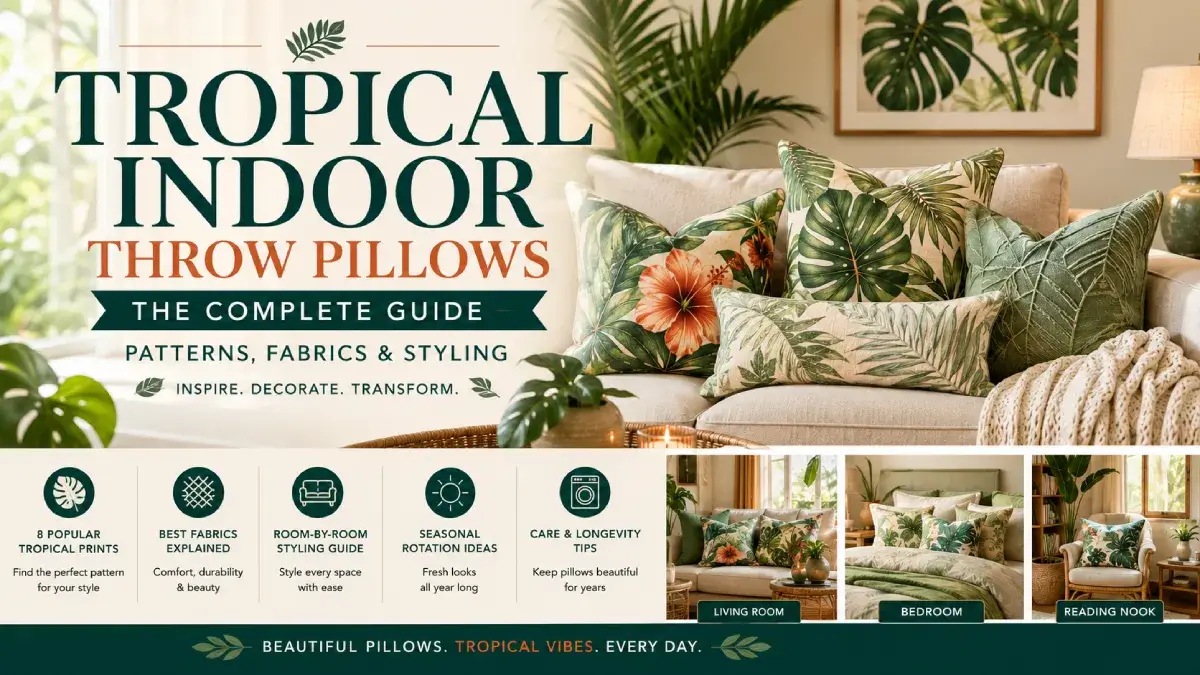
This guide cuts through the noise. It covers everything specific to indoor tropical pillow use — from the eight most popular tropical print categories and the best fabrics for interior spaces, to room-by-room styling strategies, seasonal rotation, and care routines that keep indoor pillows looking pristine. Whether you are decorating a living room, bedroom, home office, or sunroom, this is the only guide you need.
| Need | Recommendation |
|---|---|
| First Tropical Pillow | Monstera |
| Luxury Look | Velvet |
| Minimalist Home | Palm Frond |
| Small Room | Embroidered Botanical |
| Sunny Room | Cotton-Linen Blend |
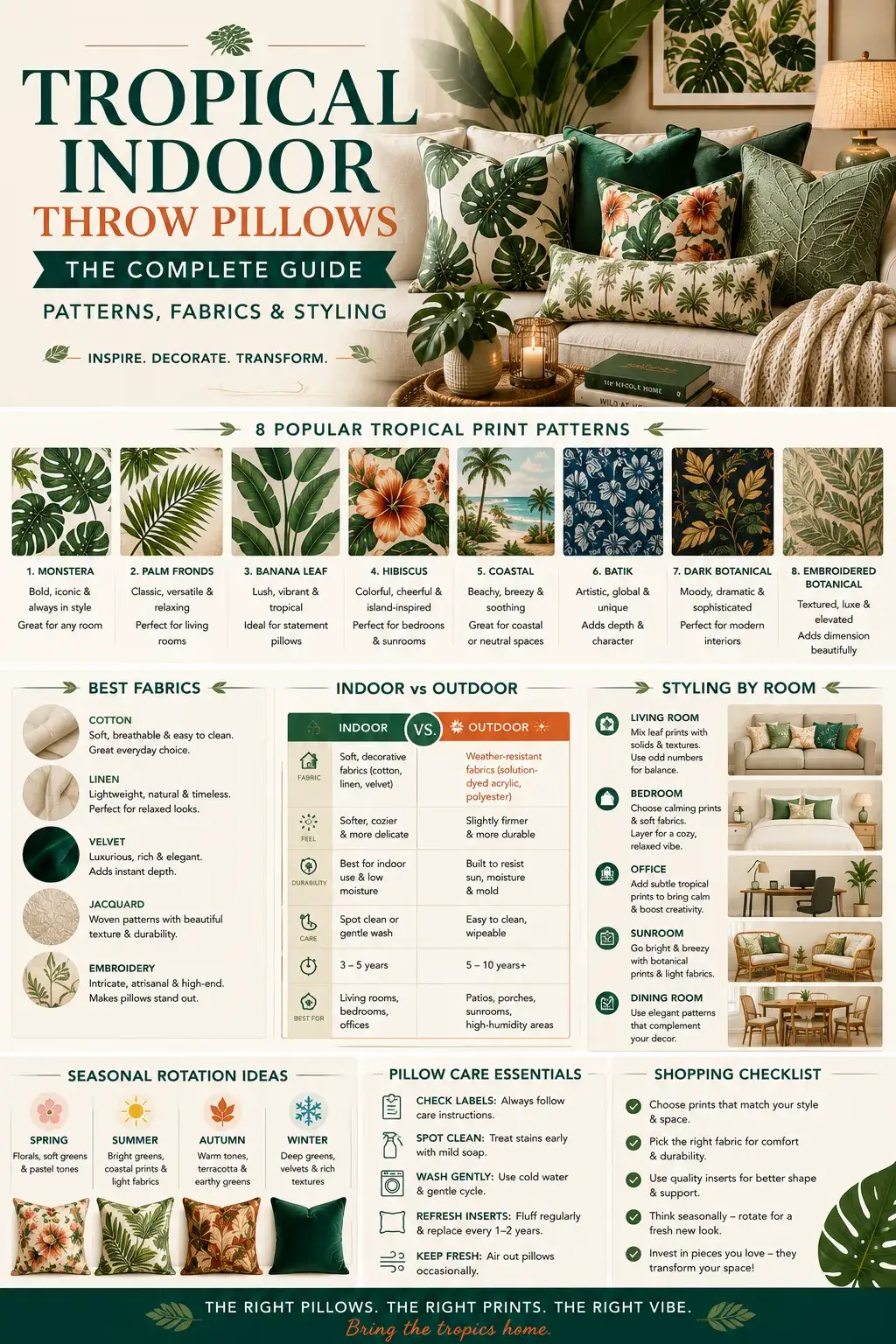
What Makes a Throw Pillow “Tropical”?
Before we dive into patterns and styling, we must define the category clearly. A tropical indoor throw pillow is any decorative pillow featuring motifs, colors, or textures derived from tropical environments — rainforests, coastlines, island flora, and tropical fauna. This vast and versatile family includes:
- Botanical prints: monstera, palm, banana leaf, bird of paradise, philodendron, fern
- Floral tropics: hibiscus, plumeria, orchid, bird of paradise flowers, anthurium
- Coastal motifs: coral reef, sea turtle, tropical fish, starfish, shell, nautical rope
- Fauna: toucan, parrot, flamingo, butterfly, gecko
- Abstract/geometric tropical: chevron in tropical colors, batik patterns, ikat in tropical palettes
- Textural tropics: woven rattan-effect, embroidered botanical, tufted leaf pattern
Despite their variety, the unifying thread of these designs is always the same: the emotional effect of warmth, lushness, and a sense of being somewhere more interesting and vibrant than a grey winter morning. They are an instant invitation to relax and unwind.
The 8 Most Popular Tropical Print Categories
Indoor tropical pillows can be broadly categorized into eight defining patterns. Understanding the unique characteristics of each helps ensure you choose the print that correctly complements your existing space.
Monstera Leaf
The unmistakable split leaf of the Monstera deliciosa has become the defining motif of modern tropical design. Available in every colorway from classic deep green on cream, to ink black on linen, to bold coral on navy. Works effortlessly in every tropical design style. Monstera prints have the widest commercial appeal and are the safest choice for a first tropical pillow purchase.
- Best room: Living room.
- Best with: Cream, warm white, or navy sofas.
Palm Frond & Palm Leaf
Classic, versatile, and deeply timeless. Palm prints range from single-frond silhouettes (elegant, graphic, restrained) to full-canopy repeating patterns (bold, maximalist). The silhouette version suits Modern Tropical and Japandi Tropical styling; the full-canopy version suits Maximalist and Boho Tropical aesthetics perfectly.
- Best room: Living room, sunroom.
- Best with: Natural linen, sage green, or charcoal sofas.
Banana Leaf
Large-scale, dramatic, and intensely architectural. Banana leaf prints — with their bold horizontal striping and saturated emerald greens — create an immediate tropical impact even in minimal quantities. A single banana leaf pillow positioned confidently on a cream sofa reads as a powerful, unapologetic design statement.
- Best room: Living room, reading nook.
- Best with: Cream, white, or grey sofas.
Hibiscus & Tropical Florals
Softer and decidedly more romantic than leafy botanical prints. Hibiscus, plumeria, orchid, and bird-of-paradise flower prints bring immediate warmth and colour energy — especially when rendered in coral, pink, and golden yellow. These prints particularly suit the bedroom, where the warmer, more delicate palette supports a deeply restful atmosphere.
- Best room: Bedroom, guest room.
- Best with: White, ivory, or soft grey bedding.
Coastal Reef & Ocean Motifs
Coral reef, tropical fish, sea turtle, and delicate shell motifs beautifully anchor the Coastal Tropical style. These prints are lighter and more playful than strict botanical prints, with the palette naturally leaning toward navy, sky blue, crisp white, and sandy beige. Ideal for beach houses, coastal condos, and any room where the ocean is the primary inspiration.
- Best room: Living room, sunroom, bathroom.
- Best with: Navy or white sofas and painted furniture.
Batik & Ikat in Tropical Palettes
Batik (a traditional wax-resist dyeing technique from Indonesia/Malaysia) and ikat (resist-dyed yarn weaving from Southeast Asia and Central America) both have deep, authentic roots in tropical cultures. When executed in tropical colour palettes — teal, coral, gold, jade — they read as tropical while adding artisanal texture and profound global character.
- Best room: Living room, bedroom, reading nook.
- Best with: Terracotta, natural jute, or rattan furniture environments.
Dark Botanical & Moody Jungle
The absolute fastest-growing print trend in 2026: deep-ground botanical prints where the background is an intense forest green, inky black, or midnight navy, and the leaf or floral motifs emerge in lighter, more saturated tones. These prints perfectly anchor Dark Tropics and Resort Luxe styles and are particularly striking when printed on rich velvet fabric.
- Best room: Living room, home library, master bedroom.
- Best with: Cream, charcoal, or deep green sofas.
Embroidered Botanical
Embroidery effortlessly elevates any tropical motif from a simple printed pattern to a tactile, dimensional art object. Embroidered monstera leaves, hibiscus flowers, or delicate palm fronds add incredible dimensionality, artisan character, and visible, high-end craftsmanship. These pillows read as “collected over time” rather than “purchased in a matching set.”
- Best room: Any room as a primary statement accent.
- Best with: Linen or velvet covers in the remaining supporting arrangement.
| Difficulty | Best Room | |
|---|---|---|
| Monstera | Easy | Living Room |
| Palm | Easy | Living Room |
| Banana Leaf | Medium | Reading Nook |
| Hibiscus | Easy | Bedroom |
| Coastal | Easy | Sunroom |
| Batik | Medium | Bedroom |
| Dark Botanical | Advanced | Library |
| Embroidered | Medium | Any Room |
The Best Fabrics for Indoor Tropical Throw Pillows
Unlike outdoor pillows, which are restricted to highly synthetic, weather-resistant materials, indoor tropical pillows have access to the full, luxurious spectrum of interior textiles. Understanding how these fabrics handle prints and interact with light is crucial.
Cotton & Cotton-Linen Blend
The trusted workhouse fabric of tropical pillow covers. Highly affordable, widely available, and accepts digital printing exceptionally well for razor-sharp botanical detail. Fully machine-washable. Has a slight tendency to wrinkle, which can actually enhance the casual, lived-in quality of Bohemian and Coastal Tropical styles. Best for: all-purpose indoor tropical pillows, casual living rooms, and relaxed bedrooms.
Pure Linen
The undisputed premium indoor fabric for tropical pillows. Natural, highly breathable, and its slightly textured surface adds incredible depth and authenticity. Ages beautifully — pure linen softens and develops subtle, appealing character with each wash. It holds botanical prints with exceptional, organic clarity. Slightly harder to source and notably more expensive than cotton. Best for: Modern Tropical, Resort Luxe, and Japandi Tropical styles.
Velvet
The absolute signature fabric of Resort Luxe and Dark Tropics styles. Velvet's unique light-absorbing quality makes any colour appear inherently richer and more saturated — deep teals become jewel-like; forest greens deepen to near-black. Solid-colour velvet pillows in tropical hues are the most effective “supporting cast” for bold botanical print pillows in a mixed arrangement. Machine-washable at cool temperatures; requires gentle brushing after washing to properly restore pile direction. Best for: rich accents and supportive structural pillows.
Jacquard Weave
The fabric where pattern and structure are completely intertwined — the design is woven into the fabric itself rather than printed on top of it. Exceptionally durable, pattern-permanent (cannot fade since there is no surface ink), and tactilely rich to the touch. Generally more expensive than printed fabrics. Readily available in classic botanical patterns, including monstera, palm, and trailing fern. Best for: high-traffic investment anchor pillows intended to last 5–10 years.
Embroidered Cotton or Linen Base
A sturdy base fabric (usually pure cotton or linen) decorated with raised, intricately embroidered motifs. Adds a level of dimensionality and artisan quality completely unavailable in any standard printed fabric. Care requires a gentle hand wash or a very delicate machine cycle inside a protective bag to protect the fine embroidery threads. Best for: statement accent pillows and acting as the crucial third “character” layer in a professionally styled arrangement.
Indoor vs. Outdoor Tropical Pillows: Key Differences
A common mistake is assuming that any beautiful tropical pillow can be thrown onto a patio chair, or that stiff outdoor pillows are perfectly fine for an indoor sofa. Understanding the profound technical differences between indoor and outdoor construction prevents ruined pillows and uncomfortable seating.
| Feature | Indoor Tropical Pillows | Outdoor Tropical Pillows |
|---|---|---|
| Fabric: | Cotton, pure linen, soft velvet, complex jacquard | Solution-dyed acrylic (Sunbrella), marine vinyl, harsh outdoor polyester |
| Fill: | Plush down, down-alternative, standard poly-fill | Quick-dry polyester fiber, specialized hollow-fiber outdoor fill |
| UV resistance: | Not strictly required (though helpful near windows) | Absolutely critical — solution-dyed fibers are heavily recommended |
| Water resistance: | Not required at all | Water-resistant to entirely waterproof required |
| Mold resistance: | Very low concern with proper indoor care | High concern — utterly essential in humid outdoor climates |
| Cleaning: | Gentle machine wash at 30°C, air dry | Hose down, highly bleach-safe (if Sunbrella), air dry in sun |
| Lifespan: | 3–7 years of standard indoor use | 3–7 seasons of harsh outdoor use |
| Price range: | $12–$120+ per individual cover | $25–$150+ per cover (performance outdoor fabrics cost more) |
Never Use Indoor Pillows Outdoors Long-Term
Indoor-fabric pillows (such as cotton, linen, and velvet) will rapidly absorb ambient moisture, grow destructive mould within 48–72 hours of rain exposure, and UV-fade highly visibly within just one season if left outdoors. For any pillow facing direct sun, rain, or outdoor humidity, always select purpose-built outdoor fabrics.
Room-by-Room Indoor Styling Guide
The way you deploy tropical pillows should shift dramatically depending on the specific room. What works perfectly in a lively sunroom may completely overwhelm the calming intent of a master bedroom.
Living Room — The Primary Stage
- The living room is exactly where tropical indoor pillows should make their absolute biggest visual impact.
- Use the established 3-layer system: foundation (22×22 solid teal or cream tucked at the armrests) → character (20×20 bold monstera or palm print in front) → accent (lumbar in bright coral or detailed embroidered botanical placed front and center).
- For a standard three-seat sofa: 5 pillows (2+2+1 lumbar configuration) is the undisputed designer standard.
- Choose exactly 1 dominant tropical print to serve as the visual anchor; ensure all other pillows strictly support it rather than competing.
- Mix textures fearlessly: printed cotton + solid rich velvet + woven natural linen creates maximum visual depth.
Bedroom — Calm Tropical Energy
- The bedroom inherently calls for a significantly softer tropical expression — think gentle hibiscus florals, muted palm prints, and pale sage botanical embroidery over bold banana leaf or dark moody jungle motifs.
- Queen/king bed formula: 2 Euro shams (featuring the primary botanical print) + 2 standard shams (in solid sage or coral) + 1 lumbar (soft hibiscus or delicate embroidered leaf detail).
- Deliberately limit overall colour saturation — choose heavily muted or pastel tropical palettes to foster a better, more calming sleep atmosphere.
- One dramatically printed Euro sham placed per side creates undeniable tropical impact without ultimately overwhelming the room's restful mood.
Home Office or Reading Nook
- The absolute most underrated tropical pillow opportunity: a single bold botanical lumbar placed on a supportive reading chair, or one oversized monstera-print cushion anchoring a window seat, completely transforms the energy of a dedicated work space.
- Keep strictly to 1–2 pillows maximum in office and reading contexts: one statement print paired with one solid support is perfect.
- Botanical prints boast documented biophilic benefits: the constant visual reference to nature actively reduces cortisol and greatly supports long-term focus.
Sunroom or Conservatory
- This is the indoor room with the highest natural light exposure — therefore, UV proximity heavily matters.
- Choose prints manufactured with reactive-dye inks (look explicitly for “washfast” or “colourfast” on product descriptions) to strongly resist light fading.
- Sunrooms are the one unique indoor space where slightly more saturated, incredibly bold tropical palettes look completely at home — the intensely strong natural light perfectly balances the bold colour.
- Rotate pillows seasonally so no single pillow faces the brightest, harshest window year-round.
Dining Room or Breakfast Nook
- Often completely overlooked: placing 1–2 tropical pillows on dining chair cushions or along a built-in bench seat instantly and beautifully elevates the tropical feel of an otherwise utilitarian kitchen/dining area.
- Removable, easily machine-washable covers are absolutely essential in dining spaces due to inevitable food spills.
- Choose prints boasting dark or highly busy backgrounds (e.g., monstera on navy, hibiscus on coral) where minor, stubborn staining is significantly less visible.
- Keep pillow count strictly low in dining areas (1 per chair at absolute most) — the chairs need to remain entirely functional for sitting.
Seasonal Rotation: Getting Year-Round Value From Tropical Pillows
A common misconception is that tropical decor is strictly for the summer months. By simply adjusting your color palette and print selection, tropical indoor pillows can feel beautifully relevant all year long.
SPRING — Fresh Botanical
Bring out lighter, airier botanical prints: pale green monstera on cream linen backgrounds, soft hibiscus pink on crisp ivory, and delicate pastel fern patterns. These lighter tropicals beautifully complement spring's natural, outdoor brightening and feel wonderfully fresh alongside seasonal cut flowers.
SUMMER — Bold & Saturated
Lean into full, unashamed tropical saturation: vibrant coral hibiscus, deep teal layered palms, highly saturated banana leaf emerald green, and bright turquoise coastal prints. Summer is the definitive season for maximum tropical expression — confidently bring out your boldest prints and your richest, most intense colours.
AUTUMN — Warm Tropical
Deliberately shift to the warmer, earthier end of the tropical palette: golden pineapple yellows, deep terracotta hibiscus, amber-toned batik patterns, and rich ochre botanical prints. These incredibly warm tropical tones blend seamlessly and naturally with autumn's shifting exterior palette without losing their island character.
WINTER — Moody Tropical
This is prime Dark Tropics time: introduce deep forest green botanical prints, striking inky black palms, and midnight navy motifs featuring gold embroidery. Velvet covers in deep, luxurious jewel tones (emerald, sapphire, garnet) maintain the unmistakable tropical spirit while delivering essential seasonal warmth and visual depth to combat the cold.
The Seasonal Investment Strategy
Buy beautiful covers in all four seasonal palettes, but invest in only 2–3 very high-quality inserts per sofa. Swap the covers out seasonally, keeping the exact same quality inserts throughout the year. This smart approach gives you year-round freshness, varied aesthetics, and longevity at a mere fraction of the cost of buying complete, stuffed pillow sets for each distinct season.
Caring for Indoor Tropical Throw Pillows
Indoor pillows avoid the harshness of outdoor weather, but they face their own unique challenges: body oils, food spills, dust, and constant compression. Maintaining them ensures your tropical prints stay vibrant.
Routine Indoor Care
- Fluff and actively rotate all indoor pillows weekly (this completely prevents uneven compression and lumpy fills).
- Vacuum pillow surfaces monthly utilizing a clean, soft brush attachment to quickly remove dust and fine debris (this is especially important for frequently used bedroom pillows).
- Spot-clean any accidental spills immediately with a clean, slightly damp white cloth — always blot firmly, never rub the fabric.
Machine Washing Indoor Covers
- Cotton and cotton-linen blend: machine wash carefully at 30°C, utilizing a gentle cycle and mild detergent; air dry flat or tumble dry on very low heat.
- Linen: machine wash at 30°C maximum, reshape the cover carefully while damp, and air dry flat (this prevents severe distortion of the natural fibers).
- Velvet: utilize a cool gentle machine wash OR opt to dry clean; always brush the fabric in one consistent direction while still damp to properly restore the pile.
- Jacquard: gentle machine wash at 30°C; absolutely turn the cover inside out to fully protect the complex woven surface from snags.
- Embroidered: hand wash gently or use a highly delicate machine cycle inside a mesh bag; never wring the fabric; lay completely flat to dry.
Insert Care
- Refresh your inserts every 3–4 months: simply place them directly in the dryer on low heat for 20 minutes with 2–3 clean tennis balls to effectively restore their full, plush loft.
- Full insert wash: perform this annually or whenever a stale odour develops; machine wash on a gentle cycle with a very mild detergent; ensure it dries completely (this often requires 2+ full dryer cycles) before returning it to the cover to prevent hidden mould.
The Pillow Freshness Test
Press a clean pillow firmly into a sofa corner and release it quickly. If it powerfully recovers its shape within 3–5 seconds, the internal insert is in good condition. If it stays sadly compressed or recovers very slowly, the insert desperately needs a dryer refresh with tennis balls or requires complete replacement.
How to Mix Indoor Tropical Pillows With Existing Décor
Unless you are starting with a completely empty room, your new tropical pillows need to integrate harmoniously with your existing furniture, rugs, and art.
- The “colour extraction” method: carefully photograph your room, specifically identify 2–3 colours already present (perhaps subtly in your rugs, wall art, or curtains), and confidently choose a tropical print that contains those exact matching colours — this guarantees instant visual harmony.
- The neutral-sofa advantage: a cream, soft grey, or crisp white sofa happily accepts ANY tropical pillow palette without visual conflict — these pieces are the easiest and most forgiving starting points for tropical decor.
- The boldest colour rule: your tropical pillow's absolute most saturated, brightest colour should ideally appear somewhere else in the room (however small — a tiny lamp shade, a specific book spine, a decorative vase) — this creates a profound sense of visual intentionality.
- The “one-at-a-time” test: safely introduce just one highly tropical pillow into your existing arrangement and live with it for one full week before adding more — this reveals clearly whether the colour direction is right before you invest further funds.
The Photography Test
Before ordering expensive tropical pillows online, photograph your existing sofa with a piece of coloured paper or scrap fabric in the target colour leaned against it. This entirely low-cost preview reveals instantly whether the colour will harmonise with your existing décor before you commit to the purchase.
Indoor Tropical Pillow Shopping Checklist
Before You Buy: Indoor Tropical Pillow Checklist
- ☑ Measure your specific sofa width and determine the correct pillow size (a minimum 20×20 is recommended for most standard sofas).
- ☑ Clearly identify existing room colours to purposely match or intentionally contrast.
- ☑ Confidently choose your dominant tropical print (limit to one only per seating arrangement to avoid chaos).
- ☑ Select a fabric highly appropriate for the room (e.g., breathable linen for light-filled rooms, rich velvet for evening/moody spaces).
- ☑ Always order a high-quality insert 2 inches larger than the stated cover size.
- ☑ Verify that the covers are fully machine-washable (always check the manufacturer's care label).
- ☑ Confirm the tropical print is reactive-dyed for crucial wash-fastness (especially if it will live near a sunny window).
- ☑ Plan your specific arrangement completely before ordering: establish the foundation (large solid) + character (bold print) + accent (lumbar).
Frequently Asked Questions
What is the most popular tropical indoor pillow print in 2026?
Monstera leaf prints decisively remain the most popular overall due to their incredible versatility across all tropical design styles (from modern to boho). However, dark botanical prints (featuring deep-ground moody jungle motifs on dark backgrounds) are undeniably the fastest-growing trend in 2026, especially when executed in rich velvet fabric for luxury spaces.
Can I use outdoor tropical pillows indoors?
Yes, absolutely, with no issues whatsoever. Outdoor-rated tropical pillows (such as those made with Sunbrella or solution-dyed acrylic) perform perfectly indoors and are actually significantly more durable and fade-resistant than most indoor-only fabrics. The only potential downside is a slightly higher cost and a smaller selection of ultra-fine print details (since outdoor fabrics are typically woven, not digitally printed with photographic precision).
What fabric is best for tropical indoor throw pillows?
Pure, breathable linen is widely considered the premium choice for most indoor applications — it prints beautifully, ages gracefully over time, and features a natural texture that inherently enhances any tropical botanical motif. A cotton-linen blend is the highly practical sweet spot for most budgets. Meanwhile, soft velvet is the ultimate best choice for solid-colour accent pillows within the Resort Luxe and Dark Tropics design styles.
How do I style tropical indoor pillows without it looking overdone?
Strictly follow the one-bold-print rule: in any given distinct seating zone, designate ONE pillow as the primary tropical statement (the bold botanical print). All other pillows in that specific arrangement must be solid colours or highly subtle textures pulled directly from that statement print's colour palette. This professional discipline completely prevents visual chaos while easily maintaining strong tropical character.
How often should I realistically replace indoor tropical throw pillow covers?
Quality cotton and cotton-linen covers reliably last 3–5 years with regular, careful washing. Premium pure linen and woven jacquard covers can easily last 5–10 years. You should plan to replace them when: colours have faded by more than 20%, the fabric is severely pilling and a fabric shaver cannot restore it, or the seams are visibly beginning to fail. Crucially, high-quality inserts typically outlast covers and can absolutely be reused with your replacement covers.
Conclusion
Tropical indoor throw pillows are undoubtedly among the most versatile, accessible, and highest-impact home décor items available to decorators at any budget. A single, perfectly placed bold monstera print on a classic cream sofa instantly brings a static living room to life. A remarkably soft hibiscus-print Euro sham transforms an ordinary, sleepy bedroom into a calm, inviting island retreat.
The key to success is always the same: deliberately choose your print with clear intention, accurately select a fabric fundamentally suited to the room's use, build the physical arrangement relying on proper size hierarchy and texture variety, and care for your pillows consistently. The tropical aesthetic richly rewards those who invest in quality and attention to detail — and it generously returns that investment in profound warmth, lasting beauty, and the daily pleasure of a home that feels genuinely, wonderfully alive.
The best tropical indoor pillows do more than decorate a room. They introduce color, texture, and a sense of escape that can completely change how a space feels, all without requiring a major redesign.